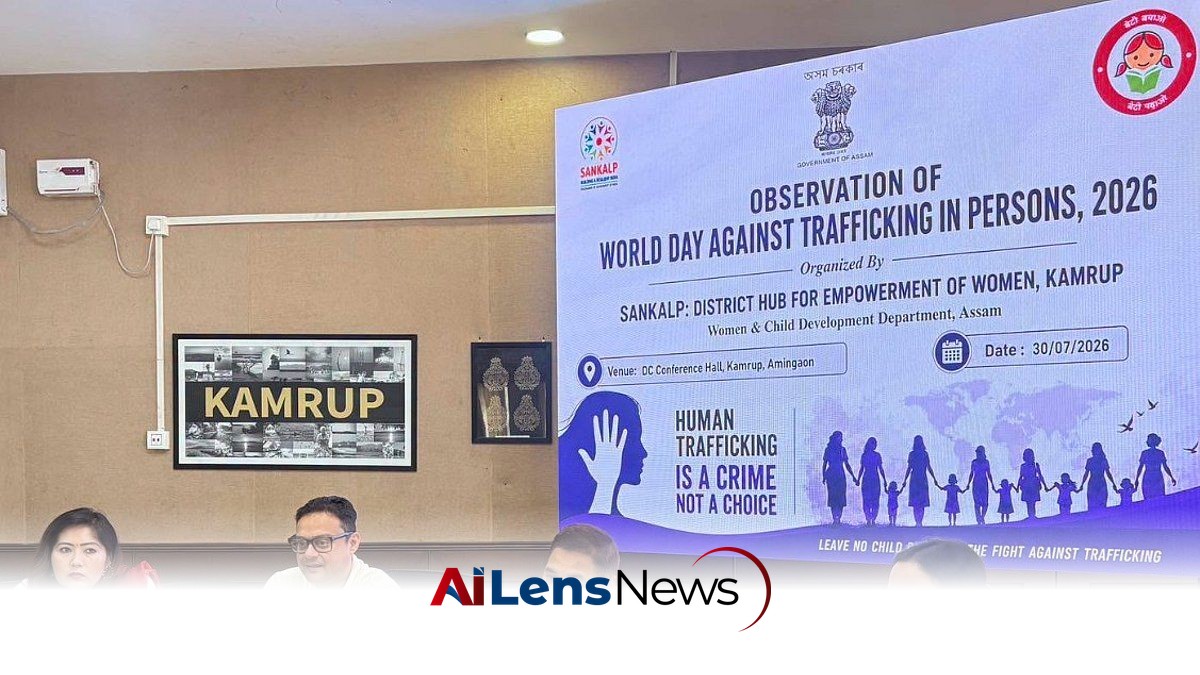


Kamrup District Commissioner Deba Kumar Mishra emphasizes the need for coordinated efforts to combat human trafficking and witch-hunting during an awareness program.
Shillong, India Jul 31, 2026 ALN: Stressing the need for coordinated efforts to tackle human trafficking and witch-hunting, Kamrup District Commissioner Deba Kumar Mishra on Thursday urged all stakeholders to identify vulnerable areas, intensify awareness campaigns and promote education as an effective tool to combat these social evils.
He was speaking at an awareness programme organised on the occasion of the World Day Against Trafficking in Persons 2026 by Sankalp: District Hub for Empowerment of Women under the Women & Child Development Department, Assam, at the conference hall of the Integrated District Commissioner’s Office, Kamrup. This initiative is part of a broader global movement aimed at raising awareness about the plight of trafficking victims and promoting efforts to combat this heinous crime.
Human trafficking is a grave violation of human rights and encompasses a range of exploitative practices, including forced labor, sexual exploitation, and child trafficking. According to various reports and studies, the northeastern region of India, including Assam, is particularly vulnerable to such crimes due to socio-economic factors, lack of awareness, and cultural practices that can lead to exploitation. The Commissioner’s emphasis on education and awareness is crucial, as these elements can empower communities to recognize the signs of trafficking and take preventive measures.
Addressing the gathering, the DC highlighted the possible causes of human trafficking and witch-hunting, which often stems from deep-rooted superstitions, socio-economic disparities, and a lack of education. He called for collective action to eliminate trafficking and protect vulnerable communities. The Commissioner expressed hope that every department and individual would contribute towards achieving this objective, underscoring the role of community engagement in fostering a protective environment for the most susceptible populations.
During the programme, a presentation on Mission Shakti was delivered, which highlighted the objectives and various sub-schemes aimed at ensuring the empowerment, protection, and welfare of women. Mission Shakti is a government initiative that focuses on the holistic development of women, providing them with the necessary tools and resources to lead dignified lives. The programme aims to create an enabling environment where women can thrive and be free from the threat of violence, exploitation, and discrimination.
Advocate Haripriya Rajbongshi of the Gauhati High Court delivered a presentation on the State Policy on Combating Human Trafficking and Ending Witch-Hunting. She discussed the prevailing challenges, legal provisions, and the need to strengthen institutional mechanisms while enhancing community participation to address these issues effectively. The legal framework in India, while robust, often faces challenges in implementation and enforcement, particularly in rural and remote areas where awareness of rights and legal recourse is limited. Rajbongshi’s insights into the legal landscape are vital for understanding how policy can translate into action on the ground.
DSP Tinkujyoti Choudhury outlined the initiatives undertaken by the police to prevent human trafficking and explained the role of the Anti-Human Trafficking Unit (AHTU) in rescue operations, investigation, rehabilitation, and inter-agency coordination. The AHTU plays a critical role in not only rescuing victims but also in prosecuting offenders and preventing future incidents. He also emphasized the importance of collaborative planning and timely intervention to strengthen anti-trafficking measures. The police’s proactive approach in this area is essential for building trust within communities, encouraging victims to come forward, and fostering a united front against trafficking.
The Assistant Legal Aid Defence Counsel (LADC) informed the gathering that the District Legal Services Authority (DLSA) has been regularly organising awareness programmes on human trafficking and related issues. These programmes are designed to educate the public about their rights and the resources available to them in case of exploitation. The LADC also assured the gathering that the DLSA remains available to provide legal assistance and support to those in need, highlighting the importance of accessible legal resources in combating trafficking and supporting victims.
The challenges posed by human trafficking and witch-hunting are not confined to legal and enforcement frameworks; they also require a cultural shift. Communities must be engaged in dialogue to dispel myths and superstitions that often lead to witch-hunting, a practice that disproportionately affects women. Education, awareness, and community-led initiatives are essential in changing perceptions and practices that contribute to these social evils.
In recent developments, the issue of human trafficking has gained significant attention, particularly in light of alarming reports of minors being trafficked. For instance, two minor girls were recently rescued from a locked room in Guwahati, and investigations into the human trafficking angle are currently underway. Such incidents underscore the urgent need for vigilant community involvement, as well as effective law enforcement strategies to prevent similar occurrences in the future.
The implications of these discussions extend beyond immediate legal frameworks; they touch upon the societal fabric and the need for a concerted effort to foster a culture of awareness, empathy, and action against human trafficking and witch-hunting. As stakeholders from various sectors come together to address these issues, it is imperative that they not only focus on punitive measures but also on preventive strategies that empower communities and individuals.
In conclusion, the call for unified action against human trafficking and witch-hunting by the Kamrup District Commissioner is a timely reminder of the collective responsibility society holds in safeguarding its most vulnerable members. By fostering awareness, education, and community participation, there is hope for a future free from the shackles of trafficking and the stigma of witch-hunting, paving the way for a more just and equitable society.
To learn more about the latest developments in Crime & Law, stay updated with our exclusive reports and analyses on AiLensNews.

