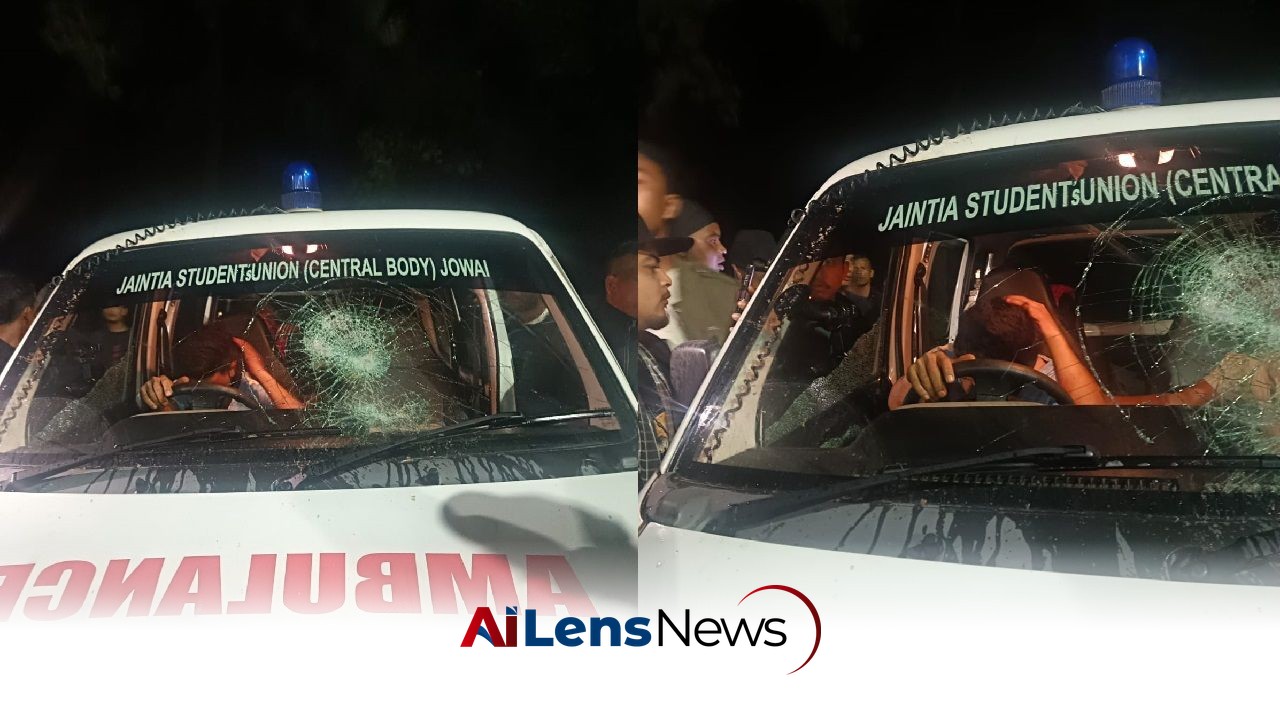


The Jaintia Students’ Union alleges its ambulance and medical team were attacked while responding to an emergency, leaving personnel injured and the vehicle damaged.
Shillong, India Jul 31, 2026 ALN: The Jaintia Students’ Union (JSU) Central Body has alleged that its ambulance and medical team were attacked while responding to an emergency rescue mission late on the night of July 30, leaving the driver and medical attendants injured and the ambulance extensively damaged.
The incident underscores ongoing tensions in the region, particularly surrounding the proposed Shree Cement public hearing. The JSU reported that the ambulance was dispatched from Cement Bazar to Shnong Rim at approximately 11:40 PM to evacuate civilians reportedly injured during clashes linked to this public hearing. Such public hearings are often contentious in regions where industrial development intersects with local community interests, and this case appears to be no exception.
According to the JSU, the ambulance was intercepted before reaching its destination by a group of individuals allegedly armed with stones and sticks. The Union claimed that the attackers smashed the vehicle’s windshield, severely damaged the ambulance, and physically assaulted the driver, Rapbor Mukhim, along with the accompanying medical attendants. This attack not only endangered the lives of the medical personnel but also highlighted the precarious situation faced by emergency responders in conflict-prone areas.
The JSU reported that the crew managed to escape the attack and returned to the dispatch point at around 12:30 AM on July 31. The injured personnel were later taken to Sutnga Community Health Centre (CHC) for medical treatment. The swift response of the JSU in evacuating the injured personnel indicates the organization's commitment to ensuring the safety and health of individuals affected by the violence in the area.
The Union alleged that the attack was orchestrated by "local mafias and goondas associated with Shree Cement" in Elaka Ningkhleih. This claim raises serious concerns about the influence of corporate interests in local affairs, particularly in regions where economic development projects can lead to social unrest. However, these allegations have not been independently verified, and no official confirmation has been issued by the police, the district administration, or Shree Cement, leaving room for speculation about the true motives behind the attack.
Condemning the incident, the Union described it as a serious attack on humanitarian services, stating that ambulances and emergency medical personnel should never be targeted while carrying out rescue operations. The JSU emphasized that such acts of violence against frontline responders not only jeopardize the safety of those involved but also undermine the fundamental principle of providing care and assistance to those in need, regardless of the circumstances.
The JSU has urged the district administration and law enforcement agencies to launch an immediate investigation into the incident, identify those responsible, ensure the safety of emergency responders, and protect the public’s right to participate peacefully in democratic processes. This call to action reflects a broader concern about the safety and security of individuals engaged in civic activities, especially in areas experiencing heightened tensions due to industrial projects.
As of the time of publication, no official response had been issued by the district administration, the police, or Shree Cement regarding the allegations made by the Union. The lack of a response raises questions about the accountability of authorities in addressing violence against medical personnel and the broader implications for community safety in East Jaintia Hills.
The incident is part of a larger narrative in India, where conflicts often arise between local communities and industrial developers. The proposed Shree Cement project has been met with opposition from various local groups, who argue that such developments threaten their land and way of life. This tension can lead to violent confrontations, as seen in this case, and poses challenges for law enforcement and local governance.
In recent years, there has been a growing recognition of the need to protect emergency services and ensure their safe operation in conflict zones. Organizations such as the World Health Organization (WHO) and the International Committee of the Red Cross (ICRC) have emphasized the importance of safeguarding medical personnel and facilities during times of unrest. The attack on the JSU ambulance echoes similar incidents worldwide, where healthcare workers face violence while performing their duties.
The implications of this attack extend beyond the immediate physical harm inflicted on the ambulance crew. It raises critical questions about the safety of healthcare providers in volatile environments and the responsibility of local governments to ensure their protection. Furthermore, it highlights the necessity for robust mechanisms to address grievances related to industrial projects, which can often lead to public unrest and violence.
The JSU's decision to pursue legal action against those responsible for the attack indicates a commitment to holding perpetrators accountable and seeking justice for the injured personnel. This approach may also serve as a deterrent against future acts of violence and promote a culture of respect for emergency services within the community.
As the situation develops, it will be crucial for local authorities to engage with community stakeholders, including the JSU and other civic organizations, to address the underlying issues that contribute to such violence. Effective dialogue and negotiation can help bridge the gap between industrial development and community interests, fostering an environment where both can coexist peacefully.
In conclusion, the attack on the JSU ambulance serves as a stark reminder of the challenges faced by emergency responders in conflict-prone areas. It underscores the need for comprehensive strategies to protect medical personnel and ensure their ability to provide care without fear of violence. The response from local authorities and the community will be pivotal in shaping the future landscape of East Jaintia Hills and determining the extent to which such incidents can be prevented in the future.
To learn more about the latest developments in Crime & Law, stay updated with our exclusive reports and analyses on AiLensNews.

