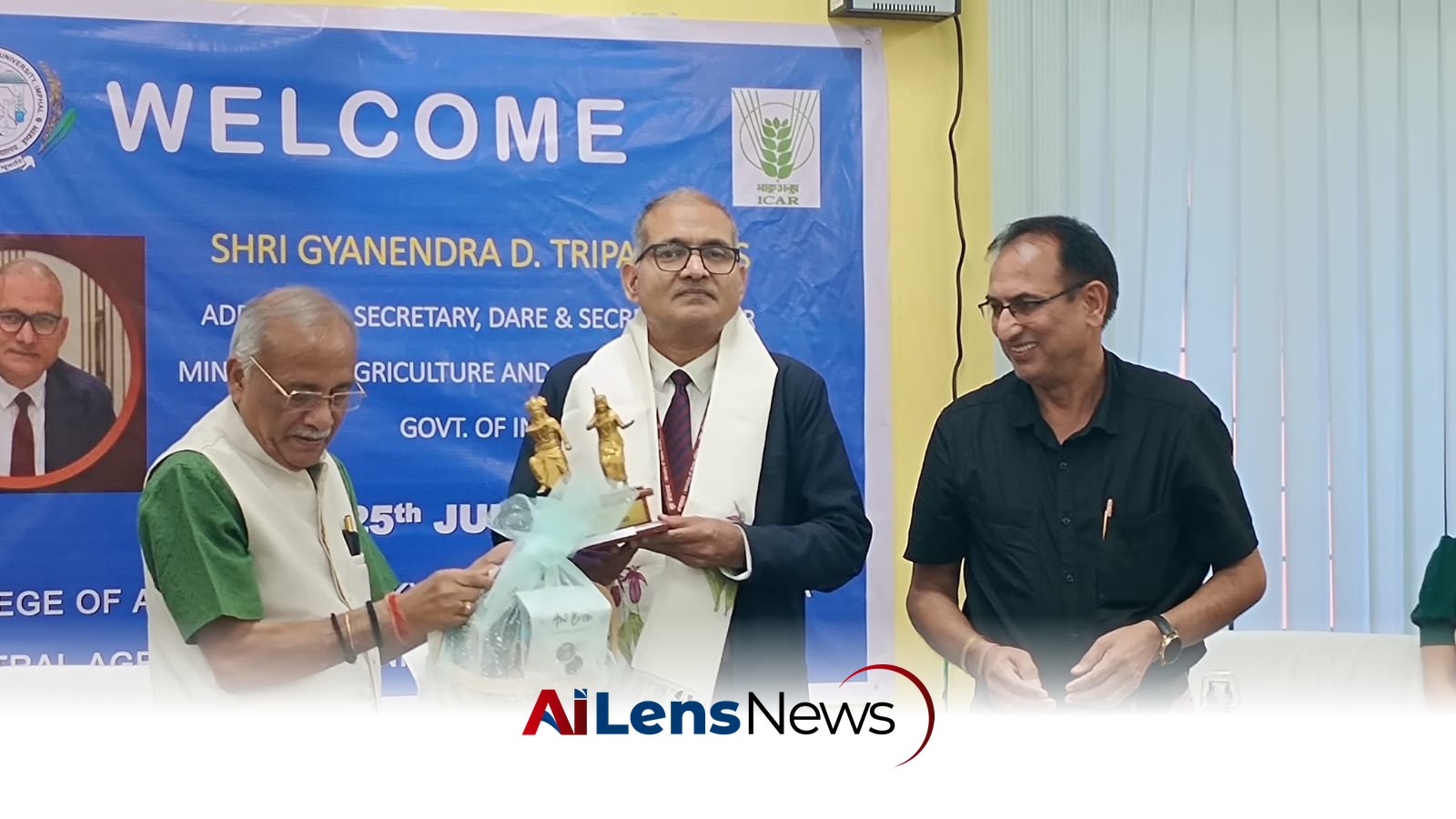


Gyanendra Dev Tripathi, Secretary of ICAR, visited Umiam to assess ongoing agricultural research and inaugurated a new solar biomass dryer.
Shillong, India Jul 26, 2026 ALN: Gyanendra Dev Tripathi, Secretary of the Indian Council of Agricultural Research (ICAR) and Additional Secretary of the Department of Agricultural Research and Education (DARE), visited the ICAR Research Complex for the North Eastern Hill Region in Umiam to review the ongoing research, development, and extension activities of the institutes in the region.
The ICAR is a pivotal organization in India that plays a crucial role in agricultural research and education. Established in 1929, it has been instrumental in advancing agricultural practices and innovations across the country. The organization not only focuses on enhancing food production and security but also addresses various challenges faced by farmers, particularly in diverse agro-climatic zones such as the North Eastern Region (NER) of India. This region is known for its rich biodiversity and unique agricultural practices, which are often shaped by the local climate and cultural traditions.
The North Eastern Hill Region, comprising eight states—Arunachal Pradesh, Assam, Manipur, , Mizoram, Nagaland, Sikkim, and Tripura—is characterized by its unique topography, climate, and biodiversity. This region faces numerous challenges, including issues related to soil erosion, shifting cultivation, and a lack of infrastructure for agricultural development. The ICAR Research Complex in Umiam aims to address these challenges through targeted research and development initiatives tailored to the specific needs of the local population. The complexity of agricultural practices in this region necessitates a multi-faceted approach to research, considering local customs, crop varieties, and environmental conditions.
A combined interaction and review meeting was held with the scientists and staff of ICAR RC NEH Region, Umiam, ICAR-ATARI, Zone VII, and ICAR-NBPGR on Saturday. This meeting provided a platform for scientists to discuss ongoing projects, share insights, and collaborate on future research endeavors. Such interactions are vital for fostering a culture of innovation and collaboration among agricultural scientists, which is essential for translating research into practical solutions for farmers. The exchange of ideas and findings during these meetings can lead to the development of new technologies and practices that are better suited to the local agricultural landscape.
During the meeting, Tripathi interacted with the scientific, administrative, and finance staff and took stock of the various programmes and initiatives being undertaken by the institute. He appreciated the dedication and contributions of the staff towards strengthening agricultural research and technology development for the North Eastern Hill region. His acknowledgment of their efforts serves to motivate the team and emphasizes the importance of their work in enhancing agricultural productivity and sustainability in the region. Recognizing the hard work of researchers and staff not only boosts morale but also reinforces the commitment to addressing the pressing agricultural challenges faced by the region.
One of the key highlights of Tripathi's visit was the inauguration of the Solar Biomass-Based Hybrid Dryer. This innovative technology has been designed to provide an energy-efficient and sustainable solution for drying agricultural produce, contributing to improved post-harvest management and value addition. The dryer utilizes renewable energy sources, which is particularly important in the context of climate change and the need for sustainable agricultural practices. The introduction of such technology can significantly reduce post-harvest losses, which is a major concern for farmers in the region, thereby increasing their income and improving food security. The adoption of renewable energy technologies in agriculture not only helps in reducing carbon footprints but also promotes energy independence for rural communities.
Post-harvest losses in agriculture can be attributed to various factors, including inadequate drying facilities, poor storage conditions, and lack of market access. In the North Eastern region, where many farmers rely on subsistence farming, these losses can have a profound impact on their livelihoods. By implementing technologies like the Solar Biomass-Based Hybrid Dryer, farmers can enhance the quality of their produce, extend shelf life, and potentially access higher-value markets. Improved infrastructure for post-harvest management is essential for transforming agricultural practices and ensuring that farmers can benefit from their hard work.
Tripathi also visited the laboratories of the institute and was briefed on the research activities being carried out across different disciplines. The laboratories at the Umiam complex are equipped with advanced facilities that support a wide range of research areas, including crop improvement, soil health management, pest and disease management, and sustainable agricultural practices. This breadth of research is critical for addressing the diverse agricultural challenges faced by farmers in the region. By focusing on local crops and agricultural practices, researchers can develop solutions that are not only effective but also culturally appropriate and economically viable for farmers.
Furthermore, the ICAR Research Complex for the North Eastern Hill Region plays a significant role in capacity building and extension services. By providing training and resources to farmers, the institute aims to empower local communities and promote the adoption of best practices in agriculture. This approach not only enhances agricultural productivity but also contributes to rural development and poverty alleviation. Training programs and workshops organized by ICAR help farmers learn about modern agricultural techniques, pest management, and sustainable farming practices, thereby improving their overall productivity and income.
The implications of Tripathi's visit and the initiatives undertaken by the ICAR are far-reaching. By prioritizing research and development in the North Eastern region, the ICAR is not only addressing immediate agricultural challenges but also laying the groundwork for long-term sustainability. The focus on renewable energy solutions and post-harvest management aligns with global efforts to combat climate change and promote sustainable agricultural practices. As the world grapples with climate change, the agricultural sector must adapt to new realities, and initiatives like those seen at the Umiam complex are essential for building resilience in farming systems.
In conclusion, Gyanendra Dev Tripathi's visit to the ICAR Research Complex in Umiam underscores the importance of agricultural research in shaping the future of farming in the North Eastern Hill Region. Through continued investment in research, technology, and capacity building, the ICAR aims to enhance food security, improve the livelihoods of farmers, and contribute to the overall development of the region. As India strives to achieve self-sufficiency in food production and sustainable agricultural practices, the role of organizations like ICAR becomes increasingly vital in navigating the complexities of modern agriculture. The collaboration between agricultural scientists, local farmers, and government initiatives is essential for fostering a sustainable agricultural ecosystem that can withstand the challenges posed by climate change and economic fluctuations.
To learn more about the latest developments in Agriculture & Rural Affairs, stay updated with our exclusive reports and analyses on AiLensNews.

