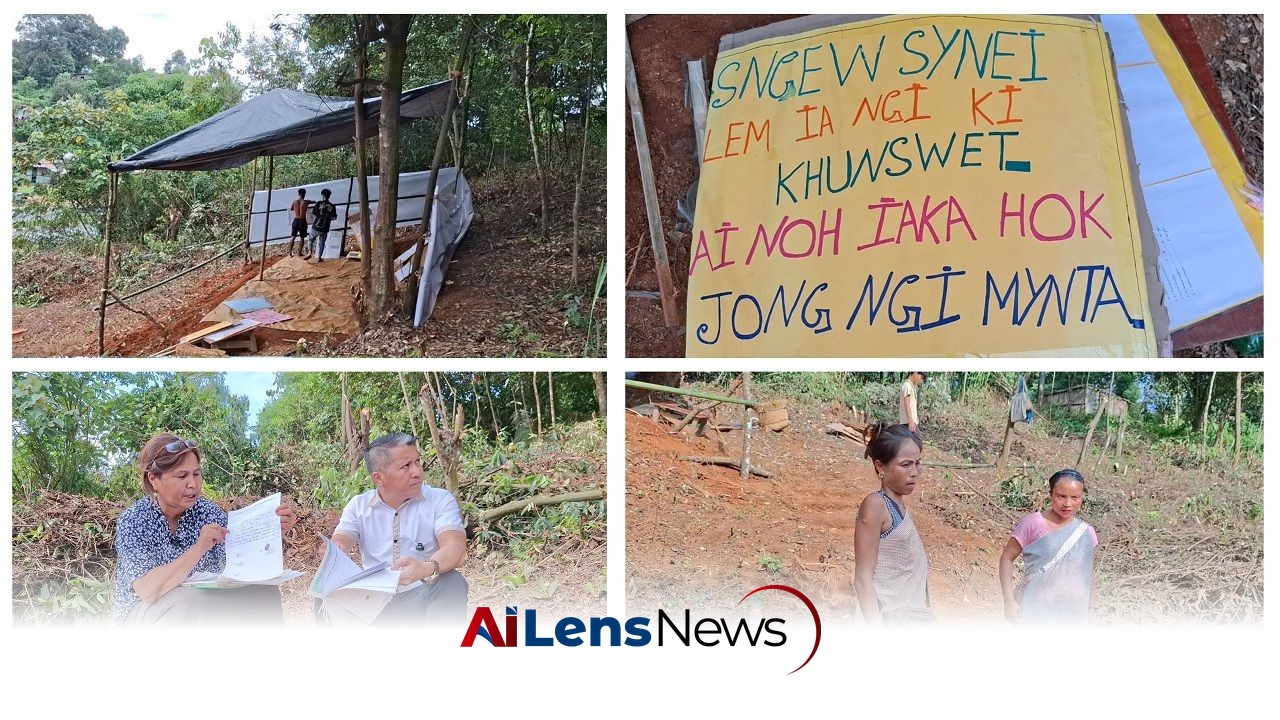


The Civil Society Women’s Organisation continues its sit-in protest demanding justice for orphaned siblings alleging abuse by their aunt in Ri Bhoi.
Shillong, India Jul 28, 2026 ALN: The sit-in protest led by Civil Society Women’s Organisation (CSWO) president Christabell Wanniang entered its second day on Tuesday, with the organisation continuing to demand justice for a group of orphaned siblings who have alleged harassment and abuse at the hands of their maternal aunt in Lumnongrim Dewlieh village, Ri Bhoi district.
The protest, staged at the residence of the orphaned children, seeks intervention from the village authorities and law enforcement agencies to resolve what CSWO described as a prolonged family dispute. The siblings have alleged that following the death of their mother, Relinda Nongbri, they were subjected to harassment and exploitation by their maternal aunt, Worda Nongbri. According to the allegations, the aunt attempted to sell land belonging to the orphaned children and also tried to deprive them of the benefits of a government housing scheme that was meant for them.
The backdrop of this protest is rooted in the broader social issues surrounding orphaned children in , a state in northeastern India known for its matrilineal society, where property and lineage are passed down through women. In such a context, the rights of children, particularly in cases of inheritance and guardianship, can often become contentious, especially when extended family members are involved. The plight of these orphaned siblings highlights the vulnerabilities faced by children in similar situations, where financial exploitation and emotional abuse can occur in the absence of parental guidance and protection.
The issue of orphaned children in India is multifaceted, encompassing not only legal rights but also cultural and emotional dimensions. In a matrilineal society like , children typically inherit property through their mothers, which complicates situations when guardianship is contested. The case of these siblings underscores the necessity for clear legal frameworks that protect the rights of children, especially in the wake of parental loss. Such frameworks can help prevent exploitation and ensure that children receive the benefits and support they are entitled to.
During the protest, Christabell Wanniang and the children met former Rangbah Shnong of Lumnongrim, Eddie G. Kharbani, who said he had been involved in documenting land-related matters while serving as village head. He stated that during his tenure there were no reports of abuse, and that the deceased mother had already distributed portions of her land among her children. This assertion raises critical questions regarding the legal standing of the children’s claims and the responsibilities of guardianship that relatives are expected to uphold. It also points to the potential for miscommunication or misunderstanding regarding the distribution of assets, which can lead to further disputes within families already grappling with loss.
Speaking to the media, Wanniang emphasized the importance of community support in ensuring that the rights of vulnerable individuals, particularly children, are protected. She stated that the sit-in protest would continue until the village authorities and the law ensured justice for the orphaned siblings. Wanniang's determination to advocate for the children underscores the role of civil society organizations in addressing social injustices and providing a voice for those who may feel powerless in such situations. The involvement of organizations like CSWO is crucial, as they often serve as intermediaries between the marginalized and the authorities, pushing for accountability and legal redress.
Furthermore, Wanniang demanded that Worda Nongbri provide a written undertaking to facilitate the construction of the government-sanctioned house on the land allocated to the children. The issue of housing is particularly significant in India, where government schemes aimed at providing shelter to the economically weaker sections of society are critical for ensuring stability and security. The denial of such benefits not only affects the immediate living conditions of the children but also has long-term implications for their overall well-being and future prospects. Adequate housing is foundational to a child's development, influencing their educational outcomes, mental health, and social integration.
A discussion also took place between Wanniang and Kharbani, during which the former village head assured that he would place the matter before the current Rangbah Shnong and the Executive Committee of the Dorbar Shnong. He appealed to Wanniang to suspend the protest, but she declined, stating that while she was willing to participate in any meeting convened by the village authorities and present documentary evidence supporting the children’s claims, the protest would continue until justice was delivered. This refusal to halt the protest reflects a growing awareness and assertiveness among civil society groups in , who are increasingly unwilling to accept inaction in the face of injustice. Their resolve illustrates a shift in societal attitudes towards the protection of children's rights and the accountability of guardians.
The orphaned siblings expressed gratitude to Wanniang for supporting them, saying they had been unable to fight for their rights due to their financial hardship. They clarified that they were not seeking conflict with their maternal aunt but only wanted to secure the share of property that had been allocated to them by their late mother. This sentiment of wanting to resolve the issue amicably, rather than escalating it into a family feud, is indicative of the complex emotional dynamics often present in familial disputes, especially those involving children who have already faced significant loss. The desire for a peaceful resolution highlights the importance of mediation and dialogue in resolving conflicts, particularly in tight-knit communities where relationships can be strained but remain vital.
Meanwhile, Lumnongrim Rangbah Shnong Bryan Sohkhlet said over the telephone that the present village leadership had only recently assumed office and was still gathering information related to the dispute. He assured that the Dorbar Shnong would soon convene a meeting, where both Christabell Wanniang and the orphaned siblings would be invited, adding that the village council would deliver an impartial decision without favouring either the aunt or the children. This commitment to impartiality is crucial in ensuring that the resolution process is fair and just, and it highlights the role of local governance structures in mediating conflicts within the community. The involvement of local leaders is essential, as they often possess the cultural and contextual knowledge necessary to navigate sensitive family issues and can facilitate discussions that lead to constructive outcomes.
The ongoing protest and the issues it raises are reflective of larger societal challenges in India regarding child welfare, inheritance rights, and the responsibilities of guardianship. As civil society organizations like the CSWO continue to advocate for justice, their efforts not only aim to resolve specific disputes but also to raise awareness about the broader systemic issues that affect vulnerable populations, particularly children. The outcomes of this protest could set important precedents for how similar cases are handled in the future, potentially influencing policy changes and community practices surrounding child rights and familial responsibilities. The increasing visibility of such cases may encourage further discourse on the need for legal reforms that better protect the rights of children and ensure that guardianship is exercised in their best interests.
In conclusion, the plight of the orphaned siblings in Lumnongrim Dewlieh village serves as a poignant reminder of the vulnerabilities faced by children in the wake of familial loss. The ongoing protest, championed by CSWO, not only seeks immediate justice for these children but also highlights the urgent need for systemic changes that safeguard the rights of all children in similar situations. As the community and local authorities engage with this issue, the hope remains that a fair and just resolution will be achieved, setting a positive example for future disputes involving vulnerable individuals.
To learn more about the latest developments in Crime & Law, stay updated with our exclusive reports and analyses on AiLensNews.

