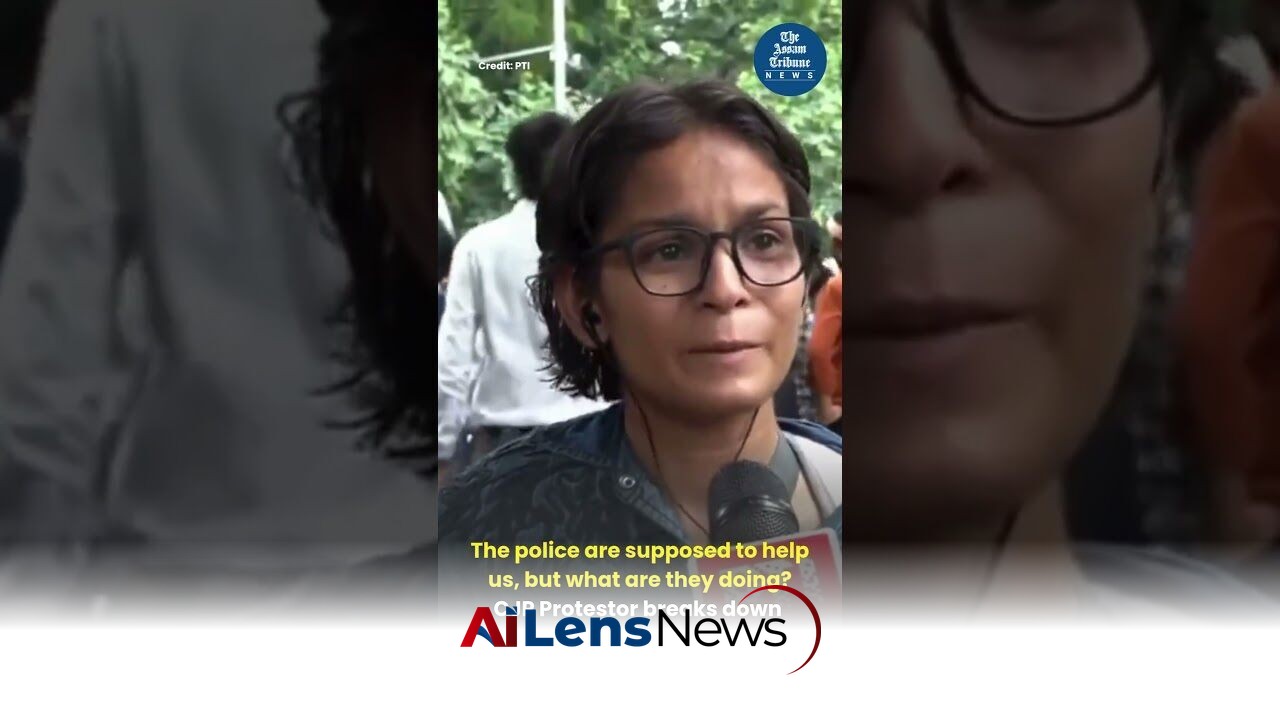


A protestor from the Citizens for Justice and Peace (CJP) expressed frustration over police inaction during a recent demonstration, questioning their role in public safety.
Shillong, India Jul 20, 2026 ALN: During a recent protest organized by the Citizens for Justice and Peace (CJP), a demonstrator broke down while addressing the media, voicing deep concerns about the police's role in ensuring public safety. This emotional moment highlighted not only individual distress but also a broader societal issue that has been gaining traction in various communities across the country. The protest was part of an ongoing movement advocating for justice and accountability in law enforcement practices, which has seen a resurgence in the wake of numerous high-profile incidents involving police violence.
The protestor's poignant question, "The police are supposed to help us, but what are they doing?" encapsulates a growing sentiment among citizens regarding police accountability and effectiveness. Many individuals have witnessed or experienced situations where police presence did not equate to safety, leading to an erosion of trust in law enforcement agencies. This distrust is often exacerbated by reports of police brutality, racial profiling, and a lack of transparency in police operations.
This incident occurred amidst a larger movement advocating for justice and accountability in law enforcement practices. The protest aimed to draw attention to various issues, including police brutality and the need for reform within the system. The CJP and other activist organizations have been vocal in their demands for comprehensive reviews of police conduct, training practices, and the overall approach to community policing. These calls for reform are not just reactions to isolated incidents but reflect a systemic problem that many communities have faced for years.
As tensions rise, many community members are demanding a reassessment of the police's responsibilities and a more active role in protecting citizens rather than perpetuating fear. The role of the police in society has been a topic of heated debate, especially in the context of recent events that have sparked nationwide protests. Many argue that the police should not only respond to crime but also engage proactively with the community to foster trust and cooperation. This perspective suggests a shift from a punitive model of policing to one that emphasizes community engagement and support.
The protestor's emotional appeal resonated with many attendees, reflecting a collective frustration with the current state of law enforcement. Activists are calling for a dialogue on how to improve police-community relations and ensure that the police serve their intended purpose. This dialogue is seen as essential for rebuilding trust and ensuring that policing is viewed as a service rather than a threat. Many community leaders have suggested that establishing community oversight boards could be a step toward greater accountability and transparency in police operations.
The protest concluded with organizers emphasizing the importance of continued advocacy for justice and the need for systemic change in law enforcement practices. The CJP has outlined a series of demands aimed at reforming police practices, including the implementation of de-escalation training, the use of body cameras, and increased funding for community services that address the root causes of crime. By advocating for these changes, the organization hopes to create a safer environment for all community members and restore faith in the justice system.
This incident underscores the urgent need for reform and accountability within police departments, as communities seek to reclaim trust and safety. The call for reform is not limited to one city or state; it reflects a national trend where citizens are increasingly aware of and vocal about the need for change in law enforcement. As more individuals come forward to share their experiences, the collective narrative continues to shape public perception and policy discussions surrounding policing.
In recent years, various cities have begun to implement changes in response to public outcry over police practices. Some jurisdictions have adopted measures such as banning chokeholds, instituting mandatory reporting of use-of-force incidents, and increasing mental health resources for officers. These changes are often met with resistance from certain factions within law enforcement, who argue that such measures could hinder their ability to perform their duties effectively. However, advocates for reform maintain that these changes are necessary to protect the rights and lives of citizens.
The implications of the protest and the sentiments expressed by the demonstrator extend beyond the immediate call for police reform. They reflect a broader societal shift towards prioritizing human rights, equity, and justice. As communities continue to mobilize and demand change, there is potential for significant shifts in policy at local, state, and even national levels. The ongoing dialogue surrounding police reform serves as a crucial element in shaping the future of law enforcement and its relationship with the communities it serves.
Furthermore, the emotional weight carried by the protestor's words serves as a reminder of the human impact of policing policies. Each statistic related to police violence represents a person, a family, and a community affected by the actions of law enforcement. Recognizing this human element is essential in fostering empathy and understanding among all stakeholders involved in the conversation about policing and justice.
As the movement for justice and accountability continues to grow, it is imperative that all voices are heard, and that constructive dialogue is prioritized. The path toward reform is complex and requires the participation of community members, law enforcement, policymakers, and advocacy organizations working together to create a safer and more just society. By addressing the concerns raised during protests and advocating for meaningful changes, communities can begin to heal and rebuild the trust that has been lost.
In addition to the emotional and social dimensions of this issue, it is essential to consider the legal framework surrounding police practices. Various laws and regulations govern how police conduct themselves, and many advocates argue that these laws need to be revisited and revised to ensure greater accountability. For example, qualified immunity, a legal doctrine that protects government officials from being held personally liable for constitutional violations, has been a focal point of debate among reform advocates. Critics argue that this doctrine enables police misconduct by making it difficult for victims to seek justice.
Moreover, the role of technology in policing has also been a topic of discussion. The adoption of body cameras has been championed as a tool for increasing transparency and accountability. However, concerns remain about how footage is managed, who has access to it, and how it is utilized in investigations. Ensuring that such technologies are implemented effectively and ethically is crucial in rebuilding trust between law enforcement and the communities they serve.
As the CJP and other advocacy groups push for reform, they are not only responding to current grievances but also aiming to create a framework for future policing that aligns with the values of justice, equity, and respect for human rights. This involves not only changes in policy but also shifts in culture within police departments. Training programs that emphasize community engagement, de-escalation techniques, and cultural competency are essential in fostering a new generation of law enforcement officers who are equipped to handle the complexities of modern policing.
The emotional appeal made during the protest serves as a catalyst for further discussions on these critical issues. It reminds us that behind every statistic lies a story, and every call for reform is rooted in lived experiences. As communities continue to advocate for change, it is crucial for all stakeholders to engage in meaningful conversations that prioritize the safety and well-being of all citizens.
In conclusion, the protest organized by the CJP reflects a significant moment in the ongoing struggle for police reform and accountability. The heartfelt concerns expressed by the demonstrator resonate deeply within a society grappling with the complexities of law enforcement and community safety. As the movement for justice continues, it is vital to ensure that the voices of those affected by policing policies are not only heard but actively shape the future of law enforcement in a way that promotes trust, safety, and justice for all.
To learn more about the latest developments in Crime & Law, stay updated with our exclusive reports and analyses on AiLensNews.

