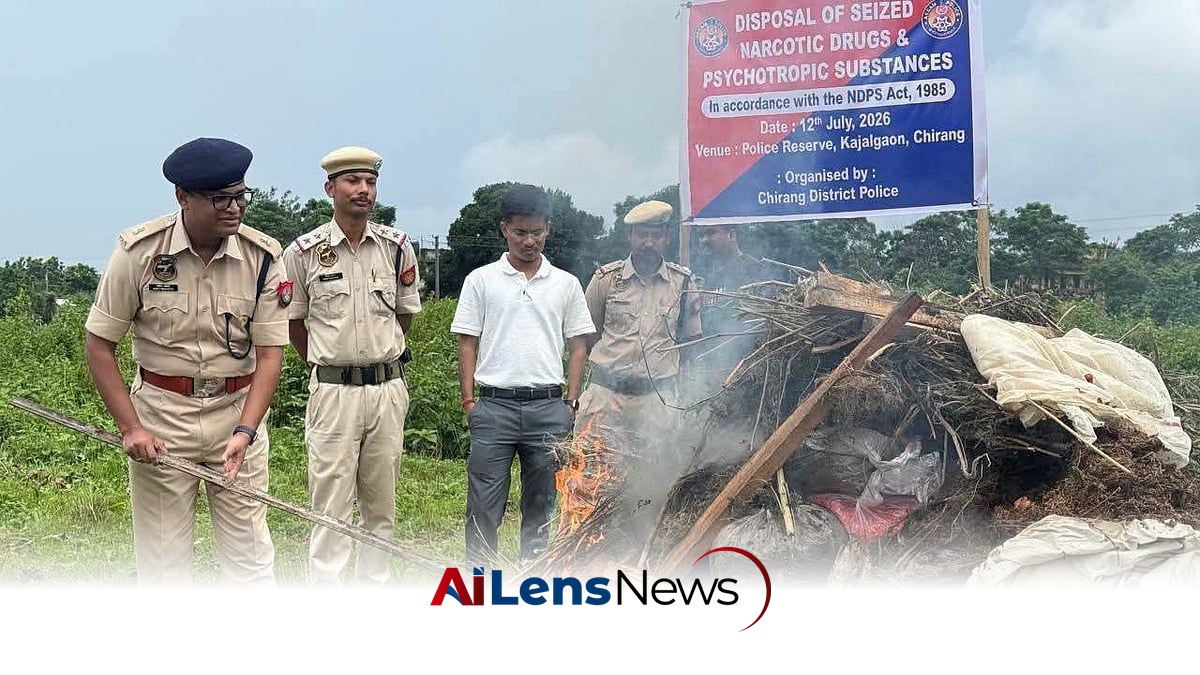


In a significant anti-drug initiative, Bongaigaon Police destroyed narcotics valued at Rs 6.63 crore at Birjhora Tea Estate, sending a strong message to traffickers.
Shillong, India Jul 13, 2026 ALN: Bongaigaon: Bongaigaon Police destroyed seized drugs worth Rs 6.63 crore at Birjhora Tea Estate on Sunday as part of the Assam Police’s anti-drug campaign. This action underscores the ongoing efforts by law enforcement agencies in India to combat the growing menace of drug trafficking and substance abuse, which has become a significant public health and safety issue in the region.
The destruction was carried out following all legal and environmental guidelines, ensuring that the process was conducted responsibly and did not pose any harm to the surrounding environment or community. The event was attended by Senior Superintendent of Police (SSP) Numal Mahatta, Additional Superintendent of Police (Crime) Jayanta Barua, Deputy Superintendent of Police (DSP), the Additional Deputy Commissioner (ADC), and other officials. Their presence highlights the collaborative approach of various governmental and law enforcement bodies in tackling drug-related issues.
In addition to police officials, representatives of the Drug Disposal Committee, Pollution Control Board, Village Defence Parties (VDPs), civil society organisations, and the media were also present. This diverse attendance reflects a community-oriented strategy in addressing drug abuse, emphasizing the role of public awareness and community involvement in the fight against drugs.
According to SSP Mahatta, the destroyed narcotics included an alarming quantity of substances: 1,027.093 kg of ganja, 294.59 grams of heroin, 13.084 kg of opium, 5,070 tablets, and 24 capsules, with a total market value of Rs 66,335,450. The sheer scale of these figures illustrates the severity of the drug problem in the region, as well as the ongoing efforts by law enforcement to intercept and eliminate these dangerous substances from circulation.
“This destruction of the seized drugs sends a strong message to drug traffickers. We are committed to creating a drug-free society,” Mahatta added. This statement reflects a broader commitment among law enforcement agencies not only to eradicate drugs but also to deter potential traffickers by demonstrating the consequences of illegal drug trade. Such actions can be pivotal in reducing the prevalence of drug-related crimes and promoting public safety.
The implications of this event extend beyond the immediate destruction of drugs. It serves as a reminder of the ongoing battle against drug trafficking in India, particularly in northeastern states like Assam, which have been significantly affected by the drug trade. The region's geographical location makes it a strategic transit point for narcotics, particularly those originating from neighboring countries like Myanmar, where opium production is prevalent. The proximity of Assam to the Golden Triangle, an area notorious for opium production, exacerbates the situation, making it a focal point for trafficking routes.
The anti-drug campaign by Assam Police is part of a larger national initiative to address substance abuse, which has been recognized as a growing public health crisis. The Indian government has been increasingly focusing on rehabilitation and prevention strategies alongside enforcement actions. This dual approach aims to not only crack down on drug trafficking but also provide support for individuals struggling with addiction. The rising number of drug-related cases has prompted authorities to seek comprehensive solutions that include education, healthcare, and community support systems.
Furthermore, the involvement of civil society organizations and community groups in such events is crucial. These entities often play a key role in raising awareness about the dangers of drug use and advocating for preventive measures. Their participation in drug destruction events can help foster a sense of community responsibility and encourage individuals to engage in dialogues about drug abuse and its consequences. Community engagement is vital in creating a supportive environment that discourages drug use and encourages individuals to seek help when needed.
In recent years, Assam has seen various initiatives aimed at curbing drug abuse, including educational programs in schools and community outreach efforts. These programs are designed to inform young people about the risks associated with drug use and to provide them with the tools they need to resist peer pressure. The collaboration between law enforcement, local government, and community organizations is essential for the success of these initiatives. By working together, these stakeholders can create a more resilient community that is better equipped to combat the challenges posed by drug abuse.
Moreover, the environmental considerations taken during the destruction of drugs are also noteworthy. The authorities ensured that the disposal methods adhered to regulations set forth by environmental agencies, which is critical in preventing any potential harm to the ecosystem. This responsible approach is essential not only for public health but also for maintaining ecological balance in the region. The destruction of drugs, when done improperly, can lead to environmental contamination, which further complicates public health issues.
As the fight against drug trafficking continues, it is imperative that law enforcement agencies, governmental bodies, and community organizations work together to create a comprehensive strategy that addresses both the supply and demand sides of the drug problem. This includes not only strict enforcement of drug laws but also investment in education, rehabilitation, and community support systems. The multifaceted nature of drug abuse requires a coordinated response that encompasses law enforcement, healthcare, education, and community engagement.
In conclusion, the destruction of Rs 6.63 crore worth of seized drugs by Bongaigaon Police is a significant step in the ongoing battle against drug trafficking in Assam. It highlights the need for continued vigilance and collaboration among various stakeholders to combat this pervasive issue. As communities come together to address the challenges posed by drug abuse, the hope is to foster a safer and healthier environment for all citizens. The efforts made by law enforcement and community organizations can serve as a model for other regions facing similar challenges, demonstrating the importance of a united front in the fight against drugs.
To learn more about the latest developments in Crime & Law, stay updated with our exclusive reports and analyses on AiLensNews.

