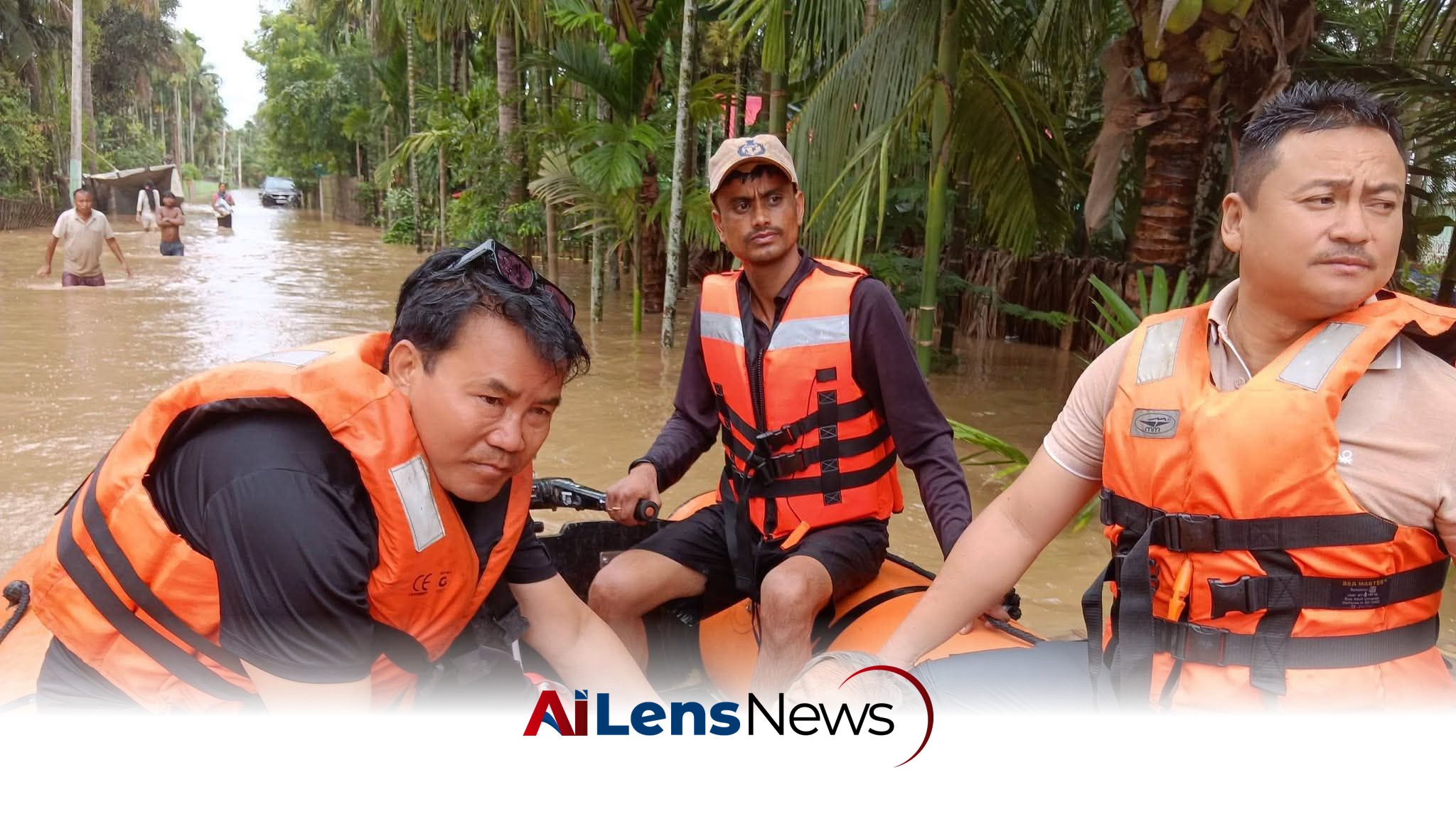


The flood situation in Assam worsens with the death toll rising to 61, as Chief Minister Himanta Biswa Sarma cites heavy rainfall in Nagaland as a contributing factor.
Shillong, India Jul 25, 2026 ALN: Dibrugarh: The flood situation in Assam remains critical, with the overall death toll rising to 61 following the latest report from the Disaster Reporting and Information Management System (DRIMS). This report confirmed 14 additional flood-related deaths, indicating the severity of the ongoing crisis.
Chief Minister Himanta Biswa Sarma attributed the unprecedented flooding in Upper Assam to exceptionally heavy rainfall experienced in both Nagaland and parts of Assam. The Chief Minister emphasized that tens of thousands of people in the worst-hit areas are still beyond the reach of rescue teams, complicating relief efforts.
Of the 14 latest deaths reported, the majority occurred in Charaideo (7), followed by Sivasagar (6) and Jorhat (1). This tragic loss of life highlights the dangers posed by the flooding, which has impacted numerous communities across the state.
According to the latest flood bulletin, approximately 705,148 people have been affected across 12 districts, with floodwaters inundating 856 villages within 37 revenue circles. This has resulted in more than 56,606 hectares of cropland remaining submerged, posing a significant threat to agriculture and food security in the region.
Sivasagar is currently the worst-hit district, with 348,555 affected individuals, followed by Charaideo (188,404) and Jorhat (126,793). The affected districts include Golaghat, Charaideo, Dibrugarh, Hojai, Nagaon, Biswanath, Jorhat, Dhemaji, Sivasagar, Sonitpur, Kamrup (Metro), and Karbi Anglong.
In response to the crisis, authorities have opened 363 relief camps and distribution centers across the affected districts. Currently, 115,205 individuals are taking shelter in these relief camps, while assistance is being provided to more than 200,000 people through the distribution centers. This highlights the scale of the disaster and the urgent need for effective relief measures.
Meanwhile, several rivers, including the Dikhou, Disang, Dhansiri (South), and Kushiyara, continue to flow above the danger level, exacerbating the challenges faced by rescue and relief operations in the affected areas. The Chief Minister noted that the government has been unable to reach around 50,000 people in Nazira and another 30,000 in Sivasagar due to the severity of the floods.
“Due to excessive rainfall in Nagaland and simultaneous heavy rainfall in Charaideo district, flooding occurred in Sivasagar and Charaideo. So far, 10 people have lost their lives in Charaideo, while 21 have died in Sivasagar,” Sarma stated. He also mentioned that seven individuals are still missing, with six from Sivasagar and one from Charaideo, underscoring the ongoing risks and uncertainties related to the flooding.
The Chief Minister reported that Mon, Mokokchung, and Wokha districts in Nagaland, along with Charaideo district in Assam, received between 435 to 493 percent excess rainfall between July 18 and 19. This unusual weather pattern has contributed significantly to the flooding, with Sarma describing the situation as "very pathetic and dangerous." He noted that these districts have historically remained unaffected by floods, making the current devastation unprecedented.
As the situation evolves, there are concerns that the death toll could rise further due to communication breakdowns that have delayed the flow of information from several affected areas. “More than seven lakh people have been affected in these districts. The death toll may rise because we have not received reports from several places due to communication breakdown. It is one of the worst floods Assam has seen,” Sarma remarked.
“There was no cloudburst in Nagaland. Excessive rainfall in the three districts of Nagaland flowed downstream into Assam, while Charaideo district also recorded exceptionally heavy rainfall, causing floods across Upper Assam,” he clarified, emphasizing the need for accurate information to guide response efforts.
Rescue teams are working diligently to reach marooned villages, with the Chief Minister expressing hope that all stranded individuals will be reached soon. However, he acknowledged the challenges faced by rescue operations, stating, “In some areas, airdropping relief materials has become difficult because floodwaters have damaged infrastructure. We tried using drones to deliver food, but it was not successful. We will speak with the Army’s Eastern Command and the Air Force and seek their assistance in the rescue operations.”
Additionally, the Chief Minister reported that more than 60,000 households are currently without electricity due to flood damage to power infrastructure across the affected districts. This lack of electricity further complicates recovery efforts and poses additional challenges for those displaced by the floods.
A central inter-ministerial team is scheduled to arrive in Assam to assess the extent of the damage and evaluate the assistance required for relief and rehabilitation. This team’s findings will be critical in determining the next steps for the state government and the central authorities in responding to the disaster.
“This flood is different because we had no warning. On July 18, heavy rain started in Nagaland’s Mon district at around 3 pm, and by 7 pm parts of Assam were already submerged. Charaideo district also received exceptionally high rainfall. One elephant was washed away in the floods, but our team managed to rescue it,” Sarma recounted, illustrating the rapid onset of the disaster and the challenges faced by both humans and wildlife.
He also clarified that no hydroelectric power construction was currently underway in Nagaland and that the state government had no information about any such activity, addressing potential concerns regarding the impact of development projects on flooding.
According to the latest flood report, five major rivers are flowing above the danger level. The Burhidihing at Chenimari (Khowang), Dikhou at Sivasagar, Dhansiri (South) at Numaligarh, and Kushiyara at Sribhumi remain above the danger mark, while the Disang River at Nanglamuraghat is flowing above its highest flood level. These conditions further indicate the need for immediate and effective intervention to mitigate the impact of the floods.
As the situation continues to unfold, residents in the worst-hit districts are struggling to cope with the aftermath of the flooding. “In Sivasagar, the floodwater has started to recede, but the problems remain the same. We have never seen such devastation in Sivasagar. This flood has taken away everything. We never imagined we would face such a situation. Our family has been shifted to a relief camp. The government has been providing relief materials, but they are not enough for us,” shared Namul Gogoi, a flood victim, reflecting the dire circumstances faced by many families in the region.
The State Disaster Response Force (SDRF), National Disaster Response Force (NDRF), Army, Air Force, and local organizations are continuing rescue operations across the affected districts, with thousands of stranded individuals rescued so far. These efforts are crucial in alleviating the immediate suffering of those impacted by the floods and restoring normalcy in the region.
To learn more about the latest developments in Crime & Law, stay updated with our exclusive reports and analyses on AiLensNews.

