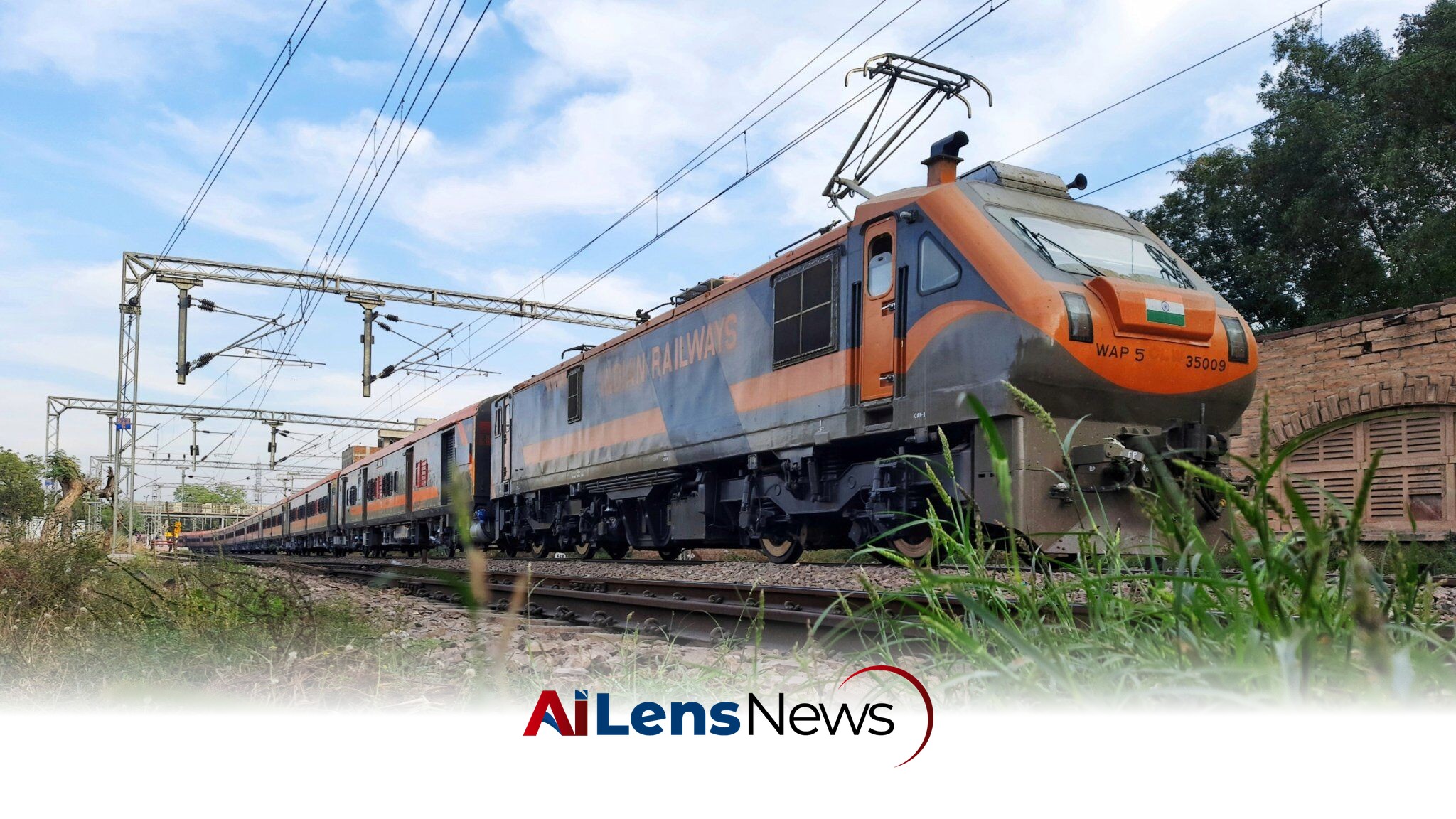


The Indian Railways has sanctioned a 14.52 km third line project between Nimpura West Outer Cabin and Midnapur to boost capacity and operational efficiency.
Imphal, India Jul 23, 2026 ALN: Indian Railways has approved the construction of a 14.52 km third line between Nimpura West Outer Cabin and Midnapur in South Eastern Railway at a cost of Rs 440 crore to enhance capacity on this busy corridor, according to an official statement issued on Thursday.
The project forms part of Indian Railways' continued efforts to augment network capacity on high-density routes to facilitate faster movement of passenger and freight trains while supporting the growing transportation needs of industries and essential commodities, the statement said.
Upon completion, the project is expected to facilitate additional freight traffic movement of 3.52 million tonnes per annum (MTPA). This increase in capacity is crucial as it will help meet the rising demand for both passenger and freight services, which have been under pressure due to the rapid growth of the Indian economy and the increasing reliance on rail transport for logistics.
The section forms part of the High Utilisation Network (HUN-2) route, where the Nimpura West Outer Cabin-Gokulpur section is presently a single line, while doubling works are already in progress. The additional third line will substantially augment line capacity and improve operational flexibility on this strategically important corridor, the statement explained. This strategic investment aims to alleviate congestion and improve the overall efficiency of rail operations in a region that is vital for the transportation of goods.
The route carries substantial volumes of passenger as well as freight traffic transporting key commodities including manganese, iron ore, containers, coal, clinker, pellet iron, iron and steel, wheat, stone, sleepers, slag, salt, rice, petroleum products, limestone, gypsum, fertilisers, edible oil, chemical salt, charcoal, cement, ballast and ash, with an overall freight loading of nearly 23.80 million tonnes per annum (MTPA). The diversity of goods transported along this corridor underscores its importance in supporting various sectors of the economy, ranging from agriculture to heavy industry.
The existing section is operating at a line capacity utilisation of 115.71 percent, indicating severe congestion. This level of usage highlights the urgent need for infrastructure upgrades, as it can lead to delays and inefficiencies that affect both passenger travel times and freight delivery schedules. The third line will create additional capacity to accommodate growing passenger and freight traffic while improving operational efficiency across the corridor.
The enhanced infrastructure will improve movement of essential commodities, reduce operational bottlenecks, increase network reliability and strengthen connectivity for industries and businesses dependent on this important rail corridor. This improvement is particularly significant in the context of India's broader economic goals, where efficient transportation networks are vital for sustaining growth and competitiveness.
The approval reflects Indian Railways' sustained focus on capacity augmentation across high-density routes, enabling faster movement of freight and passengers while supporting economic growth through a modern, efficient and future-ready railway network, the statement added. This effort is part of a larger vision to transform Indian Railways into a more robust and reliable mode of transport, which is essential for the country’s development.
Indian Railways has been facing increasing pressure to enhance its capabilities due to the growing population and urbanization, which have led to a surge in demand for both passenger and freight services. In recent years, the government has prioritized infrastructure projects that not only expand capacity but also modernize the railway system, making it more efficient and environmentally friendly.
In addition to the construction of new lines, Indian Railways is also focusing on upgrading existing infrastructure, implementing advanced technologies, and improving safety measures. The integration of digital solutions for ticketing, tracking, and real-time updates has been a significant part of this modernization effort, aiming to make rail travel more user-friendly and efficient.
The economic implications of such projects are profound. By enhancing rail connectivity, the government aims to reduce logistics costs for industries, which can lead to lower prices for consumers and increased competitiveness for Indian businesses in the global market. Furthermore, improved rail infrastructure can stimulate economic activity in regions that are connected, fostering growth in local economies and creating job opportunities.
Moreover, the focus on freight capacity is particularly relevant in the context of India’s commitment to sustainable development. Rail transport is generally more energy-efficient and environmentally friendly compared to road transport. By shifting more freight traffic to railways, the government aims to reduce carbon emissions and promote a greener transportation system.
As the project progresses, it will be essential for Indian Railways to engage with local communities and stakeholders to ensure that the developments align with regional needs and priorities. Community involvement can help mitigate any potential disruptions caused by construction and ensure that the benefits of enhanced rail services are equitably distributed.
In conclusion, the approval of the Rs 440 crore third-line project between Nimpura West Outer Cabin and Midnapur represents a significant step towards enhancing the capacity and efficiency of Indian Railways. This initiative not only aims to improve the movement of goods and passengers but also aligns with broader economic and environmental objectives, making it a crucial investment in the future of India’s transportation infrastructure.
To understand the broader context of this project, it is essential to consider the historical evolution of Indian Railways. Established in the mid-19th century, Indian Railways has grown to become one of the largest rail networks in the world, serving millions of passengers and transporting vast quantities of freight across the country. Over the decades, the railway system has played a pivotal role in India's economic development, facilitating trade and mobility.
However, with the rapid expansion of urban areas and industrial hubs, the existing railway infrastructure has often struggled to keep pace with the demands placed upon it. Issues such as overcrowding, delays, and inefficiencies have prompted the government to invest heavily in modernizing and expanding the railway network. The third-line project is part of a broader strategy to address these challenges and ensure that Indian Railways remains a reliable and efficient mode of transport.
Furthermore, the strategic importance of the corridor cannot be overstated. The Nimpura West Outer Cabin to Midnapur route is not only vital for local transportation but also serves as a critical link in the national supply chain. By enhancing this corridor, Indian Railways aims to bolster the overall connectivity of the rail network, which is essential for the seamless movement of goods across states and regions.
In light of the increasing focus on sustainable transportation solutions, the government’s commitment to rail infrastructure upgrades also aligns with global trends towards reducing carbon footprints. The shift from road to rail for freight transport is expected to contribute significantly to lowering greenhouse gas emissions, a goal that is becoming increasingly important in the face of climate change.
In summary, the approval of the third-line project is a forward-thinking initiative that addresses current challenges while positioning Indian Railways for future growth. As the project unfolds, it will be closely monitored not only for its economic impact but also for its social and environmental implications, ensuring that the benefits of enhanced rail connectivity are maximized for all stakeholders involved.
To learn more about the latest developments in Transport & Mobility, stay updated with our exclusive reports and analyses on AiLensNews.

