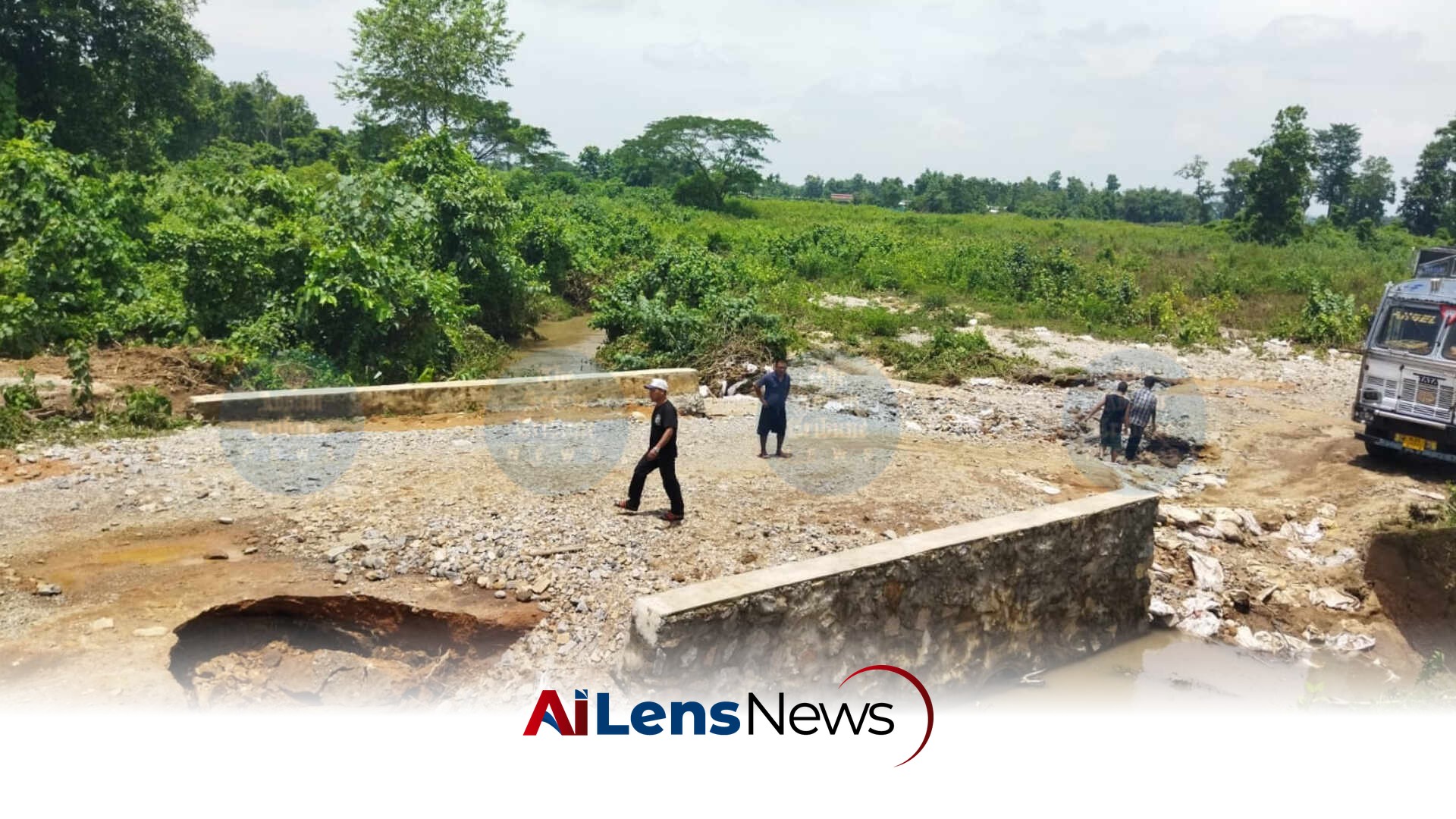


A flash flood has severely impacted the Rani–Mairang–Mawngap road, disrupting vital connectivity between Assam and Meghalaya after a temporary diversion was washed away.
Imphal, India Jul 19, 2026 ALN: The Rani–Mairang–Mawngap (MMR) road, a crucial transportation link between the northeastern Indian states of Assam and Meghalaya, has experienced significant disruption following the collapse of a temporary diversion near the Sarupani bridge due to severe flash floods on July 15. This incident highlights the vulnerabilities of infrastructure in the region, particularly during the monsoon season, which is characterized by heavy rainfall and subsequent flooding.
The Sarupani bridge, which was already deemed unsafe prior to the incident, had its vehicular movement suspended by the Public Works Department (PWD), Roads branch, in December of the previous year. In response to the closure, the PWD constructed a temporary diversion utilizing a twin-cell culvert downstream of the original bridge to maintain some level of connectivity between the two states. However, this diversion was not built to withstand the heavy flows of the Sarupani river, which originates in the Meghalaya hills and is known for its capacity to carry substantial water during the monsoon months.
The recent flash floods, exacerbated by torrential rains, resulted in the erosion of a significant portion of the approach road to the temporary diversion, effectively severing the interstate route that is vital for both commuters and transporters. The disruption has forced vehicles traveling between Assam, Meghalaya, and the Chandubi area to seek alternative routes, which has led to increased travel times and logistical challenges for goods transporters. The rerouting of traffic not only causes inconvenience to the public but also raises concerns about the economic implications for local businesses that rely on the smooth flow of goods and services across state borders.
Local residents have expressed frustration regarding the planning and execution of the temporary diversion, citing that it was constructed at nearly the same elevation as the riverbank. This design flaw has made the diversion particularly susceptible to flooding, a risk that was seemingly underestimated by the authorities responsible for its construction. The Sarupani river, known for its unpredictable and aggressive flow during the rainy season, has historically contributed to erosion and flooding in the area, impacting agricultural fields and the surrounding infrastructure.
Residents have raised concerns about the lack of progress on repairing or reconstructing the original Sarupani bridge, which has been a point of contention for several months. Despite the strategic importance of the Assam–Meghalaya road link, which facilitates trade and travel between the two states, there has been little visible action taken to address the infrastructure issues. This situation has not only affected daily commuters but also poses a risk to emergency services that depend on reliable access to both states.
The implications of this incident extend beyond immediate transportation challenges. The disruption of the MMR road can have cascading effects on local economies, particularly in regions that depend on agricultural output and trade. Delays in transporting goods can lead to increased costs for farmers and small businesses, potentially affecting food supply in the region. Furthermore, the ongoing issues with the Sarupani bridge and the temporary diversion raise questions about the efficacy of infrastructure planning and disaster preparedness in the face of climate change, which has been linked to more erratic weather patterns and increased rainfall in many parts of India.
The monsoon season in India, typically spanning from June to September, is known for its heavy rainfall, particularly in the northeastern states, which receive some of the highest annual rainfall in the country. This year, the region has experienced particularly intense weather, leading to flash floods that have affected multiple areas. The situation emphasizes the need for robust infrastructure that can withstand extreme weather events, alongside effective planning that considers the geographical and climatic challenges unique to the region.
As authorities work to assess the damage and plan for necessary repairs, the incident serves as a reminder of the importance of sustainable infrastructure development that prioritizes safety and resilience. Community feedback, such as that from local residents regarding the temporary diversion, could play a crucial role in informing future construction projects to ensure they are better equipped to handle the impacts of severe weather.
In conclusion, the collapse of the temporary diversion near the Sarupani bridge has highlighted significant infrastructure vulnerabilities along the Assam–Meghalaya road. As local residents continue to advocate for improvements and timely repairs, the situation underscores the broader need for strategic planning and investment in resilient infrastructure capable of withstanding the challenges posed by climate change and extreme weather events.
The Assam-Meghalaya region is no stranger to the impacts of climate change, which has worsened the traditional monsoon patterns. As rainfall patterns shift and the intensity of storms increases, infrastructure that was once deemed sufficient may now be inadequate. This growing concern calls for a comprehensive review of existing infrastructure, as well as the development of new projects that incorporate modern engineering techniques and materials designed to withstand extreme weather.
Moreover, the economic ramifications of such disruptions cannot be understated. The MMR road not only serves as a conduit for personal travel but is also a lifeline for many small businesses that rely on timely delivery of goods. For farmers in the region, delays in transportation can result in spoilage of perishable goods, leading to financial losses and food security issues. The local economy, thus, is intricately linked to the state of the infrastructure, making it imperative for authorities to act decisively to rectify the ongoing issues.
In light of these challenges, there is a pressing need for improved communication between government agencies and local communities. Residents should be involved in the planning and decision-making processes, particularly when it comes to infrastructure that directly affects their lives. Their insights can provide valuable information on local conditions and historical patterns that may not be apparent to external planners.
Additionally, the situation calls for a re-evaluation of disaster preparedness strategies. As climate change continues to alter weather patterns, regions like Assam and Meghalaya must develop contingency plans that can be activated in the event of extreme weather. This includes not only quick-response measures for infrastructure failure but also long-term strategies aimed at mitigating future risks.
In summary, the collapse of the temporary diversion near the Sarupani bridge serves as a critical reminder of the need for resilient infrastructure in the face of climate change. As the region grapples with the immediate consequences of this incident, it is crucial for stakeholders at all levels to come together to address the underlying issues and ensure that the Assam-Meghalaya road can serve its purpose effectively and safely in the future.
To learn more about the latest developments in Local & Regional, stay updated with our exclusive reports and analyses on AiLensNews.

