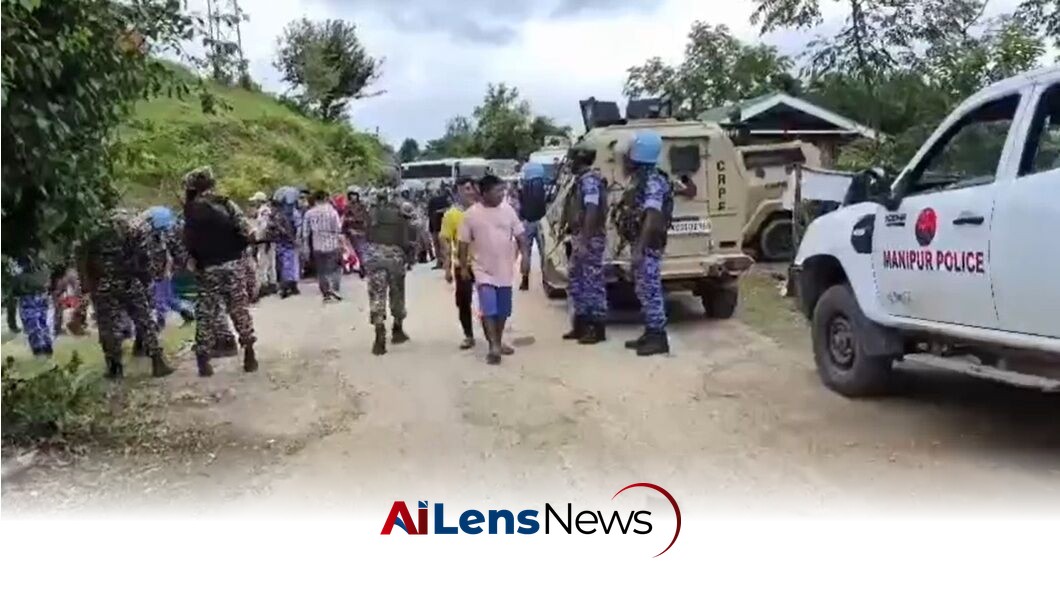


A counter-insurgency operation in Noney district resulted in the death of a local guard and injuries to two CoBRA personnel, prompting widespread condemnation and an emergency shutdown in the area.
Imphal, India Jul 29, 2026 ALN: A 22-year-old individual was reportedly killed and two personnel from the CRPF's elite Commando Battalion for Resolute Action (CoBRA) sustained injuries during a counter-insurgency operation in Noney district on Wednesday. The incident underscores the ongoing tensions and complexities surrounding security operations in northeastern India, particularly in regions where ethnic and armed conflicts are prevalent.
The deceased has been identified as Lanbimei Riamei, the son of Kadirang Riamei from Longmai Bazar in Noney district. He reportedly suffered bullet injuries during the operation and later succumbed to them. The loss of life in such operations often raises significant concerns among local communities, who may view these incidents through the lens of historical grievances and ongoing conflicts in the region.
Police sources identified the injured CoBRA personnel as Head Constable Radheshyam and Constable (GD) Jitendra Kumar, who sustained minor splinter injuries during the exchange of fire. Both were evacuated for medical treatment and are reported to be in stable condition. The injuries sustained by security forces during such operations highlight the risks involved in counter-insurgency efforts, where armed confrontations can lead to casualties on both sides.
Three other alleged Naga village guards were also reportedly injured, though their identities had not been officially confirmed at the time of this report. The involvement of local guards in such confrontations indicates the complex dynamics between state forces and community defense groups, which have emerged as a response to historical marginalization and insecurity in the region.
According to official and police sources, the operation was launched in the early hours in Biting village under the Tupul subdivision following specific intelligence inputs regarding the alleged presence of a training camp of Naga Village Guards (NVG), a local armed village defense group. The NVG has been a controversial entity, often viewed as a protectorate force by local communities while simultaneously being targeted by state security forces for their alleged militant affiliations.
A fierce exchange of fire reportedly broke out between the security forces and the alleged village guards during the operation. Such encounters are not uncommon in the region, where armed groups operate within a fraught landscape of ethnic identity and political aspirations. The intensity of the conflict has led to a cycle of violence that affects both security personnel and local populations.
Search, combing, and area domination operations continued throughout the day, while additional reinforcements were dispatched to strengthen the security cordon. The presence of additional forces is a common tactic employed by security agencies to assert control over areas perceived as hotbeds of insurgency, but it may also exacerbate tensions with local residents who may view these reinforcements as an occupation.
Meanwhile, the Working Committee of the Joint Tribes Council (WC-JTCM), representing the Inpui, Liangmai, Rongmei, and Zeme communities, strongly condemned the operation. The council's condemnation reflects the broader sentiment among certain ethnic groups in the region who often feel targeted by state actions. In a statement, the organization alleged that CoBRA personnel acted in collusion with members of ZUF-J during the operation. It further claimed that the security forces targeted Naga Village Guards, whom it described as local community defense volunteers. The allegations made by the WC-JTCM could not be independently verified, and there was no immediate response from the security forces or the government, leaving room for speculation and further unrest.
Following the incident, the organization announced an immediate emergency shutdown across areas inhabited by the Inpui, Liangmai, Rongmei, and Zeme communities. This shutdown affects National Highways, railway construction works, and other Central government projects passing through these areas. Such shutdowns are often employed as a form of protest and can significantly disrupt daily life and economic activities in the region, highlighting the interconnectedness of security issues and the socio-economic fabric of local communities.
However, essential services, including healthcare, educational institutions, electricity, telecommunications, and Public Health Engineering Department (PHED) services, have been exempted. This exemption is crucial as it attempts to mitigate the impact of the shutdown on the civilian population, who may already be facing challenges due to ongoing conflicts.
The organization stated that the shutdown would continue until the Government of India takes what it termed "decisive and meaningful action" regarding the incident. This demand reflects the deep-seated frustrations among local communities regarding the perceived lack of accountability and dialogue from the authorities in addressing their concerns.
The operation comes amid intensified intelligence-based security operations across the hill districts following recent incidents of violence and heightened security concerns. The context of increased military operations in the region is a response to ongoing insurgency threats, but it also raises questions about the balance between security and human rights, particularly in areas with significant ethnic diversity and historical grievances.
Security forces have increased intelligence-led operations against armed groups in several vulnerable areas, with heavy deployment continuing across parts of the state. The ongoing military presence has implications for local governance, community relations, and the overall stability of the region. Local sources also reported disruptions in mobile communication services in parts of the Biting-Tupul area following the operation, although the reason for the disruption could not be independently verified. Such disruptions can further isolate communities and hinder their ability to communicate during crises.
Officials stated that a detailed assessment of the operation, including recoveries, casualties, and other operational details, would be released after the operation concludes. The lack of immediate transparency can lead to mistrust and speculation among local populations, exacerbating existing tensions.
The operation is still ongoing at the time of this report, with security forces maintaining a heavy presence in and around Biting village. The situation remains fluid, and the implications of this operation will likely resonate within the affected communities for some time, influencing both local perceptions of security forces and the broader discourse on governance and justice in the region.
To learn more about the latest developments in Crime & Law, stay updated with our exclusive reports and analyses on AiLensNews.

