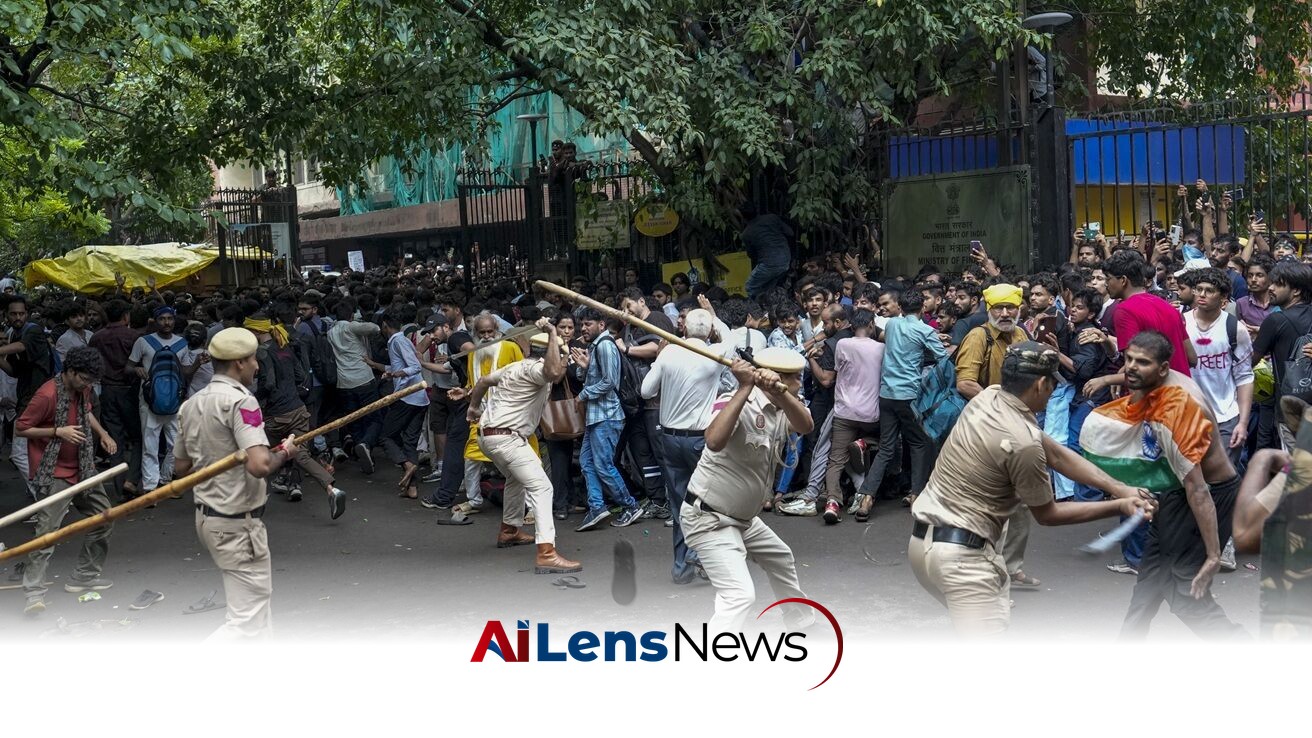


Students recount the chaos and violence they faced during the protest demanding education reforms, returning home with bruises and unanswered questions.
Imphal, India Jul 21, 2026 ALN: The recent protests in New Delhi, particularly the 'Sansad Chalo' march organized by the Cockroach Janta Party (CJP), have become a focal point for discussions on accountability in India's examination system. The event drew a significant number of participants, including a large contingent of Assamese youth, who traveled from their home state or emerged from their educational institutions in the capital. They arrived with placards, slogans, and an earnest desire to voice their grievances regarding the alleged irregularities in the National Eligibility cum Entrance Test (NEET) and other examination processes.
The NEET exam, which is a gateway for students aspiring to enter medical colleges in India, has faced criticism over the years. Allegations of corruption, leakages, and unfair practices have plagued the examination process, causing a sense of disillusionment among students. For many Assamese youth, the march represented not just a protest but a desperate plea for justice and reform in a system they believe has failed them. The stakes are high, as the outcomes of such examinations significantly impact students' futures and career paths.
However, the march, which began with high hopes and a peaceful atmosphere, quickly escalated into chaos. Participants returned with not only physical injuries but also emotional scars from the traumatic experiences they faced during the protest. The atmosphere turned tense when police forces intervened to prevent thousands of protesters from advancing towards the Parliament, leading to a violent confrontation. This clash has raised serious questions about the right to peaceful assembly and the responsibilities of law enforcement in managing public protests.
Reports indicate that the peaceful demonstration was met with baton charges, tear gas, and a significant police presence aimed at dispersing the crowd. Eyewitness accounts from the Assamese youth reveal a scene of panic and confusion, with many participants expressing shock at the level of violence they encountered. One anonymous student recounted, "I'm speechless. I saw people bleeding, being carried away. There was a stampede in my section of the march after the police started hitting people with lathis and threatening us with tear gas." This sentiment was echoed by others who described the chaos as overwhelming and frightening. The use of force by police has sparked outrage among many, who argue that such responses are disproportionate to the nature of the protest, which was largely peaceful until the intervention.
Amiya Sinha, another protester who traveled from Assam, reflected on his experience, stating, "I got hit on my bones, but I'm still lucky because they only hit me, and I managed to get out before things got worse." His observations included witnessing a woman with a toddler being pushed against a barricade, highlighting the indiscriminate nature of the police response during the protest. The collective trauma of these experiences has left many participants grappling with the aftermath of the march. Such incidents not only affect individuals physically but can also have long-lasting psychological impacts, particularly on young people who are still forming their views about civic engagement and governance.
As the situation escalated, participants found themselves trapped, with police allegedly firing tear gas shells and blocking escape routes. One protester described the scene: "We knew this was coming, but I wasn't prepared for what I actually experienced. They fired tear gas shells into the crowd and blocked off all the exits. We were running around trying to escape, but there was nowhere to go." This description paints a vivid picture of the desperation felt by many, especially younger protesters who were caught up in the chaos. The physical and emotional toll of such confrontations can deter future participation in protests, raising concerns about the state of democratic engagement in the country.
Despite the violence, the motivation behind the protest remained rooted in a desire for reform. For many of the Assamese youth, the journey to Delhi was not politically motivated but rather a collective stand for the future of their peers and the integrity of the education system. They were unified by a common goal: to demand accountability from the government and to address the alleged failures that have impacted students' futures. This unity among the youth reflects a growing awareness and activism among students across India, who are increasingly willing to challenge the status quo in pursuit of their rights and aspirations.
The accounts shared by these participants starkly contrast with the official narrative provided by the Delhi Police. Authorities reported that approximately 60 protesters sustained injuries during the clashes, while also claiming that over 118 police personnel were injured during the altercation. The police maintained that they acted in accordance with the law, stating that around 70 protesters were detained after they allegedly attempted to march towards Parliament despite prohibitory orders in place. This divergence in narratives underscores the complexities surrounding the event and raises questions about the use of force by law enforcement in such situations. The gap between the experiences of protesters and the accounts of police officials highlights the need for independent investigations into the events of that day to ensure accountability and transparency.
The aftermath of the protest has ignited a political and legal debate. The CJP has accused the Delhi Police of excessive force, a claim that the police have denied. The Delhi High Court's decision to decline an urgent hearing on a petition concerning the alleged misuse of force indicates the legal ramifications that may follow. Multiple First Information Reports (FIRs) have been registered by the police in connection with the violence, further complicating the scenario. The legal proceedings that may arise from this situation could have lasting implications for the rights of protesters and the responsibilities of law enforcement in India.
For the Assamese youth who participated in the march, the physical and emotional toll of the event may linger long after the headlines fade. They returned home with more than just bruises; they carried with them a sense of urgency and determination to seek accountability and reform in the education system. The experiences shared by these individuals highlight the broader implications of the protest, not just for those directly involved but for the future of student activism in India. The protest has the potential to galvanize further movements, as students across the country reflect on their own experiences with systemic issues in education and governance.
Despite the trauma and chaos, the resolve of the participants remains strong. They believe that their voices must continue to be heard and that sustained public pressure is essential for enacting meaningful change. As they reflect on their experiences, many express hope that the sacrifices made during the protest will lead to significant reforms in the examination system and greater accountability from those in power. This determination illustrates the resilience of youth in the face of adversity and their commitment to advocating for their rights and the integrity of the education system.
The 'Sansad Chalo' protest serves as a reminder of the challenges faced by students in India, particularly in the context of an education system that many feel is marred by corruption and irregularities. The events of that day may have left deep scars, but they also ignited a renewed commitment among the youth to advocate for their rights and the integrity of their futures. The stories of bravery, fear, and resilience shared by these Assamese youth illustrate the power of collective action and the importance of standing up for what one believes in, even in the face of adversity. As the nation grapples with the implications of this protest, it is clear that the voices of these young individuals will play a crucial role in shaping the future of student activism and accountability in India's educational landscape.
To learn more about the latest developments in Crime & Law, stay updated with our exclusive reports and analyses on AiLensNews.

