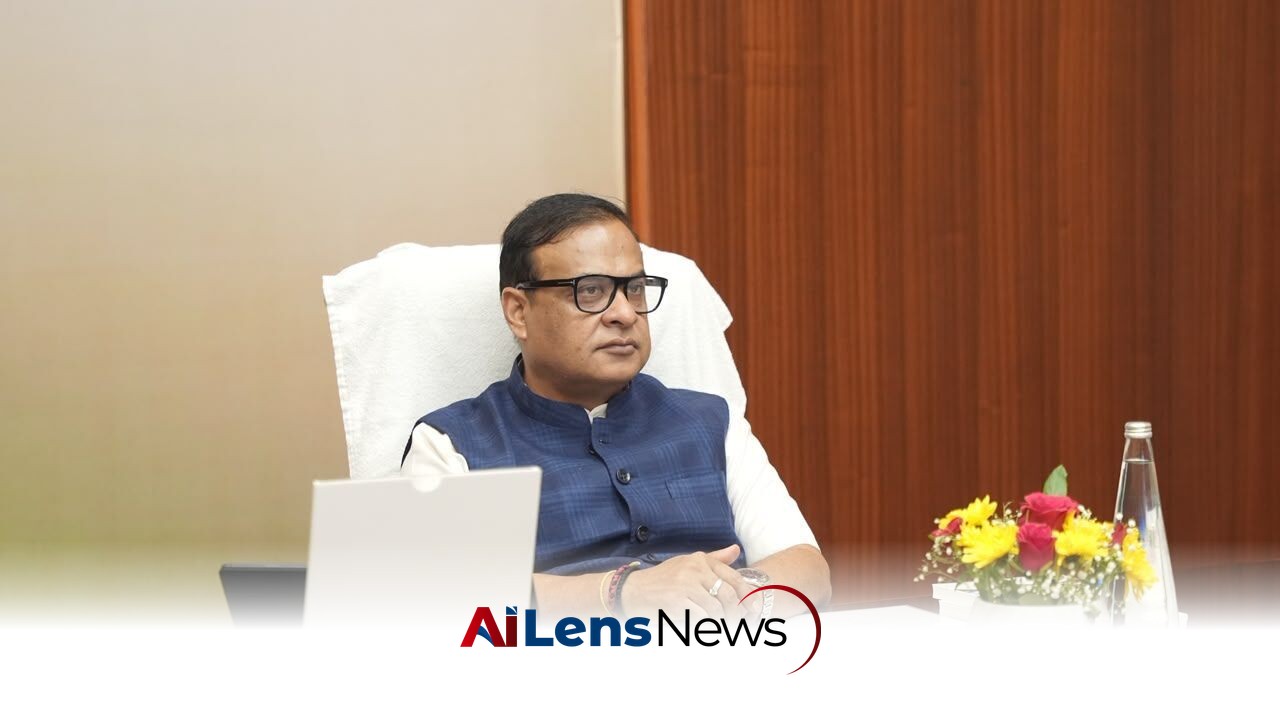


Chief Minister Himanta Biswa Sarma announces plans for 11 small hydropower projects in Assam, aiming for power surplus status and enhanced energy security.
Imphal, India Jul 15, 2026 ALN: With Assam's electricity demand rising steadily due to rapid urbanization, industrialization, and economic growth, Chief Minister Himanta Biswa Sarma announced that the state government will harness even the smallest hydropower potential to strengthen energy security and achieve power-surplus status.
During a general discussion on the Assam Budget 2026-27 in the Assembly, Sarma stated that the government will develop 11 small hydropower projects with a combined generation capacity of 137.2 MW, at an estimated investment of Rs 2,617 crore. This initiative is part of a broader strategy to enhance energy security in a state that has traditionally faced challenges in meeting its electricity demand.
The proposed projects will be located at Karbi Langpi Middle-I, Karbi Langpi Middle-II, Dhansiri, Lungnit, Disaidam, Bordikorai, Amring, Jenum, Klarang, Desang, and Amphi, covering Karbi Anglong, Dima Hasao, and other districts. The selection of these sites reflects an understanding of the geographical advantages that Assam possesses, particularly its abundant water resources and hilly terrain, which are conducive to hydropower generation.
Highlighting the government's evolving approach towards hydropower development, Sarma emphasized that Assam is now prepared to exploit even modest hydropower potential. He remarked, "Almost three years ago, Akhil Gogoi had raised questions on small hydropower projects. Today, we want to undertake such projects wherever there is potential, even if it is only one to four megawatts." This statement underscores a significant shift in policy, indicating a willingness to pursue energy generation options that may have previously been overlooked or deemed unviable.
The Chief Minister indicated that Assam could no longer rely solely on its existing generation capacity, as electricity consumption continues to rise across residential, commercial, and industrial sectors. He stated, "We have committed Rs 77,000 crore for becoming a power-surplus state. Since Independence, and before I became Chief Minister, 14 Chief Ministers served Assam and together the State generated only about 450 MW of power. Today, we are envisioning generation of 8,457 MW." This ambitious target highlights the government's recognition of the urgent need to expand energy production to keep pace with growing demand.
Sarma emphasized that a reliable and adequate power supply is critical for sustaining industrial growth, attracting investments, and supporting the state's broader economic transformation. He added, "Growth will only come when the State has industry, agricultural transformation, solutions to the flood problem, and modernized education." This comprehensive approach indicates that the government is not only focused on energy production but also on creating a conducive environment for overall economic development.
This announcement comes as Assam faces mounting pressure on its power infrastructure, with peak electricity demand increasing sharply in recent years due to expanding urban centers, higher household consumption, and rapid industrial growth. The state has historically struggled with power shortages, and the rising demand has exacerbated these challenges, making it imperative for the government to take decisive action.
To meet future energy requirements, the State Budget has proposed a Rs 77,353-crore investment roadmap spanning hydropower, solar energy, thermal generation, and battery energy storage systems. The plan also includes a proposed 3,200 MW thermal power project at Bilasipara, expansion of renewable energy capacity, and several other hydropower projects across the State. This diversified energy strategy reflects a commitment to not only increase generation capacity but also to embrace sustainable energy practices.
Alongside boosting generation, the government is also upgrading Assam's aging transmission and distribution network. Nearly Rs 4,000 crore is being invested in new substations, transmission corridors, and modern distribution infrastructure to improve grid reliability and reduce outages as electricity demand continues to climb. This investment is crucial for ensuring that the energy produced is effectively delivered to consumers, thereby enhancing the overall efficiency of the power supply chain.
Furthermore, the development of small hydropower projects aligns with global trends towards renewable energy sources. Many countries are increasingly recognizing the importance of utilizing local resources to achieve energy independence and sustainability. By tapping into its hydropower potential, Assam is not only addressing its immediate energy needs but also contributing to broader environmental goals, such as reducing carbon emissions and promoting clean energy.
In addition to the environmental benefits, the construction and operation of these small hydropower projects are expected to create job opportunities in the region. Local communities may benefit from employment in construction, maintenance, and operational roles, thereby contributing to economic development at the grassroots level. This aspect of the projects can play a vital role in improving the livelihoods of residents in the areas where these projects are implemented.
The focus on small hydropower also reflects a growing recognition of the importance of decentralized energy systems. Smaller projects can often be developed more quickly and with lower upfront costs compared to larger installations. This flexibility can be particularly beneficial for regions like Assam, where geographical and infrastructural challenges may hinder the development of large-scale energy projects.
In conclusion, the announcement of the development of 11 small hydropower projects in Assam marks a significant step towards enhancing the state's energy security and addressing the challenges posed by rising electricity demand. By investing in both generation capacity and infrastructure improvements, the Assam government is taking a proactive approach to ensure that its energy needs are met sustainably and efficiently. As the state moves forward with these initiatives, it will be crucial to monitor the implementation of these projects and their impact on both the local economy and the environment. The success of this endeavor may serve as a model for other regions facing similar energy challenges, illustrating the potential of harnessing local resources for sustainable development.
To learn more about the latest developments in Crime & Law, stay updated with our exclusive reports and analyses on AiLensNews.

