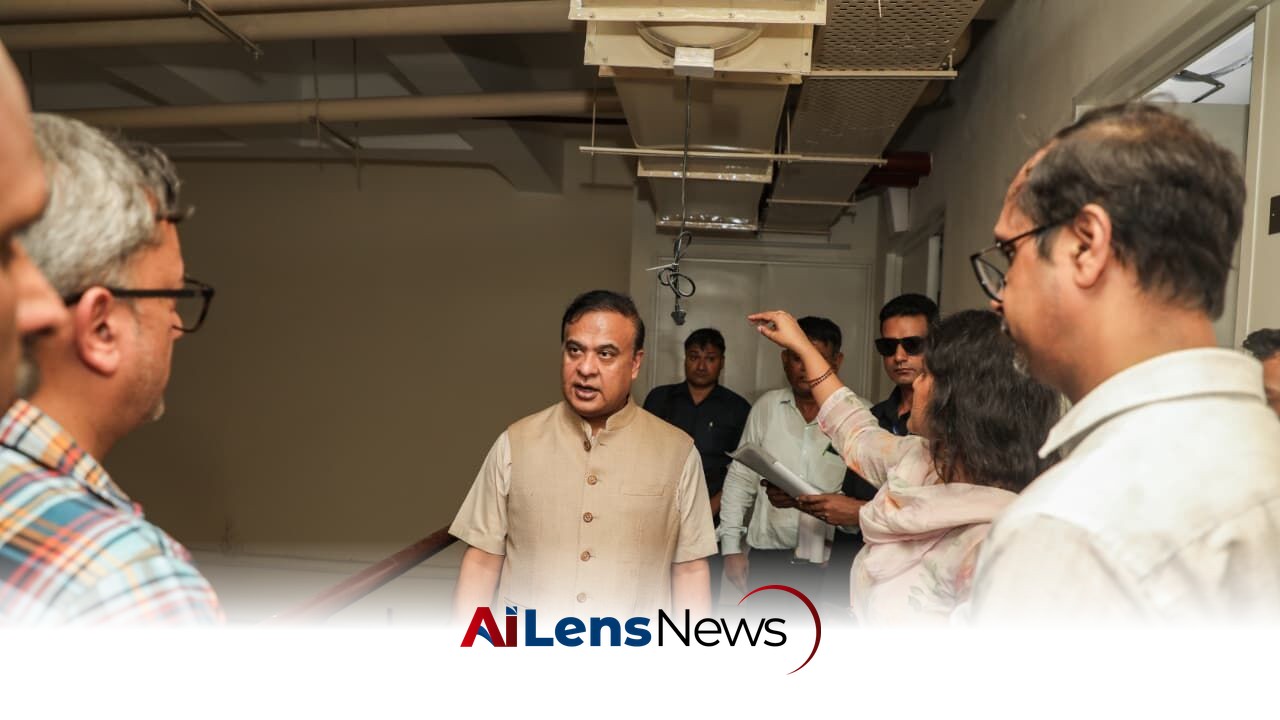


The Assam government is set to enhance its presence in Delhi with new bhawans, hostels, and a cultural center, aiming to improve public accommodation for residents.
Imphal, India Jul 19, 2026 ALN: The Assam government is undertaking a major expansion and upgrade of its residential and support infrastructure across the country's four metropolitan cities, with seven dedicated facilities planned in the national capital.
Chief Minister Himanta Biswa Sarma, addressing the media in New Delhi on Sunday, stated that the state is working to establish seven dedicated facilities in the capital, including new Assam Bhawans, community-specific hostels, and a proposed cultural-cum-convention centre.
Explaining the expansion plan, Sarma noted that New Delhi currently has two government-run facilities, Assam House and Assam Bhawan. While Assam House has already been renovated and rebuilt in recent years, the reconstructed Assam Bhawan is expected to be completed by the end of this year.
"The Assam Bhawan, which was demolished and rebuilt, will be completed by the end of this year. It will house the Resident Commissioner's office, space for Cabinet meetings, and other government-related activities," he said.
Sarma mentioned that shifting official functions to the new Assam Bhawan would free up substantial space at Assam House for public use. This move is part of a broader strategy to enhance the accessibility of state services to the Assamese community residing in or visiting the capital.
The Chief Minister added that a third Assam Bhawan in Dwarka is nearing completion and is expected to be inaugurated around Durga Puja. "We are constructing the third Assam Bhawan in Dwarka, alongside Karbi Bhawan and Dimasa Bhawan. It will have accommodation for around 40 people and will mainly cater to patients from Assam coming to Delhi for long-term treatment," he said.
According to Sarma, the Dwarka facility will include dedicated dormitories for patients, students seeking admission, and others requiring longer stays in the capital. Government officials will not be accommodated there so that the facility remains available primarily for public use. This decision underscores the government's commitment to prioritizing the needs of its citizens over administrative convenience.
"We will also arrange transport connectivity between the Dwarka Assam Bhawan and the main Assam Bhawan," he added, emphasizing the importance of ensuring easy access between these facilities for those who may need to travel for various reasons, including medical appointments or official visits.
The Chief Minister stated that once all the ongoing projects are completed, nearly 200 people from Assam would be able to stay in government-run facilities in New Delhi at any given time. This increase in capacity is expected to significantly alleviate the accommodation challenges faced by Assamese individuals visiting the capital for various purposes.
He also mentioned that the government was exploring the possibility of establishing a separate Barak Bhawan in the national capital. This initiative reflects the state's intention to create a more inclusive environment for all communities within Assam, particularly those from the Barak Valley region.
Beyond residential infrastructure, the Assam government is also planning a major cultural project in Dwarka. The proposed Assam Cultural-cum-Convention Centre and naamghar will be built on land allotted in Sector 17, Dwarka. The state has acquired the land at a cost of around Rs 35 crore. This project is particularly significant as it aims to serve as a cultural hub for the Assamese diaspora in Delhi, allowing for the preservation and promotion of Assamese traditions and values.
"We will try to construct a 100-room accommodation facility where members of the Assam society in Delhi can organise events. We also want to have a naamghar on the top floor," Sarma said. The inclusion of a naamghar, a traditional Assamese prayer hall, highlights the importance of spiritual and cultural practices for the Assamese community, providing them with a dedicated space for worship and community gatherings.
Describing it as the state's fourth major project in the national capital, he said construction is likely to begin in January or February next year and is expected to take two to three years to complete. The timeline for the project aligns with the government's goal of enhancing its presence and services in Delhi, catering to the growing population of Assamese residents and visitors.
The Chief Minister stated that the convention centre would serve as a permanent cultural and community hub for Assamese residents and visitors in New Delhi. This facility is expected to host various cultural events, workshops, and community meetings, fostering a sense of belonging and community among Assamese people living far from their home state.
On accommodation charges, Sarma emphasized that affordability would remain a priority. "Fees are not the major issue; accommodation is. We will fix a base amount, but it will be much lower than hotel rates in New Delhi," he said. This approach is aimed at ensuring that the facilities are accessible to a broader segment of the population, particularly those who may be economically disadvantaged.
Later, in a post on social media, Sarma expressed that Assam was strengthening its presence in Delhi to better serve people from the state. "Assam will soon have seven dedicated spaces in New Delhi for our people visiting the national capital. Alongside the existing Assam House, three new complexes are coming up in Central Delhi and Dwarka, with one featuring a Naamghar and convention hall," he wrote. This statement reflects the government's commitment to enhancing the quality of life for its residents, no matter where they are situated.
Highlighting similar infrastructure projects elsewhere in the country, Sarma mentioned that a new Assam Bhawan in Bangalore is nearing completion and is expected to be inaugurated this year. This expansion in other metropolitan areas signifies a broader trend of state governments investing in infrastructure to support their diaspora and ensure that their cultural heritage is preserved and promoted outside their home states.
He added that a major redevelopment project is also underway on Russell Street in Kolkata, where a six-storey Assam House with 90 rooms is being constructed. These initiatives are part of a comprehensive strategy to bolster the presence of Assam in key urban centers across India, providing essential support and services to the Assamese community, while also promoting the state's culture and heritage on a national platform.
The expansion of Assam's infrastructure in metropolitan cities is not just about providing accommodation; it is also about creating spaces that foster community engagement and cultural exchange. By establishing dedicated facilities, the Assam government aims to ensure that its citizens feel connected to their roots, even when they are far from home. This initiative is expected to have a positive impact on the Assamese community in Delhi and beyond, offering them a sense of belonging and the resources they need to thrive in an urban environment.
In conclusion, the Assam government's expansion plans in New Delhi and other metropolitan areas reflect a proactive approach to addressing the needs of its citizens living away from home. By investing in infrastructure and cultural projects, the state is not only enhancing its presence in key urban centers but also strengthening the bonds of community and culture among Assamese people across the country.
To learn more about the latest developments in Local & Regional, stay updated with our exclusive reports and analyses on AiLensNews.

