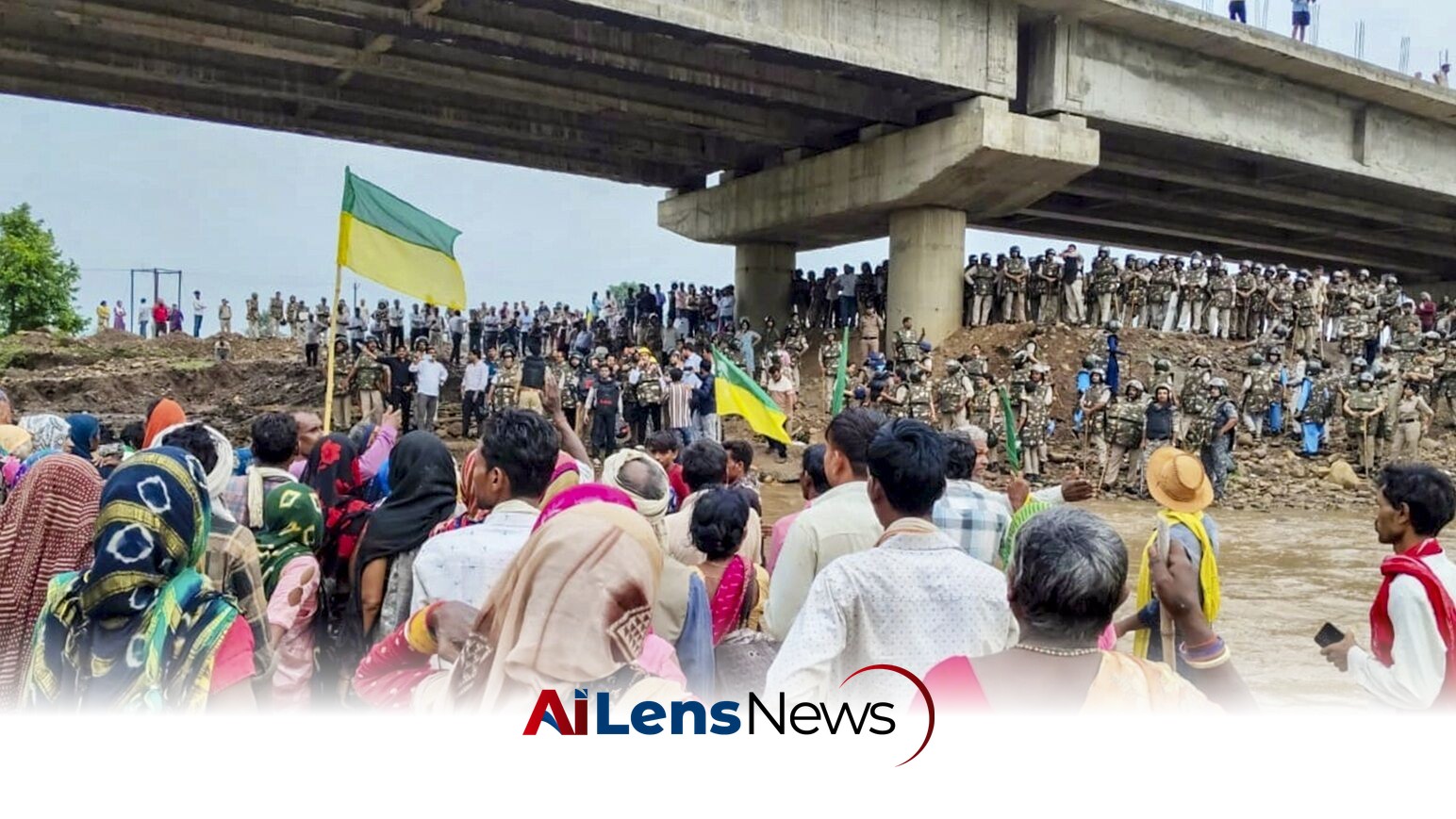


A 15-day protest against the Ken-Betwa Link Project concluded abruptly as police intervened, citing safety concerns due to rising river levels.
Bhopal, India Jul 19, 2026 ALN: Chhatarpur (MP), Jul 19: A 15-day protest against the Ken-Betwa Link Project and other development works in Madhya Pradesh's Chhatarpur district ended on Sunday after police cleared the agitation site and transported protesters back to their villages.
Additional Superintendent of Police Aditya Patle informed that protesters were taken by bus to their native villages. Those from Panna district were sent back there, while protesters from Chhatarpur and nearby areas were dropped at their respective villages.
A police official stated that the protest site, located beneath an under-construction bridge and in the Barana river, had become unsafe due to rising water levels, necessitating the evacuation.
The protest had begun on July 3 on the banks of the Barana river near Kupi village, opposing the Ken-Betwa river-linking project and other works. It was led by activist Amit Bhatnagar, who had been on an indefinite fast for 11 days. While some protesters alleged that Bhatnagar had been detained, the police denied making any arrests.
Protest leader Divya Ahirwar alleged that police personnel reached the site in large numbers at around 5 am on Sunday and detained Bhatnagar and several other protesters before he could address the media on what she described as an alleged Rs 400-crore corruption in the project.
Ahirwar stated that the protesters had been demanding that the administration implement the project in accordance with the law and uphold the constitutional rights of affected people. She also claimed the administration would be responsible if any harm comes to Bhatnagar or any of the protesters, and appealed to the public to raise their voice against the alleged corruption.
The police official mentioned that Bhatnagar had been admitted to the hospital after his health deteriorated during the prolonged hunger strike.
The agitation, led primarily by tribal women, also featured 'jal satyagraha', 'chita (funeral pyre) satyagraha' and a symbolic 'faansi satyagraha'.
The Ken-Betwa Link Project, the country's first river interlinking initiative under the National Perspective Plan, aims to transfer surplus water from the Ken river to the Betwa to provide irrigation and drinking water to the drought-prone Bundelkhand region spanning Madhya Pradesh and Uttar Pradesh. This ambitious project is part of a broader governmental strategy to tackle water scarcity in India, particularly in areas that experience chronic drought conditions.
The agitation had drawn national attention over the past fortnight, with protesters alleging irregularities in land acquisition, rehabilitation, environmental safeguards, and project implementation. These claims underscore the tensions that often arise in large-scale development projects, where the interests of local communities may clash with those of the state or corporate entities involved in the project.
The administration has rejected the allegations, maintaining that the project is being implemented in accordance with the law and is of national importance, with the potential to improve irrigation, drinking water supply, and overall development in the Bundelkhand region. This stance reflects a common governmental narrative that prioritizes developmental goals over local dissent, often leading to protests such as the one witnessed in Chhatarpur.
The Ken-Betwa Link Project is a significant component of India's broader water management strategy, which seeks to address the challenges posed by water scarcity in various regions across the country. Bundelkhand, an area known for its recurrent droughts and water shortages, has been the focus of various government initiatives aimed at improving water availability for agriculture and drinking purposes. However, the project has faced criticism from local communities and environmental activists who argue that it could lead to adverse impacts on the ecosystem and displace local populations.
The concerns raised during the protest highlight a growing tension between developmental projects and the rights of indigenous communities, particularly in regions where land and water resources are already under pressure. The voices of these communities often go unheard in the planning stages of such projects, leading to feelings of disenfranchisement and resentment.
Protests such as the one in Chhatarpur reflect a broader pattern of resistance against large-scale development projects across India, where local populations often feel marginalized in the decision-making processes that affect their lives and livelihoods. The Ken-Betwa Link Project is no exception, as it not only involves the transfer of water but also raises questions about the sustainability of such initiatives in the face of climate change and environmental degradation.
In recent years, the Indian government has emphasized the importance of infrastructure development and water resource management as part of its economic growth agenda. However, this has sometimes led to conflicts with local communities, who may not see the benefits of such projects or who may be adversely affected by them. The recent protest in Madhya Pradesh underscores the need for a more inclusive approach to development that takes into account the voices and rights of all stakeholders, particularly those who are most vulnerable.
The implications of the Chhatarpur protest extend beyond the immediate context of the Ken-Betwa Link Project. It serves as a reminder of the need for transparency and accountability in development initiatives, particularly in regions where the socio-economic conditions are precarious. The outcomes of such protests can influence future governmental policies and community engagement strategies, shaping the landscape of development in India.
As the situation develops, it remains to be seen how the government will address the concerns raised by the protesters and whether further negotiations will take place to ensure that the rights of local communities are respected. The outcome of this protest could have significant implications for future projects in the region, as well as for the broader discourse on development and environmental sustainability in India.
In conclusion, the end of the 15-day protest against the Ken-Betwa Link Project marks a pivotal moment in the ongoing struggle for water rights and environmental justice in Madhya Pradesh. The actions taken by local activists and the response from law enforcement highlight the complexities involved in balancing developmental goals with the rights of affected communities. As India continues to grapple with water scarcity and environmental challenges, the lessons learned from this protest could inform future policies and practices aimed at achieving sustainable development in the region. The need for a balanced approach that respects both developmental imperatives and the rights of local populations is more critical than ever, as the country navigates its path towards a sustainable and equitable future.
To learn more about the latest developments in Local & Regional, stay updated with our exclusive reports and analyses on AiLensNews.

