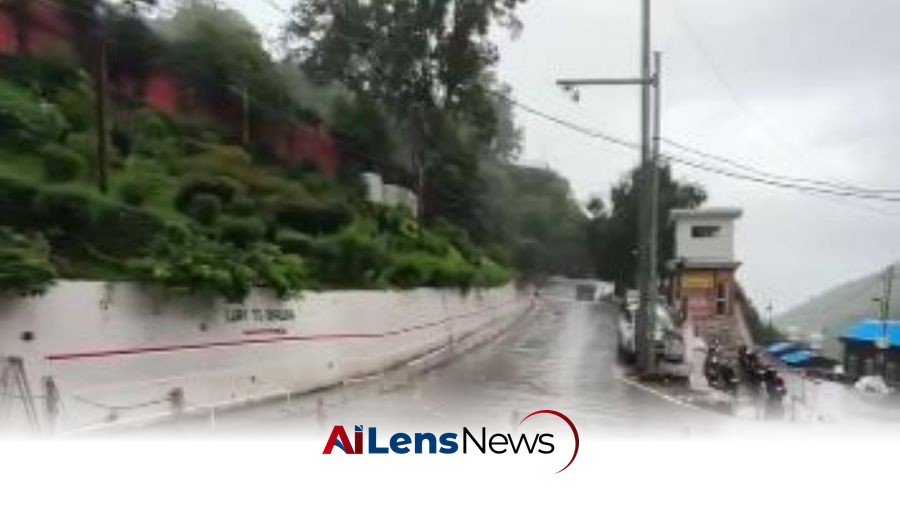


The Shri Mata Vaishno Devi pilgrimage has been suspended for the fourth consecutive day amid heavy rainfall and adverse weather conditions, affecting pilgrim movement.
Leh, India Jul 22, 2026 ALN: Katra, the base camp of the revered Shri Mata Vaishno Devi pilgrimage, wears a deserted look as the Yatra remained suspended for the fourth consecutive day due to prevailing adverse weather conditions in the region. The Vaishno Devi shrine, located in the Trikuta Mountains of Jammu and Kashmir, is one of the most visited religious sites in India, attracting millions of pilgrims each year. The suspension of the Yatra, which is a significant event for both devotees and local businesses, underscores the impact of weather on pilgrimage activities.
The pilgrimage has remained suspended as a precautionary measure amid inclement weather, affecting the movement of devotees towards the holy cave shrine. This decision was made in light of safety concerns, as the region is prone to landslides and other weather-related hazards during heavy rainfall. The suspension has resulted in a significant decline in pilgrim movement across Katra, which otherwise remains bustling with devotees throughout the day. Local shopkeepers and service providers who rely on the influx of pilgrims for their livelihoods are particularly affected during this period of inactivity.
Pilgrims have been advised to remain updated with official advisories and avoid proceeding towards the Yatra routes until the pilgrimage is formally resumed. Authorities have emphasized the importance of adhering to safety guidelines and staying informed through official channels, given the unpredictable nature of weather in the region. This is particularly pertinent as the monsoon season often brings heavy rains, leading to hazardous conditions in mountainous areas.
The Shri Mata Vaishno Devi Yatra is expected to resume once weather conditions improve. The shrine's management and local authorities are closely monitoring the situation, and they are prepared to act swiftly to ensure the safety of pilgrims when conditions allow. Historically, the Yatra has faced interruptions due to weather, but the shrine's management has always prioritized the safety of devotees, often leading to timely communication regarding any changes in pilgrimage status.
Meanwhile, traffic on the Jammu-Srinagar National Highway (NH44) has been suspended due to heavy and incessant rainfall, triggering mudslides and shooting stones at multiple locations along the highway. This vital road connects the Kashmir Valley with the rest of India and is crucial for the movement of goods and people. The suspension of traffic not only affects pilgrims but also disrupts the supply chain and daily commuting for local residents. Authorities have been working to clear the debris and ensure the road can be safely reopened, but the ongoing weather conditions have complicated these efforts.
No vehicles are being allowed to proceed from either Qazigund in Kashmir or Udhampur towards Ramban amid the adverse weather conditions. This precautionary measure is aimed at preventing accidents and ensuring the safety of travelers. The Jammu and Kashmir administration has deployed teams to monitor the situation and assist those affected by the road closures, providing necessary support and information to stranded travelers.
The region has been witnessing rainfall for the past two days, with heavy rainfall also lashing Bhalesa in Jammu and Kashmir's Doda district. The persistent rain has caused rivers, streams, and drains to swell, leading to concerns about flooding and waterlogging in low-lying areas. Damage to houses, crops, and agricultural land has been reported, raising alarms about the potential economic impact on local farmers and residents who depend on agriculture for their livelihoods.
Amid flash floods, cloudbursts, and landslides, the administrations of Doda and Kishtwar have urged people to avoid high-altitude, landslide-prone, and riverbank areas until weather conditions improve. These warnings are crucial as the region's topography makes it particularly susceptible to natural disasters during the monsoon season. Local authorities have been proactive in disseminating information and ensuring that communities are aware of the risks associated with the current weather patterns.
Meanwhile, thick fog enveloped the mountains of Ramban following heavy rainfall across the region, causing a noticeable drop in temperature. The continuous rain has transformed the surrounding hills into mist-covered vistas, while low-hanging clouds and dense fog reduced visibility in several areas, further complicating travel and rescue operations. The picturesque landscapes, while beautiful, pose challenges for both residents and authorities trying to navigate the conditions safely.
The continuous rainfall in Reasi and upper catchment areas has triggered a surge in water inflow into the Salal reservoir, prompting authorities to open all gates of the dam to regulate the rising water level. This is a critical measure to prevent overflow and potential flooding downstream. Water management during the monsoon is a significant aspect of governance in the region, as authorities must balance the need for water storage with the risks of excessive rainfall and runoff.
As the situation develops, local government agencies and disaster management teams remain on high alert, ready to respond to any emergencies that may arise due to the adverse weather. The community's resilience and preparedness will be tested as they navigate the challenges posed by the monsoon season. The hope is that conditions will improve soon, allowing the Yatra to resume and bringing back the vibrancy of pilgrimage activity to Katra, which is not only a spiritual journey for many but also a vital economic lifeline for the region.
The Vaishno Devi pilgrimage holds immense cultural and spiritual significance for millions of Hindus. The journey to the shrine is often seen as a rite of passage, with many devotees undertaking the trek as a demonstration of faith and devotion. The shrine, dedicated to Goddess Vaishno Devi, is believed to fulfill the wishes of those who visit, which adds to its allure and the number of devotees it attracts annually. However, the reliance on pilgrimage for local economies means that interruptions due to weather can have far-reaching consequences.
In addition to the economic implications, the suspension of the Yatra also affects social interactions among communities. The pilgrimage season is a time when families and friends come together, and the absence of this communal aspect can lead to feelings of isolation among those who look forward to these gatherings. The local economy thrives on the interactions between pilgrims and the residents of Katra, as shops, hotels, and transport services cater to the needs of visitors.
As authorities work diligently to restore normalcy, the importance of disaster preparedness and response strategies becomes evident. The region's vulnerability to natural disasters necessitates a coordinated effort among government agencies, local organizations, and the community to enhance resilience against future weather events. This includes improving infrastructure, such as better drainage systems and road maintenance, to mitigate the impacts of heavy rainfall and landslides.
In conclusion, while the suspension of the Vaishno Devi Yatra due to adverse weather conditions is a significant setback for both pilgrims and the local economy, it also highlights the need for ongoing efforts to prepare for and respond to the challenges posed by the monsoon season. With the hope that conditions will improve soon, the community remains vigilant and resilient, ready to adapt to the ever-changing weather patterns that characterize this beautiful yet challenging region.
To learn more about the latest developments in Crime & Law, stay updated with our exclusive reports and analyses on AiLensNews.

