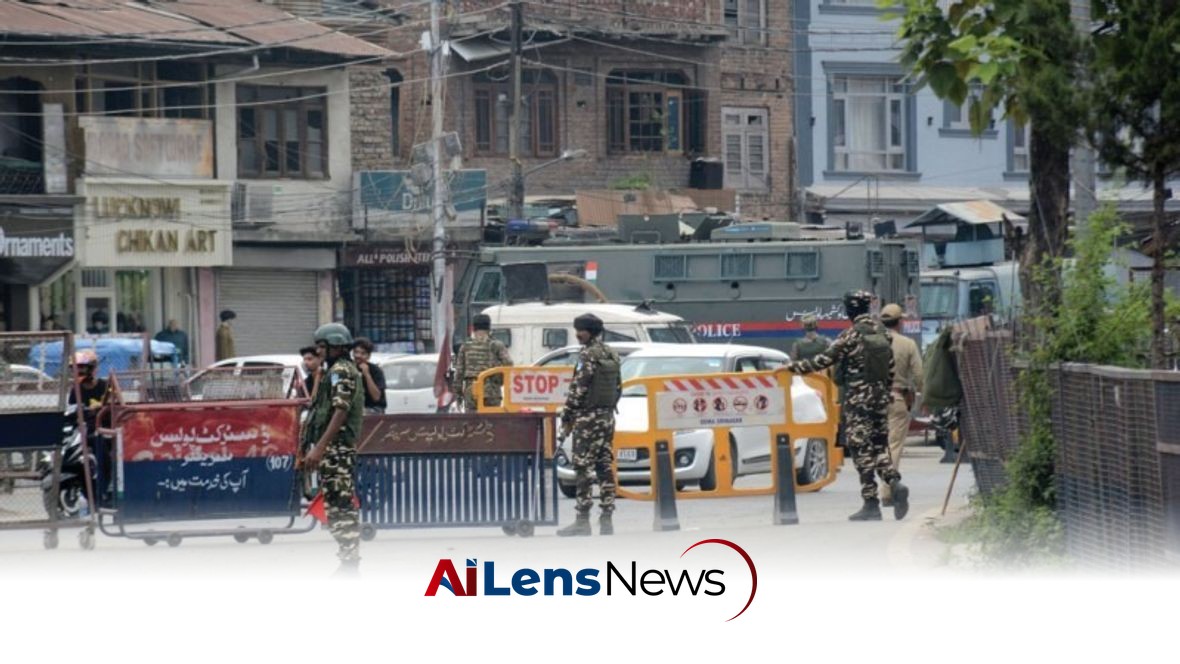


Srinagar continues to impose restrictions for the second day to prevent gatherings at the Martyrs' graveyard in Naqshband Sahib (RA) area, following the commemoration of July 13.
Leh, India Jul 15, 2026 ALN: Restrictions persisted for the second day on Tuesday in parts of Srinagar to prevent people from assembling at the 'Martyrs' graveyard in Naqshband Sahib (RA) area of the city, officials said.
The restrictions continued in old parts of the city, including Nowhatta and Naqshband Sahib (RA) areas, as a precautionary measure, the officials stated. The enforcement of these restrictions is a part of a broader strategy employed by the authorities to maintain public order during sensitive commemorative events. The authorities have often implemented similar measures during significant anniversaries or events that could potentially spark unrest, reflecting a long-standing approach to managing public gatherings in a region marked by political tension.
Police and paramilitary forces have been deployed in strength in the area to maintain law and order. The presence of these security forces is often heightened during such commemorative occasions, reflecting the tense political climate in the region. The deployment aims to deter any potential unrest or gatherings that could lead to violence, a concern that has been prevalent in the region for decades. This heightened security presence is indicative of the authorities' strategy to preemptively address any signs of dissent, which is often rooted in the historical context of the region's political struggles.
On Monday, the Naqshband Sahib (RA) area was completely sealed off by the security forces to prevent any assembly to commemorate July 13 as Martyrs' Day. This day is marked to honor those who lost their lives in the struggle for political rights and justice in Jammu and Kashmir. Chief Minister Omar Abdullah, other National Conference (NC) leaders, and Peoples Democratic Party (PDP) president Mehbooba Mufti claimed they were not allowed to visit the graveyard to pay their tributes. Later, they paid tributes at their respective party headquarters, highlighting the political significance of the day and the ongoing struggle for representation and rights in the region. The inability of political leaders to commemorate this day publicly underscores the contentious relationship between the local government and the central authorities, as well as the sensitivities surrounding political expression in Jammu and Kashmir.
Historically, July 13, 1931, marks a pivotal moment in the political history of Jammu and Kashmir. On this day, 22 individuals were gunned down by the Dogra army outside Srinagar's central jail during a protest against the oppressive rule of the Maharaja. This incident is often viewed as a catalyst for the political awakening and the subsequent demand for self-determination in the region. The memory of these martyrs has been a rallying point for various political movements in Jammu and Kashmir, symbolizing resistance against oppression and the quest for justice. The commemoration of this day has evolved over the decades, becoming a significant symbol of the struggle for political rights and a means of mobilizing public sentiment towards the ongoing quest for autonomy and recognition of rights.
In recent years, the significance of Martyrs' Day has been complicated by the changing political landscape in Jammu and Kashmir. In 2020, the administration dropped the day from the list of gazetted holidays, which was met with criticism from various political parties and civil society groups. This decision was perceived as an attempt to downplay the historical significance of the day and the sacrifices made by individuals in the pursuit of political rights. The removal of the holiday has sparked debates about the memory and acknowledgment of historical injustices in the region. Critics argue that this decision reflects a broader trend of marginalizing the historical narratives that are pivotal to the identity and political consciousness of the Kashmiri people.
The ongoing restrictions and the heavy presence of security forces during Martyrs' Day reflect the sensitive nature of commemorating historical events in Jammu and Kashmir. The region has experienced decades of conflict, and the memory of past violence continues to shape contemporary political discourse. Commemorative events such as Martyrs' Day are often seen as opportunities for political expression, and the authorities' efforts to prevent gatherings can be interpreted as a means of stifling dissent. This suppression of public commemoration raises questions about the balance between maintaining public order and allowing citizens the freedom to express their collective memory and identity.
The implications of these restrictions extend beyond the immediate context of Martyrs' Day. They highlight the broader challenges faced by the people of Jammu and Kashmir in expressing their political identity and commemorating their history. The tension between the state and the populace regarding the acknowledgment of historical events often leads to a cycle of unrest and repression, complicating efforts toward reconciliation and peace. The repeated enforcement of such restrictions can exacerbate feelings of alienation among the local population, leading to a growing discontent that may manifest in various forms of resistance.
In the wake of the restrictions, there have been calls from various political leaders and civil rights activists to reassess the approach taken by the authorities in handling commemorative events. Many argue that open dialogue and acknowledgment of historical grievances are essential for fostering a sense of trust and healing in the region. The ability to commemorate significant historical events is seen as a fundamental aspect of political expression, and efforts to suppress such gatherings can exacerbate feelings of alienation among the population. This sentiment is echoed by numerous voices within civil society, who advocate for a more inclusive approach to historical narratives that honors the sacrifices made in the past while also paving the way for a more harmonious future.
As Jammu and Kashmir continues to navigate its complex political landscape, the memory of Martyrs' Day serves as a reminder of the region's tumultuous history and the ongoing struggles for justice and representation. The events surrounding this day illustrate the delicate balance between maintaining public order and respecting the rights of individuals to commemorate their history. Moving forward, it remains crucial for all stakeholders to engage in constructive dialogue that acknowledges the past while working towards a more inclusive and peaceful future. The challenge lies in reconciling the diverse narratives that exist within the region and fostering an environment where all voices can be heard and respected, ultimately contributing to a more stable and just society.
To learn more about the latest developments in Crime & Law, stay updated with our exclusive reports and analyses on AiLensNews.

