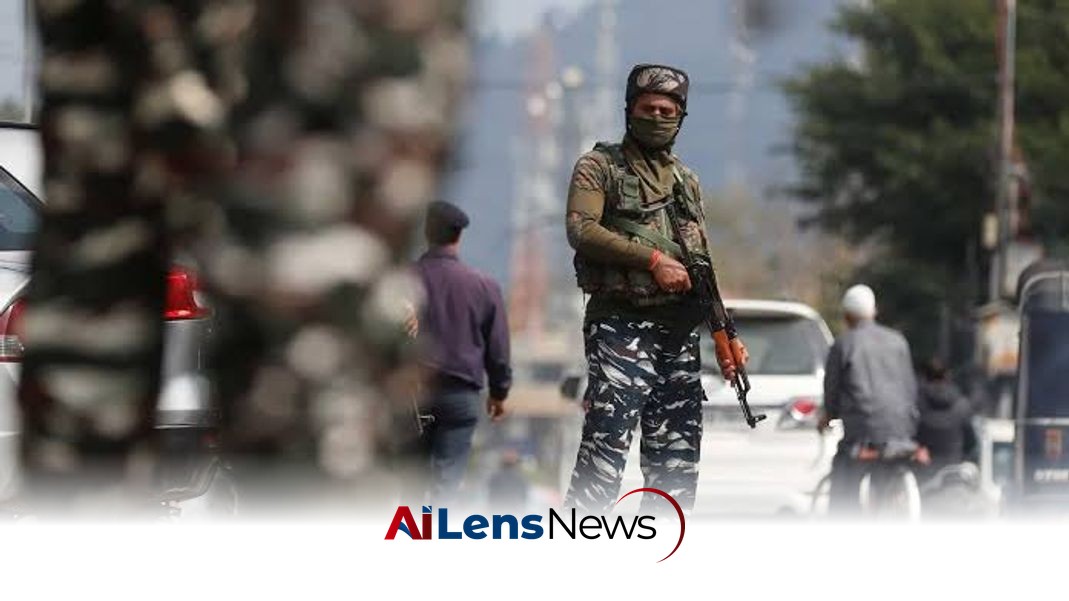


In response to the targeted killing of a police constable in Anantnag, security forces have ramped up counter-terrorism operations across Kashmir, detaining over 3,500 suspects.
Leh, India Jul 24, 2026 ALN: Security forces on Thursday intensified counter-terrorism operations across Kashmir, a day after a police constable was killed in a targeted terrorist attack in Anantnag. This incident has heightened tensions in the region, which has long been a hotspot for militant activity and conflict between various groups, including separatists and the Indian state.
The killing of police constable Ashiq Hussain Qureshi, who was shot dead by terrorists in the Lal Chowk area of Anantnag, has prompted a significant response from security forces. Qureshi was deployed for security duties related to the ongoing Amarnath Yatra, an annual pilgrimage that attracts thousands of devotees to the Amarnath Cave shrine in the Himalayas. The pilgrimage is often seen as a barometer of peace and stability in the region, and any attacks on security personnel during this period are particularly alarming.
In response to the attack, security has been markedly strengthened across the Valley. Special checkpoints and vehicle checking points have been established at several locations to maintain a strict vigil. These measures are part of broader efforts to enhance security during the Amarnath Yatra, which is not only a religious event but also a significant economic activity for the local population.
As part of the operations, the houses of two alleged active Lashkar-e-Taiba (LeT) terrorists were demolished in separate actions in south Kashmir's Anantnag district during the intervening night of Wednesday and Thursday. The demolition of these houses is a controversial tactic used by security forces, aimed at disrupting militant infrastructure and support networks. Critics argue that such actions may further alienate local populations and exacerbate tensions, while supporters claim they are necessary to deter militant activities.
According to reports, the residence of Aadil Ahmad Thokar, a resident of Guri village, was demolished during the operation. In a separate action, the house of Haroon Rashid Ganai of Hassanpora Tawella in Bijbehara was also brought down. The targeting of these properties is part of a larger strategy to dismantle the support systems that enable militant groups to operate within the region.
Following the attack on Qureshi, security agencies expanded search operations across several districts of Jammu and Kashmir. Officials stated that thousands of suspected overground workers and other persons are being questioned as part of the investigation to identify any support network linked to militant activities. These search operations are critical in gathering intelligence and preventing further attacks, but they also raise concerns about civil liberties and the potential for wrongful detentions.
Meanwhile, security arrangements across Kashmir have been further strengthened. Special nakas have been established at important road junctions, entry and exit points, and other sensitive locations across the Valley. Security personnel are conducting round-the-clock checks of vehicles and verifying the identity of commuters to prevent any untoward incidents. This rigorous approach aims to create a sense of security among residents and pilgrims alike, but it can also lead to increased frustration and resentment among the local population.
Additional deployments have been made along the Amarnath Yatra route to ensure the safety of pilgrims. Given the historical context of attacks during this period, security forces are on high alert. Senior security officials have stated that the situation is being closely monitored and that all necessary measures have been put in place to maintain law and order and ensure public safety.
In the wake of the intensified operations, reports indicate that more than 3,500 persons have been detained across the Valley. Police have intensified search operations to track down the assailant responsible for the killing of the police official in Anantnag. A senior police official confirmed that the anti-terror operations are in full swing, with a focus on detaining suspects for questioning following the terror attack.
Mobile vehicle checkpoints have been established at various locations to prevent the assailant and his accomplices from escaping. This proactive approach aims to disrupt any potential escape routes and gather intelligence on the networks that may be facilitating such attacks.
Additional police and paramilitary forces have been deployed in Anantnag and adjoining areas as cordon and search operations have intensified across the district. These operations are often met with mixed reactions from the local populace, with some supporting the need for increased security and others expressing concerns over heavy-handed tactics.
Lt Governor Manoj Sinha has directed officials to intensify anti-terror operations to neutralize emerging security threats in the Union Territory. Sinha's directive comes amid ongoing concerns about the resurgence of militant activities in the region, particularly in light of the recent attack on a police officer.
During a security review meeting with senior officials from the Army, Jammu and Kashmir Police, civil administration, Central Armed Police Forces, and key security agencies, Sinha emphasized the need for heightened vigilance. The meeting aimed to assess the current security landscape and strategize on effective measures to counteract potential threats.
The official spokesperson noted that the Lt Governor directed officials to remain highly vigilant, step up intelligence-led anti-terror operations, and proactively neutralize emerging security threats. The meeting was attended by General Officer Commanding-in-Chief, Northern Command, Lt General Pratik Sharma, Chief Secretary Atal Dulloo, Director General of Police Nalin Prabhat, and officials of the Shri Amarnathji Shrine Board.
The implications of these intensified operations extend beyond immediate security concerns. They reflect the ongoing struggle between state forces and militant groups in Kashmir, a region with a complex history of conflict and resistance. The situation remains fluid, and the actions taken by security forces will likely shape the dynamics of local politics, public sentiment, and the broader narrative surrounding Kashmir both domestically and internationally.
As the situation develops, the balance between maintaining security and respecting the rights of local populations will be a critical challenge for authorities in Kashmir. The outcomes of these operations could have lasting effects on the region's stability, the safety of its residents, and the broader peace process in the context of India-Pakistan relations.
To learn more about the latest developments in Crime & Law, stay updated with our exclusive reports and analyses on AiLensNews.

