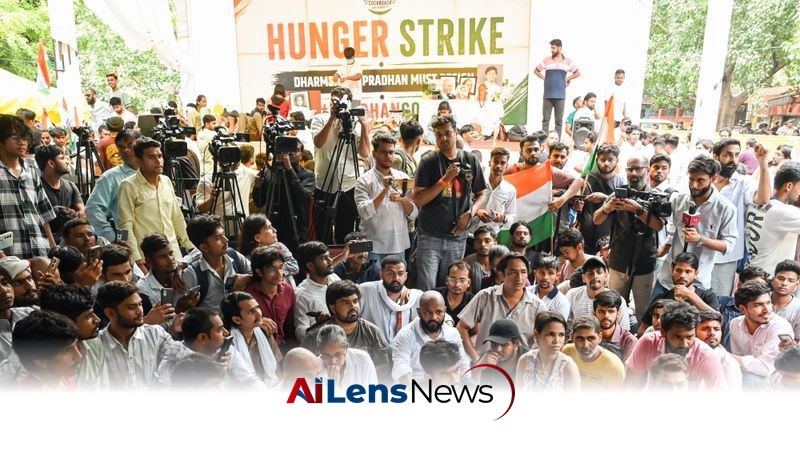


A significant crowd gathered at Jantar Mantar, with activist Anna Hazare urging the government to engage in discussions after Sonam Wangchuk's removal.
Leh, India Jul 19, 2026 ALN: A large crowd has assembled at Jantar Mantar, New Delhi, in response to the recent removal of social activist Sonam Wangchuk. The gathering has drawn attention from various sectors of society, highlighting the ongoing concerns regarding environmental issues and governance. This protest not only underscores the importance of Wangchuk's work but also reflects a broader discontent with governmental policies affecting the environment and civil rights.
Prominent activist Anna Hazare addressed the crowd, calling on the central government to initiate talks with the protesters. Hazare emphasized the importance of dialogue in resolving pressing issues that affect the community and the environment. His presence at the protest is particularly significant given his history of leading successful movements for social change, including the anti-corruption movement that garnered national attention over a decade ago. Hazare’s involvement brings a sense of legitimacy and urgency to the demands being made by the protesters.
Sonam Wangchuk, known for his advocacy on environmental sustainability and education reform, was removed from his position, sparking outrage among his supporters. Wangchuk's work has focused on promoting sustainable practices in the Himalayan region, making his removal a significant point of contention. He is widely recognized for his innovative approaches to water conservation and his efforts to combat the adverse effects of climate change in . His removal is seen not just as a personal loss but as a blow to the environmental movement at large.
The decision to remove Wangchuk has been criticized as part of a larger pattern of silencing dissenting voices in India. This trend raises alarms about the state of democracy and freedom of expression in the country. Activists have pointed out that such actions create a chilling effect on those who might wish to speak out against government policies, especially those related to environmental governance, which are increasingly contentious in the context of climate change and resource management.
The atmosphere at Jantar Mantar was charged with emotion as attendees expressed their solidarity with Wangchuk. Many participants carried placards and chanted slogans demanding justice and accountability from the government. The crowd included students, environmentalists, and citizens concerned about the future of their communities. This diverse gathering illustrates the widespread discontent among various demographics, united by a common concern for environmental sustainability and social justice.
Among the protesters, many shared personal stories of how Wangchuk’s work has positively impacted their lives. For instance, local farmers spoke about how his initiatives have helped them adapt to changing climate conditions and improve their agricultural practices. Such testimonies highlight the tangible benefits of Wangchuk’s advocacy and the potential consequences of losing such a pivotal figure in environmental activism.
In his speech, Hazare urged the government to listen to the voices of the people and take their concerns seriously. He pointed out that the removal of activists like Wangchuk undermines the democratic process and stifles crucial discussions about environmental policies. Hazare’s call for action resonates with the growing sentiment that the government must prioritize the voices of its citizens, particularly those advocating for the environment, which is increasingly threatened by industrialization and climate change.
The protesters are not merely demanding the reinstatement of Wangchuk; they are calling for a broader commitment to environmental governance and sustainable development. This includes policies that protect natural resources, promote renewable energy, and engage local communities in decision-making processes. The implications of these demands extend beyond Wangchuk’s removal, touching on the fundamental rights of citizens to participate in governance and hold their leaders accountable.
This gathering at Jantar Mantar reflects a growing trend of activism in India, where citizens are increasingly vocal about their rights and environmental issues. The presence of notable figures like Anna Hazare adds weight to the movement, encouraging more individuals to join the cause. The protest is emblematic of a larger shift in Indian society, where grassroots movements are gaining momentum in response to perceived governmental inaction on critical issues.
Social media has played a crucial role in mobilizing support for the protest, allowing activists to share information and rally support quickly. This digital engagement has expanded the reach of the movement, attracting attention from international audiences and environmental organizations. The interconnectedness of various movements—environmental, social justice, and human rights—highlights the complexity of the issues at hand and the necessity for a cohesive response from the government.
The situation at Jantar Mantar remains dynamic as more people join the protest, showing their support for Wangchuk and the broader environmental movement. As the government faces mounting pressure, it remains to be seen how they will respond to these calls for dialogue and action. The outcome of this protest could have significant implications for the future of environmental governance in India and the role of civil society in shaping policy. The ongoing activism suggests that citizens are unwilling to remain passive in the face of challenges, indicating a potential shift in the relationship between the government and the public.
In the coming days, the government’s response will be critical in determining whether they will engage in meaningful dialogue with the protesters or continue with a more authoritarian approach. The stakes are high, not just for Wangchuk but for the future of environmental activism in India, as the nation grapples with pressing ecological challenges that require urgent and collaborative solutions.
To learn more about the latest developments in Society & Social Issues, stay updated with our exclusive reports and analyses on AiLensNews.

