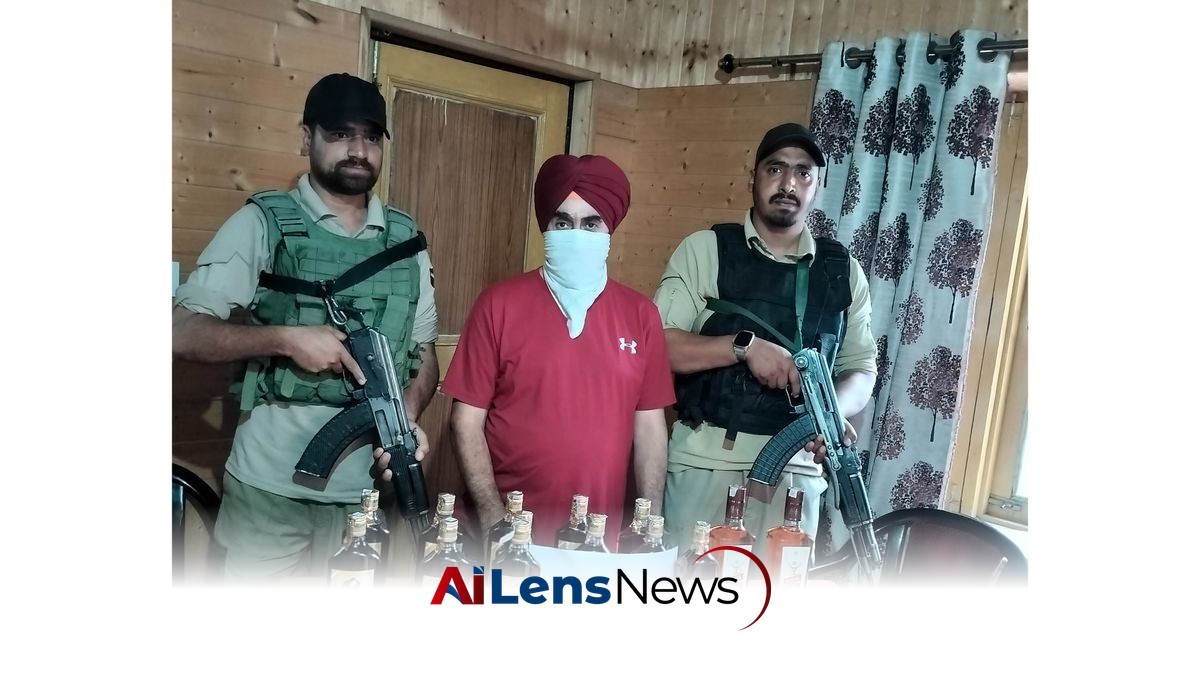


Anantnag Police seized 14 bottles of illicit liquor from a vehicle during a routine check, leading to the arrest of the driver under the Excise Act.
Leh, India Jul 13, 2026 ALN: Anantnag Police reported the recovery of illicit liquor during a routine naka checking at Lazibal, resulting in a case being registered under the Excise Act. This incident highlights ongoing efforts by law enforcement to combat the illegal liquor trade in the region, which has implications for public health and safety.
According to a police statement, officers from Police Post Sherbagh were conducting routine checks when they intercepted an i10 vehicle (PB13AN9357) driven by Dhanwant Singh, son of Sardar Ajeet Singh, who is a resident of Amritsar, Punjab, and currently residing in Jawahar Nagar, Srinagar. The choice of location for the routine check, Lazibal, is significant as it is a known area for both local and transit traffic, making it a strategic point for police operations aimed at intercepting illegal activities.
Upon searching the vehicle, police discovered a total of 14 bottles of liquor, which included 12 bottles of Old Adventure and two bottles of Royal Stag, each containing 750 ml. The discovery of these bottles raises concerns about the illegal liquor trade, which is often linked to organized crime, health hazards, and social issues such as addiction and public disorder.
The driver was unable to provide any valid license or permit authorizing the possession or transportation of the liquor, leading to further action by the police. This lack of documentation is a common issue in cases involving illicit liquor, as traffickers often operate outside the bounds of legal regulations to avoid detection and prosecution.
As a result, FIR No. 236/2026 was registered under Section 48 of the Excise Act at Police Station Anantnag, and an investigation is currently underway. The Excise Act regulates the production, sale, and distribution of alcoholic beverages in India, and violations can lead to significant legal repercussions, including fines and imprisonment. The registration of this FIR signifies the police's commitment to enforcing these laws and deterring future violations.
The implications of such incidents extend beyond the immediate legal consequences for the individuals involved. The illegal liquor trade poses serious public health risks, as unregulated alcohol can be of inferior quality or even toxic. The consumption of such beverages can lead to health issues, including alcohol poisoning, and can exacerbate existing social problems related to alcohol abuse.
Moreover, the presence of illicit liquor in the community often correlates with increased crime rates, including violence and anti-social behavior. Communities affected by illegal liquor trade may experience a breakdown of social order, as the trade often operates in conjunction with other illegal activities. Law enforcement agencies are therefore tasked not only with apprehending offenders but also with addressing the broader social and economic factors that contribute to the prevalence of illegal liquor.
In recent years, there has been a concerted effort by various state governments in India to crack down on illegal liquor production and distribution. This includes increasing police presence in vulnerable areas, conducting regular checks, and raising public awareness about the dangers of consuming illicit alcohol. The Anantnag Police's recent operation is a part of this larger initiative to safeguard public health and maintain law and order.
Additionally, the case also reflects the challenges faced by law enforcement in balancing regulation with the rights of individuals. While the enforcement of the Excise Act is crucial for maintaining public safety, it is also important for police to operate within the framework of the law to ensure that the rights of citizens are not infringed upon during such operations. This includes ensuring that searches are conducted legally and that individuals are treated fairly throughout the legal process.
As the investigation progresses, it will be important for the police to gather evidence and potentially identify any larger networks involved in the illegal liquor trade. This could involve tracing the source of the liquor, understanding the distribution channels, and collaborating with other law enforcement agencies if necessary. The outcome of this case may also influence future operations and policies regarding alcohol regulation in the region.
In conclusion, the apprehension of Dhanwant Singh and the recovery of illicit liquor during the routine check in Anantnag is a significant event that underscores the ongoing issues surrounding illegal alcohol trade in the region. The actions taken by the Anantnag Police not only aim to enforce the law but also contribute to broader efforts to protect public health and safety. As investigations continue, the case may reveal deeper insights into the dynamics of illegal liquor trade and its impact on local communities.
The illegal liquor trade is not just a local issue but a national concern, with various states in India grappling with the challenges posed by unregulated alcohol. The trade often flourishes in areas where there is a lack of enforcement, poverty, and limited access to legitimate alcohol outlets. In many cases, the illicit liquor is produced in unlicensed distilleries, which do not adhere to safety standards, leading to products that can be harmful to consumers.
Furthermore, the socio-economic factors contributing to the illegal liquor trade cannot be overlooked. In many communities, the demand for cheap alcohol drives individuals to seek out illicit sources, often resulting in a cycle of addiction and poverty. The economic implications are significant, as the illegal trade undermines legitimate businesses and deprives the government of tax revenues that could be used for public welfare programs.
Efforts to combat the illegal liquor trade have included not only law enforcement interventions but also community engagement initiatives aimed at educating the public about the risks associated with consuming unregulated alcohol. These programs often involve local leaders and health professionals who can provide valuable insights into the dangers of illicit liquor and promote healthier lifestyle choices.
In addition to public health campaigns, there have been calls for policy reforms that address the root causes of the illegal liquor trade. This includes improving access to affordable and safe alcohol, enhancing law enforcement training, and fostering collaboration between various government agencies to create a more comprehensive approach to alcohol regulation.
As the investigation into Dhanwant Singh's case unfolds, it will be crucial for law enforcement to not only focus on the individual but also to consider the broader implications of the illegal liquor trade. Understanding the networks and motivations behind these activities can help shape future policies and law enforcement strategies aimed at curbing the trade and promoting public health.
In summary, the recent apprehension of an individual with illicit liquor in Anantnag is part of a larger narrative surrounding alcohol regulation in India. It reflects the ongoing challenges faced by law enforcement and the need for a multifaceted approach that encompasses legal enforcement, public education, and community engagement. As authorities continue to tackle this issue, the hope is that communities can be safeguarded from the dangers associated with illegal alcohol while promoting a healthier and safer environment for all.
To learn more about the latest developments in Crime & Law, stay updated with our exclusive reports and analyses on AiLensNews.

