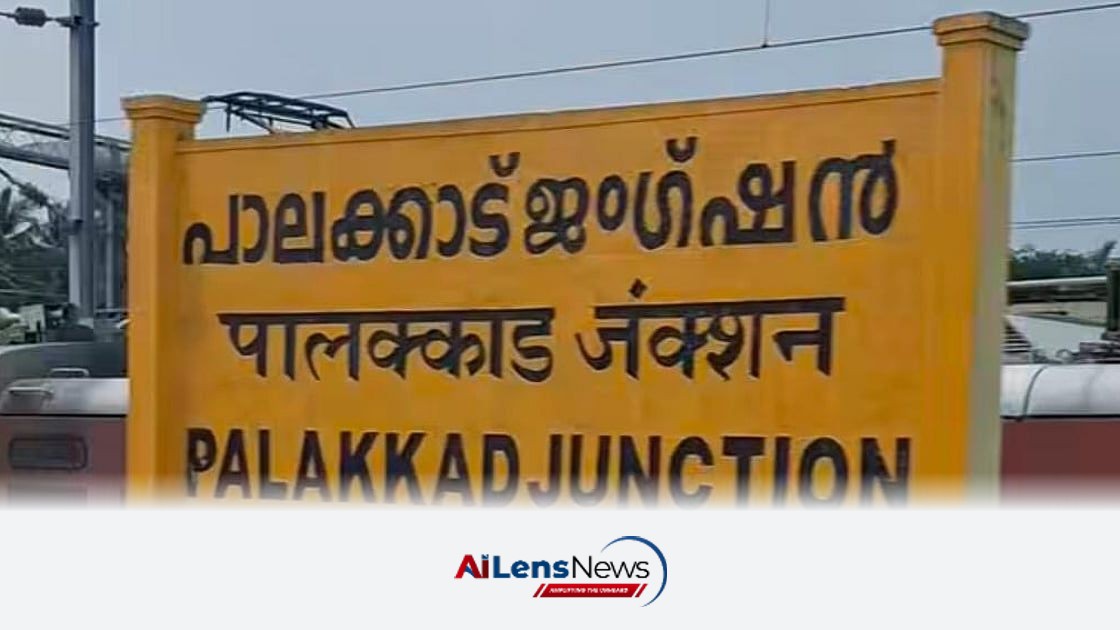



The Railway Board's decision to merge Mangaluru's railway region with Mysuru has sparked outrage in Kerala, with political leaders condemning the move.
New Delhi, India Aug 23, 2026 ALN: The recent decision by the Railway Board to merge the Mangaluru railway region with the South Western Railway’s Mysuru division, effective October 1, has ignited a wave of protests and discussions across Kerala. This move is not merely a logistical adjustment; it is seen as a pivotal change that could significantly undermine the operational and financial viability of the Palakkad railway division, which has been a crucial part of the Southern Railway zone for decades.
Kerala's political leaders, including Chief Minister VD Satheesan, have vocally opposed this decision, asserting that it will lead to substantial revenue and operational losses for the Palakkad division. The Chief Minister's strong stance reflects a broader sentiment among Kerala's political spectrum, where the railway infrastructure is viewed as a vital component of the state's economic and social framework. The opposition to the merger is not just limited to the ruling party; various other political factions have expressed their discontent, indicating a unified front against what they perceive as a detrimental move for the state.
In contrast, the Bharatiya Janata Party (BJP) in Karnataka has welcomed the Railway Board's decision, viewing it as a long-overdue rectification of what they consider historical injustices faced by their state. This divergence in opinions highlights the complexities of regional politics in India, where railway divisions often become points of contention between states, reflecting deeper historical grievances and aspirations for development.
The Palakkad railway division, headquartered in Olavakkode, Palakkad, is one of the six administrative divisions under the Southern Railway zone. Established in 1956, it is among India's oldest railway divisions, overseeing a vast transit network that spans across Kerala, Tamil Nadu, and Karnataka. The division has played a critical role in facilitating the movement of passengers and goods, contributing significantly to the regional economy.
The historical context of the Palakkad division is essential to understanding the current unrest. Initially formed as the Olavakkode division in 1979, it was created by dissolving the Podanur division, marking a significant reorganization in the region's railway management. At its inception, the division managed nearly 1,248 route kilometers. However, the operational landscape has changed dramatically over the years. In November 2007, the establishment of the new Salem division further reduced Palakkad's operational map, resulting in a loss of around 550 route kilometers. This latest decision to merge with the Mysuru division represents yet another reduction in the division's operational footprint, raising alarms among local leaders and residents about the future of railway services in the region.
Chief Minister Satheesan's comments reflect a deep-seated concern for the economic implications of the merger. He emphasized that the Railway Board's unilateral decision is unacceptable and detrimental to both the revenue generation and developmental prospects of Southern Railway and Kerala. His commitment to addressing this issue at the highest levels of government underscores the seriousness with which state leaders are treating this matter. The Chief Minister has pledged to bring this issue to the attention of both the Prime Minister and the Railway Minister, indicating a potential escalation in the political discourse surrounding the railway merger.
Moreover, John Brittas, a Rajya Sabha MP from the Communist Party of India (Marxist) [CPI(M)], has also voiced strong objections to the merger. In a letter addressed to Union Railway Minister Ashwini Vaishnaw, Brittas articulated concerns about the broader implications of the merger for Kerala's railway infrastructure. He pointed out that previous commitments made to the state, such as the establishment of the Kanjikode Coach Factory, have not materialized as promised, leaving the state in a precarious position regarding its railway infrastructure and development. Brittas emphasized that Kerala has been waiting for decades for the fulfilment of railway commitments, which are crucial for the state's economic growth. He warned that further restructuring could diminish Kerala's railway footprint, particularly as the demand for a separate railway zone for the state remains unaddressed.
The political ramifications of this decision extend beyond Kerala and Karnataka. The railway system in India serves as a critical artery for economic activity, and changes in its management can have ripple effects across regions. The merger of Mangaluru with Mysuru could alter the dynamics of railway operations, affecting not only the local economies but also the inter-state relations between Kerala and Karnataka. Former Karnataka minister and BJP leader Pramod Madhwaraj has urged the Karnataka government and MPs to support the decision, framing it as a necessary step towards justice for Karnataka after years of perceived neglect. His call for unity across political lines in support of the merger highlights the contentious nature of railway management in India, where regional interests often clash with one another.
In conclusion, the decision to merge the Mangaluru railway region with the Mysuru division has sparked significant opposition in Kerala, raising concerns about the future of the Palakkad division. As political leaders mobilize to challenge the Railway Board's decision, the implications of this merger extend far beyond operational logistics, touching on issues of regional equity, economic development, and the fulfillment of long-standing commitments to the state. The coming weeks may see intensified political negotiations and discussions as Kerala's leaders seek to safeguard their state's interests in the face of this controversial decision.
To learn more about the latest developments in Transport & Mobility, stay updated with our exclusive reports and analyses on AILensNews.

