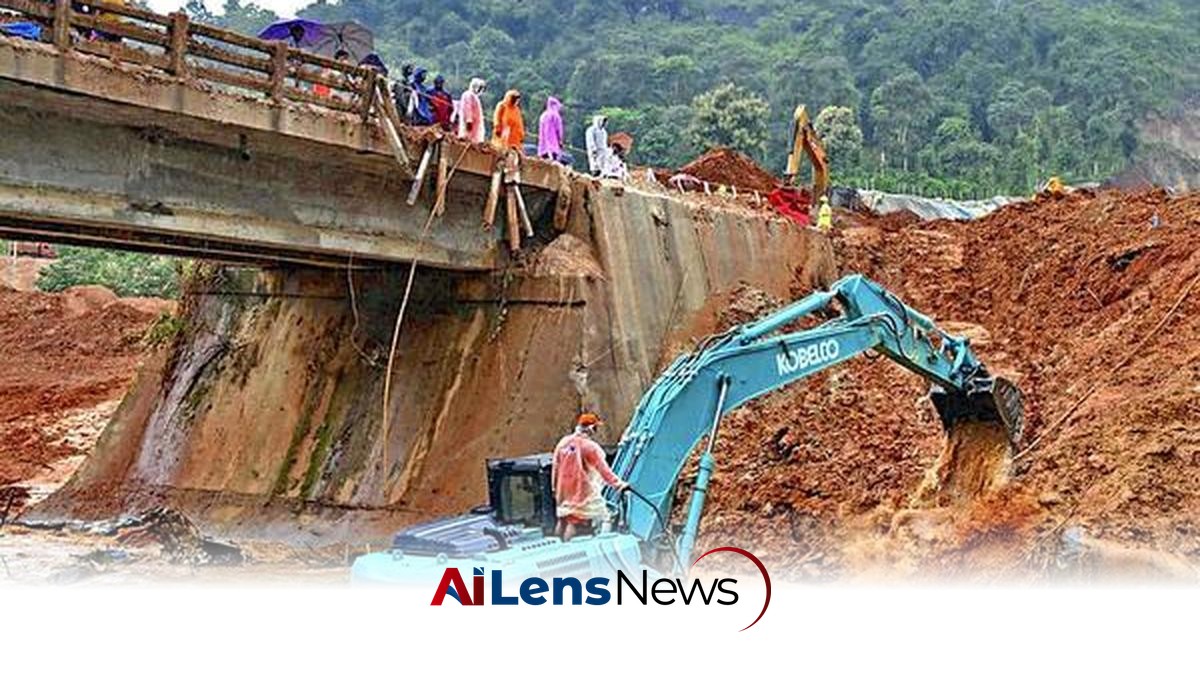


The High Court has mandated the KSDMA to conduct hazard assessments at landslide-prone sites after a deadly debris slip in Wayanad resulted in multiple fatalities.
Thiruvananthapuram, India Jul 25, 2026 ALN: The recent directive from the High Court regarding the assessment of landslide risks by the State Disaster Management Authority (KSDMA) comes in the wake of a tragic incident in Wayanad, where a debris slip resulted in the loss of eight lives and left ten others injured. This incident has raised serious concerns about the safety measures in place for construction projects in landslide-prone areas, highlighting the need for comprehensive risk assessments and proactive disaster management strategies.
The High Court's order to KSDMA mandates that they conduct hazard sweeps of landslide-prone sites, similar to the Anakkampoyil-Kalladi-Meppadi tunnel, where the catastrophic debris slip occurred. This directive is part of a broader initiative to ensure that such disasters are prevented in the future, especially in regions that are vulnerable to landslides due to their topography and geological conditions.
The court's involvement was prompted by a suo motu petition aimed at monitoring the progress of victim compensation and the inquiry into not only the Wayanad incident but also the Chooralmala landslide that occurred in 2024. Such judicial oversight underscores the critical role of the court in ensuring accountability and transparency in disaster management and response efforts.
The Division Bench, comprising Justices A.K. Jayasankar and A.K. Preeta, emphasized that KSDMA cannot evade its responsibilities in the wake of such tragedies. They pointed out that environmental clearances for construction projects are issued under the assumption that precautionary principles are upheld. This places a significant burden on state authorities to ensure that all necessary safety measures are in place before any construction activities begin.
In their observations, the justices also called for an investigation into who should bear the responsibility for the tragedy, indicating that accountability must be established to prevent future occurrences. This reflects a growing trend in judicial systems worldwide, where courts are taking an active role in environmental and disaster management issues, pushing for systemic changes to safeguard communities.
The court was informed by the amicus curiae that the District Disaster Management Authority had previously alerted the executing agencies about the dangerous accumulation of nearly one lakh cubic meters of excavated earth at the construction site. This accumulation ultimately led to the tragic landslide, raising questions about the effectiveness of communication and response protocols among disaster management agencies and construction authorities.
It was noted that the excavated earth, which posed a significant risk, should have been removed to prevent such an incident. This highlights a critical gap in the operational procedures followed by both the construction agencies and the disaster management authorities, indicating a need for improved risk assessment practices and adherence to safety protocols.
In response to the tragedy, the High Court had previously ordered the state to expedite the disbursement of compensation to the victims of the Wayanad debris slip. Furthermore, the court mandated that the state cover the medical expenses of the injured individuals currently receiving treatment. This decision reflects the court's commitment to ensuring that victims of natural disasters receive timely support and compensation, which is essential for their recovery and rehabilitation.
The implications of the court's order extend beyond the immediate context of the Wayanad incident. It calls for a reevaluation of the policies and practices surrounding construction in landslide-prone areas throughout . The state must prioritize comprehensive risk assessments, implement stringent safety measures, and enhance the training and preparedness of disaster management personnel.
Moreover, the court's directive may prompt a wider discussion about the environmental implications of construction projects in vulnerable areas. As climate change continues to exacerbate extreme weather events, the frequency and severity of landslides and other natural disasters are likely to increase. This necessitates a proactive approach to disaster management that incorporates climate resilience and sustainability into planning and development processes.
The ongoing inquiry into the circumstances surrounding the Wayanad debris slip and the Chooralmala landslide will likely shed light on the systemic failures that contributed to these tragedies. It is essential for the findings of this inquiry to be made public and for the recommendations to be implemented to prevent similar incidents in the future.
The High Court has scheduled the matter for review after ten days, indicating that it will continue to monitor the situation closely. This ongoing judicial oversight serves as a critical mechanism for accountability and ensures that the state authorities are held responsible for their actions and decisions.
As the state moves forward in addressing the aftermath of the Wayanad incident, it will be crucial for all stakeholders, including government agencies, construction companies, and local communities, to collaborate effectively. Building a culture of safety and preparedness will require collective efforts to enhance risk awareness, improve disaster response capabilities, and foster a shared commitment to protecting lives and property in vulnerable areas.
In conclusion, the High Court's intervention in the Wayanad landslide tragedy highlights the urgent need for comprehensive disaster management strategies in . By directing KSDMA to assess landslide risks and holding authorities accountable, the court is taking a significant step toward ensuring the safety and well-being of communities in landslide-prone regions. The outcomes of this case could have far-reaching implications for disaster management practices across the state, potentially leading to stronger regulations and enhanced safety measures in the face of increasing environmental challenges.
To learn more about the latest developments in Crime & Law, stay updated with our exclusive reports and analyses on AiLensNews.

