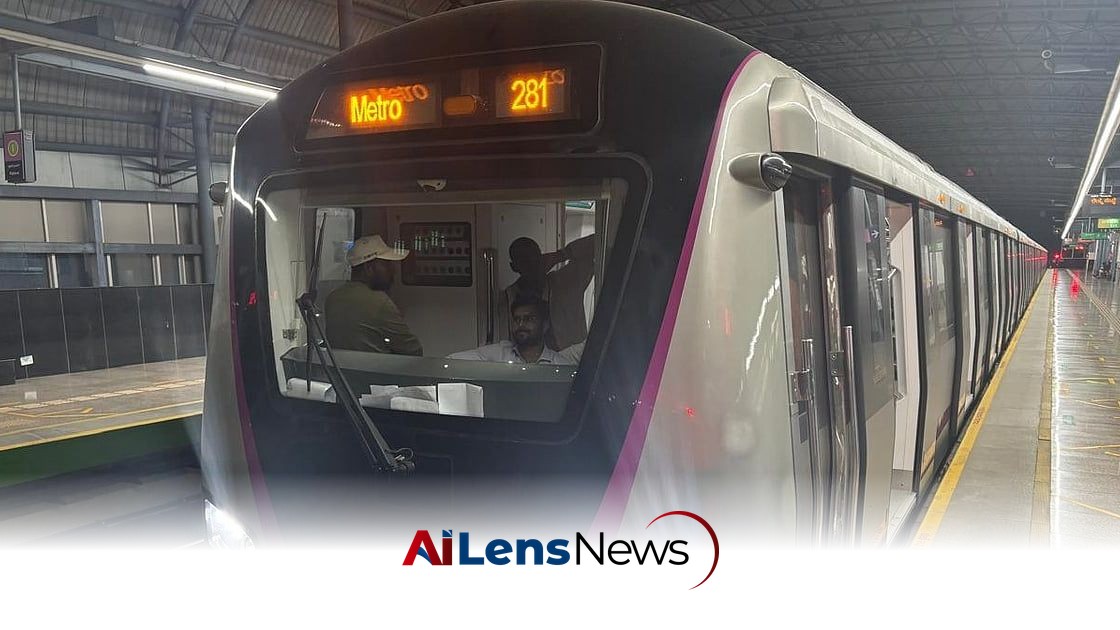


The Bannerghatta metro line in Bengaluru is expected to miss its August 15 deadline due to pending safety certifications, pushing the opening to late August or early September.
Bengaluru, India Jul 21, 2026 ALN: Bengaluru: The much-anticipated Bannerghatta Metro Project is facing further delays, leaving commuters on Bannerghatta Road awaiting the metro connection longer than originally planned. The elevated section of the Pink Line, which is a critical part of Bengaluru's expanding metro network, is now projected to miss the previously set deadline of August 15, as stated by Greater Bengaluru Development Minister Krishna Byre Gowda. Sources familiar with the situation have indicated that the line is now expected to open in late August or early September.
The delay in the project primarily stems from the pending signalling validation that is essential before the line can undergo the mandated statutory safety inspection. The Research Designs and Standards Organisation (RDSO), which plays a crucial role in the safety and operational validation of metro systems, is anticipated to issue the Interim Speed Certificate (ISC) shortly. However, the Independent Safety Assessment (ISA) certificate for the signalling system, which is crucial for the line's operational safety, is expected to take several additional weeks to obtain.
The elevated section of the Pink Line stretches approximately 7.5 kilometers, connecting Kalena Agrahara to Tavarekere and including six stations, one of which is Jayadeva Hospital. This station is particularly significant as it serves as an interchange with the Yellow Line, thereby enhancing connectivity for commuters across Bengaluru. Once operational, this section will contribute to the expansion of Bengaluru's metro network to a total of 103.6 kilometers, a significant milestone for the city's public transport system.
As of now, the civil works, track laying, and most of the architectural finishing have been completed. Moreover, six new trains have already been delivered to the metro authorities; however, the remaining testing and certification processes have led to the current delays in commissioning the line. The new trains have undergone critical tests, including oscillation trials and Emergency Braking Distance (EBD) tests, which were conducted by the RDSO between April 28 and May 9. These tests are essential for determining the maximum permissible operating speed and verifying the braking performance of the trains. The ISC is typically issued after these tests have been successfully completed.
According to sources, the process of obtaining the ISC is nearing completion, with expectations of receiving the certificate within a day or two. However, the subsequent milestone involves the Independent Safety Assessment conducted by Bengaluru-based Jodova Technologies Pvt Ltd. This assessment will evaluate the signalling system, its interfaces with other subsystems, and key functions such as Automatic Train Protection (ATP) and Automatic Train Operation (ATO).
While the ATP testing has been successfully completed, the validation of the ATO is still ongoing. The ATO tests are critical as they verify the automatic operation of the trains, ensuring precision stopping and proper station berthing after calibrating the station-specific operating parameters. Sources have indicated that the signalling software is currently being upgraded before its installation on the trains, with testing scheduled from August 3 to 5. Following this, the ISA assessment is set to take place on August 5 and 6.
After the ISA certificate is obtained, the Bangalore Metro Rail Corporation Limited (BMRCL) will formally submit an application to the Commissioner of Metro Railway Safety (CMRS) for the essential statutory safety inspection of the line. This inspection is a critical step in the commissioning process, as it ensures that all safety protocols and operational standards are met before the line can be opened to the public.
Sources have indicated that they expect the CMRS inspection to occur in the third week of August. However, it is important to note that any observations or recommendations made during this inspection will need to be addressed by BMRCL before the line can be officially opened. This could potentially push the opening date further into late August or early September, depending on the findings of the inspection.
One source commented on the situation, expressing concern that the necessary testing, acquisition of the ISA certificate, and approach to the CMRS for inspection should have been completed by now, indicating a level of frustration with the delays. The implications of these delays are significant, as they affect not only the timeline for the opening of the Pink Line but also the overall expansion of the metro network in Bengaluru, which is crucial for alleviating traffic congestion and providing efficient public transport options for the city's growing population.
In addition to the elevated section, the Pink Line also includes a 13.75-kilometer underground section that runs from Dairy Circle to Nagawara, which is slated to open in March 2027. This underground extension will further enhance connectivity across the city, providing commuters with more options and potentially reducing travel times significantly.
The delays in the Bannerghatta Metro Project highlight the challenges faced in large-scale infrastructure projects, particularly in rapidly urbanizing cities like Bengaluru. As the city continues to grow, the demand for efficient public transport solutions becomes increasingly pressing. The successful completion and timely opening of the Pink Line will be a critical step in addressing these challenges and improving the overall quality of life for Bengaluru's residents.
The Bannerghatta Metro Project is part of a broader initiative to expand Bengaluru’s metro network, which has been under development for several years. The city's metro system is designed to provide a reliable and efficient alternative to the congested roadways, which have long been a source of frustration for daily commuters. With a population that has rapidly increased over the past decade, the urgency for improved public transport has never been more critical.
Metro systems globally have proven to be effective in reducing traffic congestion and lowering pollution levels, and Bengaluru aims to replicate this success. The Pink Line, in particular, is expected to serve a high-density corridor, thus playing a vital role in the overall transportation strategy of the city. However, the delays in its opening may hinder the anticipated benefits and exacerbate the current traffic situation.
Moreover, the operationalization of the Pink Line will not only enhance the connectivity but also spur economic development along its route. Areas surrounding metro stations often experience increased commercial activity and property value, which can lead to a more vibrant urban environment. The extended wait for the metro line to become operational could delay these economic benefits for local businesses and residents alike.
In light of these developments, it is essential for the stakeholders involved, including the BMRCL, government authorities, and contractors, to work collaboratively to expedite the remaining processes. Ensuring that the necessary safety validations and certifications are completed without further setbacks will be crucial in meeting the revised timelines.
As Bengaluru moves forward, the lessons learned from the delays experienced in the Bannerghatta Metro Project can inform future infrastructure projects. Addressing the complexities of urban transport systems requires not only technical expertise but also effective project management and stakeholder engagement. The city’s ability to navigate these challenges will ultimately determine the success of its public transport initiatives and its capacity to accommodate the needs of its growing population.
In conclusion, while the delays in the Bannerghatta Metro Project are disappointing for many, they also serve as a reminder of the complexities involved in large-scale infrastructure development. The hope remains that the project can be completed efficiently and safely, paving the way for improved transit options that will benefit the residents of Bengaluru for years to come.
To learn more about the latest developments in Transport & Mobility, stay updated with our exclusive reports and analyses on AiLensNews.

