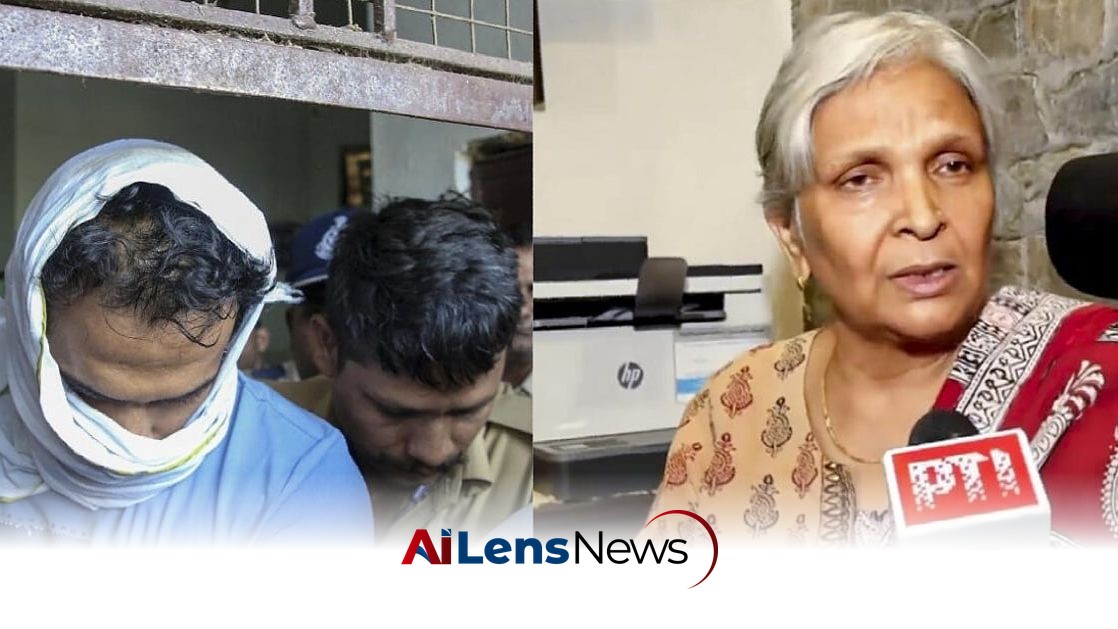


A Bhopal court has extended the judicial custody of Samarth Singh and his mother Giribala Singh until July 28, amid allegations of non-cooperation in the investigation into Twisha Sharma's death.
New Delhi, India Jul 15, 2026 ALN: Bhopal: A local court on Tuesday extended till July 28 the judicial custody of Samarth Singh and his mother Giribala Singh in the death case of former model-turned-actor Twisha Sharma, following the CBI's allegations that they were not cooperating in providing voice samples.
During the hearing, the mother-son duo appeared before the Bhopal District and Sessions Court via video conference. This case has drawn considerable public attention, not only because of the tragic circumstances surrounding Twisha Sharma's death but also due to the high-profile nature of the individuals involved. Samarth Singh is known as a prominent figure in the local community, and his mother, Giribala Singh, has a distinguished background as a former district judge.
Twisha Sharma was found hanging at her in-laws' house in Bhopal on May 12. Her husband, Samarth Singh, and her mother-in-law, Giribala Singh, were later arrested on charges of dowry-related harassment, mental abuse, and domestic violence. These allegations are serious and reflect broader societal issues regarding domestic violence and dowry practices in India, which remain prevalent despite legal prohibitions.
The Central Bureau of Investigation (CBI) has taken charge of the investigation into Twisha's death, a move that underscores the significance of the case. The agency's involvement often indicates the complexity or sensitivity of a case, especially when it involves allegations of systemic abuse within a family structure. The CBI's allegations that the two accused were not cooperating in providing voice samples have become a focal point in the ongoing judicial proceedings.
During the previous hearing, the CBI claimed that although the accused had initially expressed no objection to providing voice samples, they failed to cooperate when the investigative team visited the jail on July 6. Ankur Pandey, a lawyer representing Twisha's family, highlighted these points, stating that the CBI's request for an extension of judicial custody was based on the claim that the investigation was being hampered by the lack of cooperation from the accused.
Pandey emphasized that the CBI informed the court that Giribala, a former district judge, and Samarth refused to provide voice samples despite its orders. This refusal to cooperate raises questions about the transparency and willingness of the accused to assist in the investigation, which is critical for establishing the facts surrounding Twisha's death.
According to Pandey, Giribala had provided a sample once but subsequently refused when the CBI team arrived to collect it again. Samarth also reportedly refused to give a sample, which the CBI argued hindered their investigation. The implications of such refusals could be significant, as voice samples may be essential for corroborating evidence or establishing timelines related to the case.
In contrast, Enosh George Carlo, the lawyer representing Giribala and Samarth Singh, refuted the CBI's allegations, asserting that his clients never refused to provide voice samples. Carlo stated that despite Giribala being unwell, she had provided samples twice but could not provide them the third time due to health reasons. He added that Giribala had requested the CBI to collect the sample the following day, suggesting that there may be a miscommunication or misunderstanding regarding the cooperation of the accused.
Carlo further claimed that Samarth Singh was cooperating fully with the investigation, although he had objections to the process itself. This statement indicates potential legal complexities, as objections to investigative procedures can sometimes lead to protracted legal battles, further complicating the resolution of the case.
After hearing arguments from both sides, the court granted the CBI's request to extend the judicial custody of Giribala and Samarth Singh by 14 days. This extension allows the CBI additional time to gather evidence and conduct further investigations, which are crucial in a case of this nature. The decision highlights the court's role in balancing the rights of the accused with the needs of the investigation.
The case of Twisha Sharma is emblematic of the larger societal issues surrounding domestic violence and the treatment of women in India. Despite legal frameworks aimed at protecting women from dowry-related violence and harassment, cases like Twisha's illustrate the ongoing challenges in enforcing these laws effectively. Public interest in such cases often leads to heightened scrutiny of the judicial process, which can influence the dynamics of the investigation and the legal proceedings that follow.
Furthermore, the involvement of the CBI, a federal agency, in this case may also reflect the need for a thorough and impartial investigation, especially given the high-profile nature of the individuals involved. The agency's reputation for handling complex cases can lend a sense of credibility to the investigation, but it also places additional pressure on the judicial system to ensure a fair process for all parties involved.
As the case continues to unfold, it will likely attract ongoing media attention and public discourse, particularly concerning issues of domestic violence, women's rights, and the effectiveness of law enforcement in addressing such serious allegations. The implications of the findings from this case could resonate beyond the individuals involved, potentially influencing public policy and societal attitudes towards domestic abuse and dowry practices in India.
The judicial custody extension of Samarth Singh and Giribala Singh marks a significant moment in the ongoing investigation into Twisha Sharma's death. As the CBI seeks to gather voice samples and other evidence, the legal proceedings will undoubtedly continue to evolve, reflecting the complexities of the case and the broader societal issues at play.
In recent years, India has faced increasing scrutiny regarding its handling of domestic violence cases, particularly those involving dowry. The Dowry Prohibition Act of 1961 was enacted to combat dowry-related violence, yet enforcement remains a significant challenge. Many women continue to suffer in silence due to societal pressures, stigma, and fear of reprisal. The case of Twisha Sharma, therefore, is not just a legal matter but a reflection of the ongoing cultural and societal struggles faced by many women in India.
Moreover, the media's role in such high-profile cases cannot be understated. Coverage often shapes public perception and can influence the judicial process itself. The Twisha Sharma case, given its high-profile nature, is likely to be closely monitored by both the public and media, which may further complicate the legal proceedings. The scrutiny can lead to calls for justice from the public, which may pressure law enforcement and the judicial system to act decisively.
As the investigation progresses, the court's decisions will be pivotal in determining the future of the accused and the overall direction of the case. The extension of judicial custody serves as a reminder of the delicate balance between ensuring a thorough investigation and upholding the rights of the accused. The legal outcomes will not only affect the individuals directly involved but also have broader implications for how domestic violence cases are viewed and handled in the future.
In summary, the ongoing judicial custody of Samarth Singh and Giribala Singh in the Twisha Sharma case highlights significant issues surrounding domestic violence, societal norms, and the legal system in India. As the CBI continues its investigation, the developments in this case will likely resonate beyond the courtroom, influencing public discourse and potentially prompting changes in policy and societal attitudes towards domestic abuse and dowry practices.
To learn more about the latest developments in Crime & Law, stay updated with our exclusive reports and analyses on AiLensNews.

