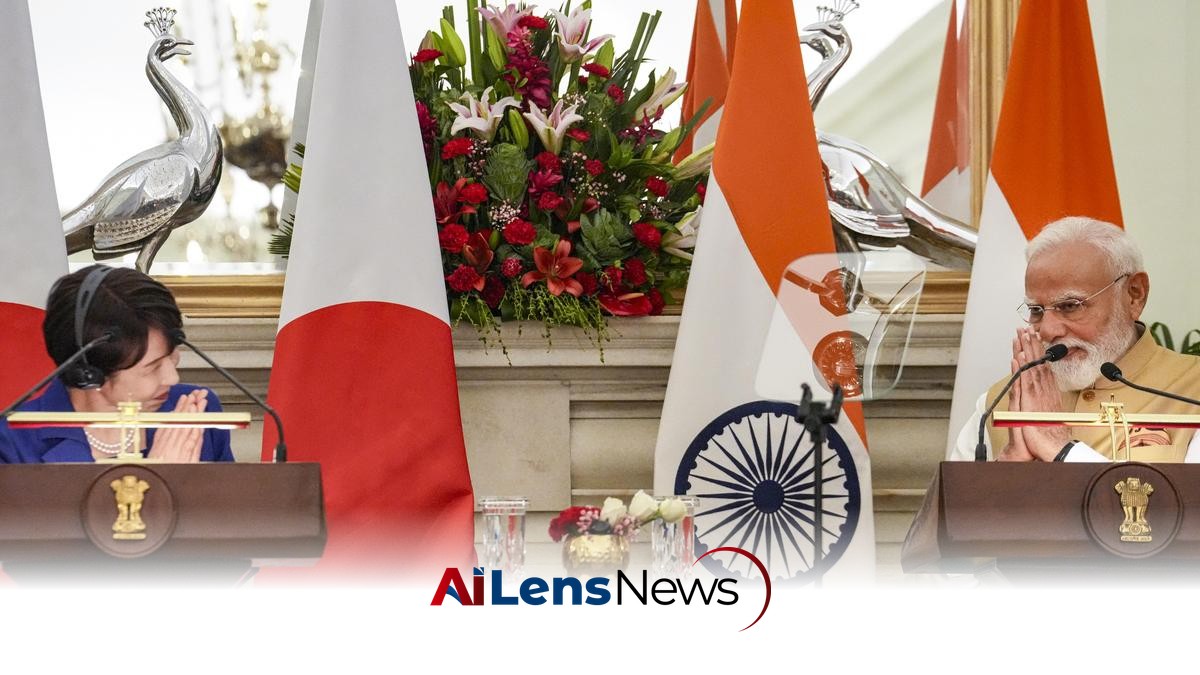


PM Modi and Japanese PM Takaichi discuss enhancing economic ties and cooperation in critical technologies during summit talks in New Delhi.
New Delhi, India Jul 2, 2026 ALN: India and Japan on Thursday (July 2, 2026) unveiled a raft of initiatives aimed at significantly enhancing their bilateral relationship. The announcements came following talks between Indian Prime Minister Narendra Modi and Japanese Prime Minister Sanae Takaichi, marking a pivotal moment in the evolving dynamics of Asia-Pacific geopolitics. The initiatives include an economic partnership framework and a defense pact focused on co-developing military hardware, reflecting the growing strategic alignment between the two nations.
The major outcomes from the meeting encompassed a declaration on economic security, a joint statement for cooperation in the field of artificial intelligence, and a document aimed at bolstering engagement in the energy supply chain. These outcomes underscore the commitment of both nations to not only strengthen their economic ties but also enhance their collaborative efforts in critical areas of technology and defense.
During the meeting, the two Prime Ministers conducted a comprehensive review of India-Japan relations across various sectors, including trade and investment, economic security, energy, emerging technologies, defense, and people-to-people exchanges. This holistic approach to reviewing their relationship indicates a mutual recognition of the multifaceted nature of their ties and the necessity for a coordinated strategy moving forward.
Prime Minister Modi emphasized the complementary nature of the Indian and Japanese economies, stating, "The economies of India and Japan are complementary. From cultural values to modern technology, there is similarity in our thinking and approach as well." He also highlighted the foundation of bilateral relations as being rooted in "unbreakable mutual trust," a sentiment that reflects the historical context of India-Japan ties, which have been steadily strengthening since the early 2000s.
In a significant move towards enhancing economic security, Mr. Modi announced that both sides have prepared a joint roadmap aimed at strengthening supply chain resilience in strategic areas such as semiconductors, quantum technologies, and advanced materials. This initiative is particularly timely, given the global disruptions in supply chains caused by various geopolitical tensions and the COVID-19 pandemic, which have spotlighted the need for resilient and secure supply chains.
Energy security was another critical area of focus during the discussions. Prime Minister Modi noted the establishment of the India-Japan bio-gas initiative, which aims to set up one thousand bio-gas and organic fertilizer plants in India. This initiative is expected to enhance sustainability, promote rural livelihoods, and contribute to India's broader goal of achieving energy self-sufficiency and sustainability.
Both leaders witnessed the exchange of key Memorandums of Understanding (MoUs) and agreements that span various domains, including economic security, clean energy, critical technologies, and research and development. These agreements signify a deepening of collaboration and an intent to leverage each other's strengths in addressing shared challenges.
As India and Japan prepare to celebrate the 75th anniversary of their diplomatic relations, the external affairs ministry spokesman Randhir Jaiswal indicated that both nations have agreed on a list of activities to commemorate this milestone. The upcoming anniversary presents an opportunity for both countries to reflect on their shared history and the progress made in their partnership.
Prime Minister Modi also reiterated the significance of India-Japan ties in the context of global challenges, mentioning his remarks at the recent G7 Summit where he stated, "In today’s atmosphere of global upheaval, mutual trust is our greatest strategic asset." This statement underscores the importance of strong bilateral relationships in an increasingly multipolar world, where countries are seeking to navigate complex geopolitical landscapes.
Furthermore, Modi pointed out the potential for collaboration in artificial intelligence, stating, "The convergence of Japan’s precision technology and India’s software capabilities will give new momentum and strength in artificial intelligence." This collaboration is particularly relevant as both nations seek to position themselves as leaders in the global technology landscape, with AI being a transformative force in various sectors.
On the defense front, Mr. Modi announced the signing of an agreement for the first co-development project between India and Japan, which marks a significant step in enhancing defense cooperation. This initiative is part of a broader strategy to bolster defense capabilities and ensure regional security amidst rising tensions in the Asia-Pacific region.
Prime Minister Takaichi, who is on a three-day visit to India, emphasized the importance of economic growth through investment and innovation collaboration. She stated, "I am committed to realizing a strong economy and aiming to enhance Japan’s supply chain and technological capabilities through investment in 17 strategic areas." This commitment aligns with Prime Minister Modi's vision of Viksit Bharat, which aims to transform India into a developed nation by 2047, thereby driving economic growth and development in both countries.
The upswing in India-Japan ties can be traced back to 2014 when the relationship was elevated to a Special Strategic and Global Partnership. This elevation marked a new chapter in bilateral relations, characterized by increased cooperation across various sectors, including trade and investment, economic security, defense and security, science and technology, culture, and people-to-people ties. The bilateral framework now comprises over 70 dialogue mechanisms, indicating a robust and structured approach to collaboration.
Prime Minister Modi’s visit to Japan for the 15th Annual Summit in Tokyo in August last year further solidified this partnership. The annual summit serves as the flagship platform driving the strategic agenda of the India-Japan relationship, facilitating high-level discussions and the formulation of joint initiatives.
In conclusion, the recent unveiling of initiatives between India and Japan marks a significant step in deepening their bilateral ties. As both nations navigate the complexities of the contemporary geopolitical landscape, their commitment to collaboration across various sectors is likely to yield substantial benefits, not only for their respective economies but also for regional stability and security. The strategic partnership between India and Japan is poised to play a crucial role in shaping the future of the Asia-Pacific region as both countries work towards shared goals of prosperity and security.
To learn more about the latest developments in World News & International Affairs, stay updated with our exclusive reports and analyses on AiLensNews.

