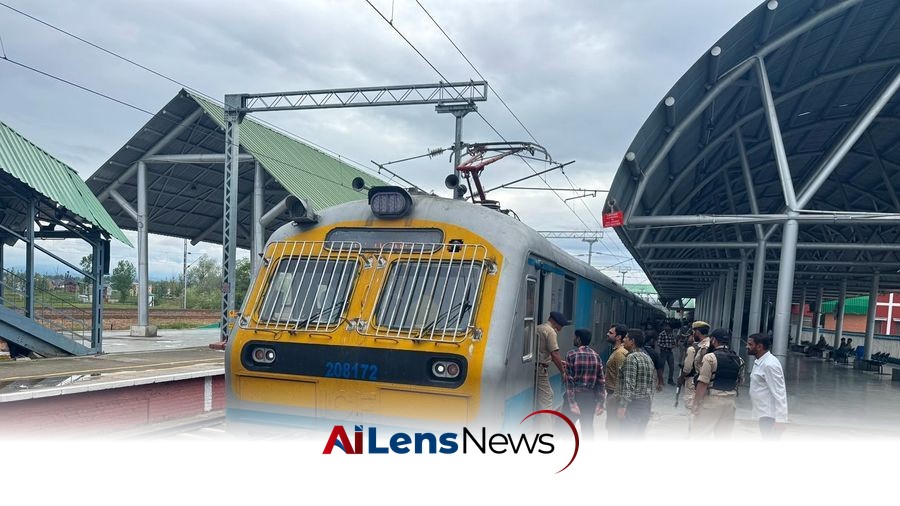


In response to the closure of the National Highway due to heavy rains, Northern Railway has initiated a special train service from Srinagar to Katra to assist stranded passengers.
Srinagar, India Jul 24, 2026 ALN: Due to the closure of the National Highway caused by heavy rains and inclement weather, Northern Railway, Jammu Division operated a special train today from Srinagar to Shri Mata Vaishno Devi Katra to provide relief to passengers stranded in the Kashmir Valley.
Heavy rains in the region have been a recurring issue, particularly during the monsoon season, which typically spans from June to September. The National Highway, which serves as a vital artery connecting Jammu and Kashmir to the rest of India, is often susceptible to landslides, flash floods, and other weather-related disruptions. Such closures can leave travelers stranded, particularly during peak pilgrimage seasons when many individuals travel to the region to visit the revered shrine of Shri Mata Vaishno Devi.
The shrine of Shri Mata Vaishno Devi, located in the Trikuta Mountains, is one of the most significant pilgrimage sites in India, attracting millions of devotees each year. The journey to the shrine is not only a spiritual endeavor but also a cultural experience, as it involves traversing through picturesque landscapes and engaging with local traditions. However, the pilgrimage can be severely impacted by natural calamities, as seen during heavy rains, making reliable transportation essential for the movement of pilgrims.
In a statement, Public Relations Inspector, Jammu Division, Raghvender Singh said the decision was taken with immediate effect under the directions of Senior Divisional Commercial Manager, Shri Uchit Singhal, to ensure passenger convenience and comfortable travel. This proactive approach by the Northern Railway reflects a broader commitment to passenger service, especially during emergencies when alternative transportation options are limited.
The special train departed from Srinagar Railway Station at 17:10 hrs on July 23, 2026. En route, the train made a halt at Banihal Railway Station and is expected to reach Shri Mata Vaishno Devi Katra at 20:15 hrs. More than 600 passengers availed the facility of this special train. This operation highlights the railway's ability to adapt to unforeseen circumstances and provide timely solutions to transport challenges faced by the public.
The operation of this special train will provide safe and quick travel connectivity to passengers stranded in the Kashmir Valley. It will help passengers reach their destinations on time, especially those connecting to onward trains from Shri Mata Vaishno Devi Katra and Jammu Tawi. The railway station at Katra is strategically important as it serves as a critical transit point for pilgrims heading to the Mata Vaishno Devi shrine, one of the most visited religious sites in India, attracting millions of devotees each year.
Earlier too, Jammu Division has been operating special trains from time to time to provide better and more comfortable travel facilities to passengers. This initiative is part of a larger strategy to enhance rail connectivity in the region, which has historically faced challenges due to its geographical terrain and weather conditions. The Northern Railway has made significant investments in infrastructure and services to ensure that rail travel remains a viable option for the people of Jammu and Kashmir.
The Jammu and Kashmir region, characterized by its mountainous terrain and diverse climate, has long struggled with transportation issues. The National Highway is often the only major road connecting the region to the rest of India, making it crucial for both everyday travel and economic activities. When this highway is closed, the implications can be far-reaching, affecting not just individual travelers but also local businesses and the overall economy of the region.
“Passenger convenience and safety is our topmost priority. In view of the slow road traffic and to ensure passengers reach their destinations on time, the Division administration took a prompt decision to run this special train so that no passenger faces any inconvenience. We request all passengers to check the updated train status through the NTES App, IRCTC website, or 139 helpline before undertaking their journey,” he said. This statement underscores the railway's commitment to maintaining communication with travelers, ensuring they are well-informed about their travel options and any potential delays.
Serving passengers remains the continuous commitment of Jammu Division. The operational flexibility demonstrated by the Northern Railway in response to the highway closure not only alleviates the immediate transportation crisis but also reinforces the importance of railways as a reliable mode of transport, especially in regions prone to natural disruptions.
The impact of such train services goes beyond mere transportation; they play a crucial role in the economic stability of the region. The ease of access to pilgrimage sites like Shri Mata Vaishno Devi Katra can lead to increased tourism, which in turn supports local businesses and provides employment opportunities. Furthermore, the railway's efforts to enhance connectivity can foster a sense of unity and accessibility in the region, bridging the gap between remote areas and urban centers.
Moreover, the decision to operate special trains during adverse weather conditions reflects an understanding of the socio-economic dynamics at play in Jammu and Kashmir. The region has a unique demographic that includes a significant number of seasonal migrants and pilgrims, making efficient transport systems essential for maintaining the flow of people and goods. The ability to respond quickly to transportation needs not only helps in managing the current crisis but also builds trust among the local population regarding the reliability of rail services.
In conclusion, the initiative taken by Northern Railway to operate a special train from Srinagar to Katra amidst highway closures due to heavy rains is a testament to the railway's commitment to passenger welfare. As the region navigates the challenges posed by its geographical and climatic conditions, such measures are vital in ensuring that the people of Jammu and Kashmir remain connected and can travel safely and efficiently. The ongoing commitment to improving rail services in the area will continue to be crucial as the region seeks to enhance its infrastructure and support its community's needs. This incident not only illustrates the importance of railways in crisis management but also highlights the need for continued investment in transportation infrastructure to ensure resilience against future disruptions.
To learn more about the latest developments in Transport & Mobility, stay updated with our exclusive reports and analyses on AiLensNews.

