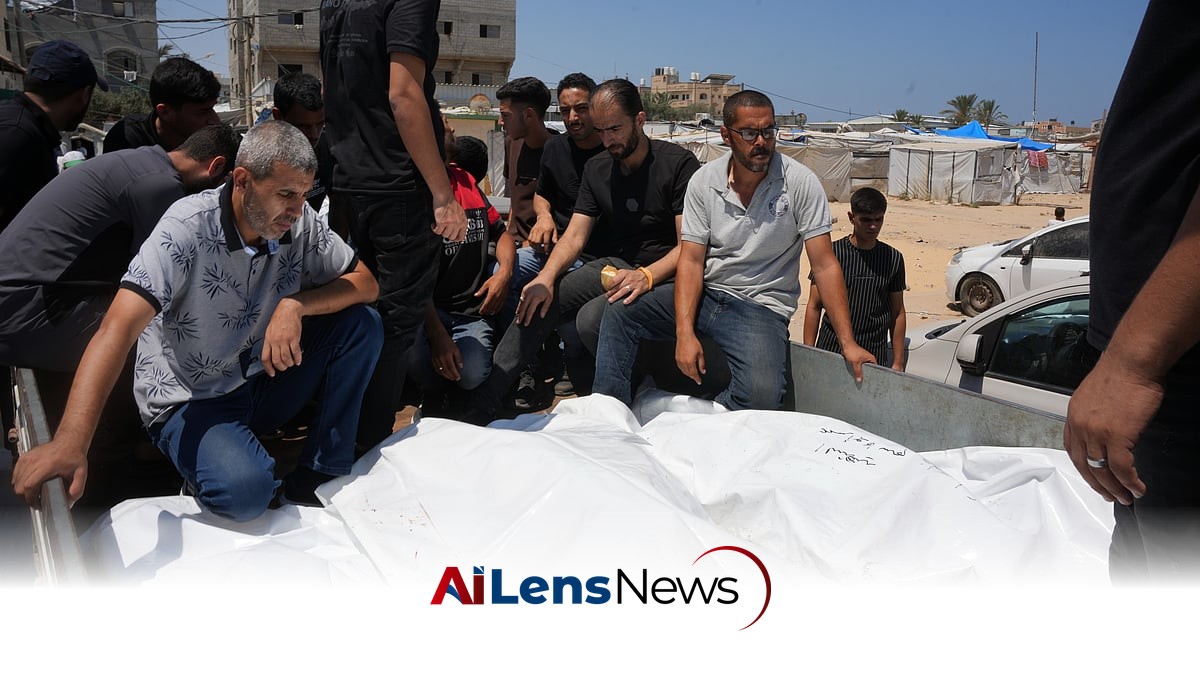


Recent Israeli airstrikes in Gaza have resulted in the deaths of at least a dozen individuals, including police officers, raising concerns over ongoing violence despite a ceasefire.
New Delhi, India Jul 16, 2026 ALN: DEIR AL-BALAH: Israeli airstrikes have killed at least a dozen people in Gaza over the past two days, local health officials said Wednesday, as strikes continue almost daily despite a months-old ceasefire with Hamas. The ongoing violence highlights the precarious nature of the ceasefire that was established following a prolonged period of intense conflict between Israel and Hamas.
On Wednesday, three members of a family were killed in central Gaza, Al Aqsa Hospital officials reported. This incident underscores the tragic reality faced by ordinary civilians in the region, who often find themselves caught in the crossfire of military operations. The strikes have not only resulted in loss of life but have also exacerbated the humanitarian crisis in Gaza, where resources are already strained due to the ongoing blockade and previous military operations.
On Tuesday, a woman and six police officers were among those killed in an airstrike on a police station in the densely populated Jabaliya refugee camp in northern Gaza, according to hospital officials. Additionally, a man died in the bombing of a tent camp in Khan Younis in the south, while Israeli forces shot and killed a child in the Muwasi area outside the southernmost city of Rafah. These incidents reflect the indiscriminate nature of the violence, which has led to civilian casualties, including children, and raised concerns about the proportionality of Israeli military responses.
The Israeli military did not immediately comment on the strikes in central and southern Gaza. In a statement regarding the attack in Jabaliya, it claimed that four of the slain police officers were Hamas militants, without providing evidence of their involvement in planning or executing attacks. This assertion raises questions about the criteria used by the Israeli military to designate targets as legitimate, especially when it comes to police personnel who are typically tasked with maintaining law and order rather than engaging in military operations.
One of the officers, Col. Mohamad Marwan Salem, was a senior police commander and head of the Jabaliya police station, as stated by the Hamas-run Interior Ministry. The dual role of Hamas as both a governing body and an armed group complicates the situation further, as it blurs the lines between civilian law enforcement and military engagement. Hamas, which has ruled Gaza for years, maintains both an armed wing and civilian police and security services overseen by its Interior Ministry. Throughout the conflict, Israel has targeted local police, including those guarding humanitarian aid convoys, raising concerns about the implications for civilian safety and the delivery of aid.
Israel's military asserts that it considers police stations legitimate targets if they are "being used to advance military activities, or if those present are military operatives involved in advancing terrorist activities." However, it did not specify what military activities it believed were occurring at the Jabaliya police station, nor did it provide evidence that attacks were being planned. Hamas contends that the police force is engaged in maintaining law and order, which is a fundamental responsibility in any governed society.
Israeli attacks on Gaza's police have drawn condemnation from the United Nations human rights office, which noted last month that police personnel had been attacked at least a dozen times in 2026, including during routine law enforcement operations such as directing traffic and patrolling streets and markets. This pattern of violence raises serious concerns about the safety of police personnel who are performing their duties in a highly volatile environment.
"The pattern of attacks raises concerns that Israeli forces apply no distinction between police personnel and fighters belonging to armed groups in Gaza," it stated in a June 3 report. This lack of distinction can lead to significant violations of international humanitarian law, which mandates the protection of civilians and those not directly participating in hostilities.
Ofer Guterman, a researcher at Israel's Institute for National Security Studies, indicated that Israel's targeting suggests it views parts of Hamas' policing apparatus as closely integrated with its military infrastructure, involving dual-role personnel and the use of facilities for weapons storage, operations, and logistics. This perspective complicates the operational landscape in Gaza, where the lines between civilian and military roles are often blurred due to the nature of Hamas' governance and military strategy.
The fragile ceasefire deal established in October aimed to halt a two-year-long war between Israel and Hamas. While the heaviest fighting has subsided, at least 1,123 people have been killed in Gaza since the ceasefire took effect, according to the territory's Health Ministry. This ministry, part of the Hamas-led government, maintains detailed casualty records that are generally regarded as reliable by UN agencies and independent experts, although it does not provide a breakdown of civilians and militants, stating that women and children constitute the majority of the deceased. The high civilian casualty rate is a significant concern for humanitarian organizations and raises questions about the effectiveness of the ceasefire.
Militants have conducted shooting attacks on Israeli troops, and Israel claims its strikes are in response to these and other violations. Since the ceasefire, five Israeli soldiers have been killed, indicating that the situation remains volatile and that both sides are engaged in actions that perpetuate the cycle of violence. The ongoing hostilities continue to undermine efforts for a lasting peace and highlight the urgent need for renewed dialogue and conflict resolution initiatives.
The conflict escalated following a Hamas-led attack on southern Israel on October 7, 2023, which resulted in approximately 1,200 fatalities and 251 hostages taken. This event marked a significant turning point in the conflict, leading to a large-scale military response from Israel that has had devastating consequences for the civilian population in Gaza. Israel's retaliatory offensive in Gaza has led to the deaths of over 73,264 Palestinians, including those killed since the ceasefire, according to Gaza's Health Ministry. The staggering number of casualties underscores the urgent need for a reevaluation of military strategies and a reconsideration of the humanitarian impact of ongoing military operations.
As the situation continues to evolve, the international community watches closely, with calls for accountability and a push for renewed peace negotiations. The complexities of the Israeli-Palestinian conflict, rooted in decades of historical grievances, territorial disputes, and cycles of violence, require a multifaceted approach that addresses the underlying issues and promotes dialogue between the parties involved. Without significant changes to the current dynamics, the likelihood of further violence remains high, perpetuating a cycle that has caused immense suffering on both sides.
To learn more about the latest developments in World News & International Affairs, stay updated with our exclusive reports and analyses on AiLensNews.

