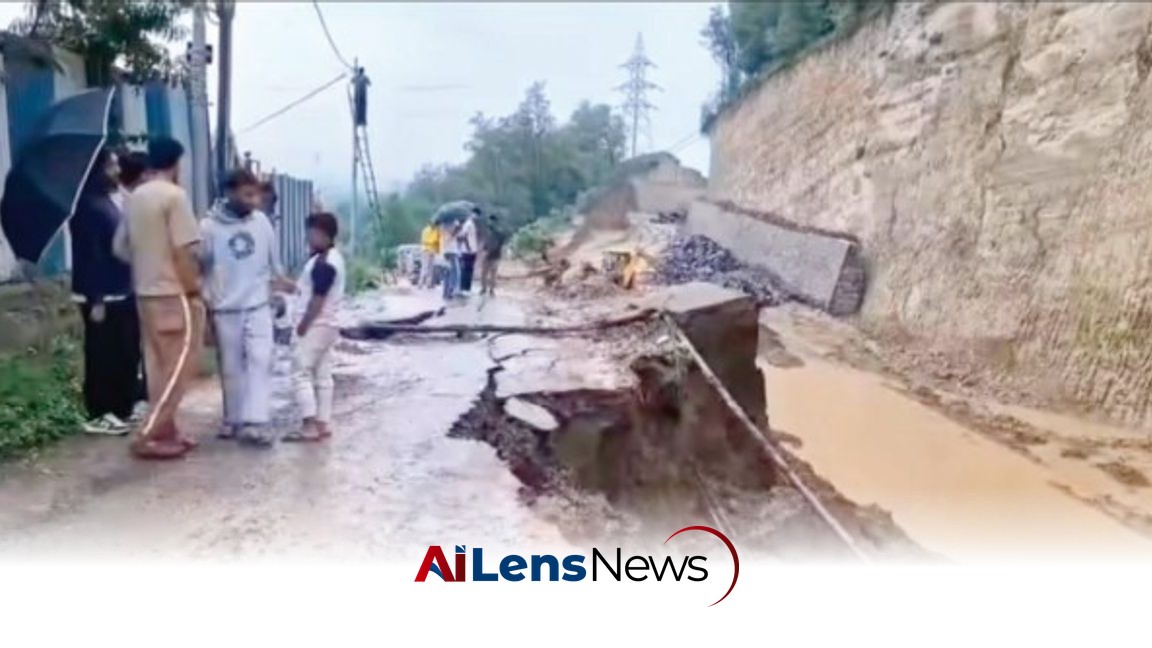


Heavy rainfall in Baramulla's Ushkara has led to significant damage, including a partially collapsed house and a road cave-in, prompting residents to call for an investigation into safety measures during the bypass project.
New Delhi, India Jul 23, 2026 ALN: A residential house was partially damaged and a road caved in at Hilltop Colony in Ushkara on Wednesday following incessant rainfall, triggering panic among residents. Fortunately, no injuries were reported, but the incident has raised significant concerns about safety and infrastructure management in the region.
The relentless rains that have affected Baramulla district over the past few days have not only caused property damage but have also heightened fears of potential flooding in vulnerable areas. The situation has prompted local authorities to issue warnings and advisories to residents living in proximity to streams and other water bodies, highlighting the need for caution during such extreme weather events.
Residents of Hilltop Colony have attributed the damage to the ongoing Baramulla bypass project, alleging that inadequate safety measures during excavation have weakened the slope, leading to the collapse of the road. The bypass project, which is intended to improve transportation and connectivity in the region, has been underway for several months and has drawn scrutiny from local residents who are concerned about its impact on their safety. The bypass is a critical infrastructure initiative aimed at easing traffic congestion and enhancing access to various parts of Baramulla, but it has also raised questions about the environmental and structural integrity of the area.
Ashiq Hussain, a resident of Hilltop Colony, voiced the frustrations of many locals, claiming that the executing agency had undertaken extensive excavation over the past three months without implementing necessary protective measures. He stated, “After removing a huge quantity of soil, the agency did not construct a retaining wall despite creating deep cuts along the hillside. Following two days of continuous rainfall, the weakened slope gave way, causing the road to cave in and cracks to develop in nearby areas.” This sentiment reflects a broader concern among residents regarding the balance between necessary infrastructure development and the preservation of safety standards, particularly in areas prone to landslides and erosion.
This incident highlights a critical issue regarding the balance between infrastructure development and environmental safety. As urban areas expand and infrastructure projects are initiated, the risks associated with excavation and construction, particularly in hilly terrains like Ushkara, can lead to significant hazards if not managed properly. The geological characteristics of Baramulla, with its steep slopes and susceptibility to heavy rainfall, necessitate careful planning and execution of construction projects to prevent disasters.
The residents have called for an inquiry into the execution of the bypass project, urging the district administration to hold the executing agency accountable for allegedly neglecting essential protective measures during excavation. This demand for accountability reflects a broader concern among the community about the management of public works and the safety of their living environment. The inquiry could serve as a pivotal moment for the local government to reassess its policies regarding construction practices and the adherence to safety protocols.
Meanwhile, the weather conditions have continued to deteriorate, with relentless rainfall for the second consecutive day keeping streams across Baramulla district flowing at dangerously high levels. This has heightened fears of fresh flooding in areas that are already vulnerable. The situation has been exacerbated by the fact that many parts of Baramulla are prone to flooding during periods of heavy rainfall, due to their geographical location and the saturation of the ground. The local topography, coupled with the current weather patterns, has created a precarious situation for residents, prompting urgent calls for effective disaster management strategies.
Tangmarg has emerged as one of the worst-hit areas, where overflowing streams have inundated residential localities, damaged orchards, and disrupted traffic on the Tangmarg-Gulmarg road. The impact of the flooding has been severe, with floodwaters entering several houses and public infrastructure, as well as agricultural land. Among the worst-affected areas in Tangmarg are Chanpora, Ferozpora, Kunzar, Hariwatno, Chandilora, Devdragar, Ongam, Qazipora, and Solanga, where overflowing streams have submerged residential neighborhoods. The extent of the damage has raised alarms about the capacity of local infrastructure to withstand such weather events, prompting discussions about the need for upgrades and improvements to flood defenses.
Devdragar, in particular, has suffered extensive damage after the Bab Kol stream overflowed its banks, inundating houses and orchards. The loss of property and agricultural produce has raised concerns among residents about their livelihoods, as many depend on agriculture for their income. The flooding has not only caused immediate damage but also poses long-term challenges for recovery and rebuilding. The economic implications for the community are significant, as many families are now faced with the prospect of financial instability due to the loss of crops and property.
In response to the escalating situation, authorities have issued a red alert, advising residents living near streams and other vulnerable locations to remain vigilant and avoid venturing close to swollen water bodies. This precautionary measure is crucial in preventing potential tragedies, as swollen rivers and streams can pose significant risks to life and property. Local emergency services are on high alert, ready to assist residents in need and to respond to any emergencies that may arise from the ongoing weather conditions. The proactive stance taken by local authorities is essential in mitigating the impact of the flooding and ensuring the safety of residents.
The implications of these events extend beyond immediate property damage. They raise critical questions about infrastructure development practices in hilly areas, the adequacy of safety measures taken during construction, and the need for comprehensive disaster management strategies. As climate change continues to influence weather patterns, leading to more extreme weather events, regions like Baramulla must adapt by enhancing their infrastructure resilience and implementing stricter regulations on construction practices. The lessons learned from this incident could inform future projects, ensuring that safety is prioritized alongside development goals.
Furthermore, the community's demand for an inquiry into the bypass project underscores the importance of transparency and accountability in public works. Ensuring that safety measures are prioritized during construction can prevent future incidents and foster trust between residents and local authorities. It is essential for the district administration to take these concerns seriously and to engage with the community to address their fears and needs. Open communication between the government and residents can help build a collaborative approach to disaster management and infrastructure development.
As the situation develops, it will be crucial for local authorities to monitor the weather closely and to provide timely updates to the community. The combination of community vigilance, effective emergency response, and proactive infrastructure management will be essential in navigating the challenges posed by both the current weather conditions and future projects in the area. Residents are hopeful that their voices will be heard and that steps will be taken to ensure their safety and the integrity of their homes in the face of ongoing development and changing environmental conditions. The ongoing dialogue between the community and local officials may also pave the way for improved disaster preparedness and response strategies, ultimately contributing to a safer living environment for all.
To learn more about the latest developments in Crime & Law, stay updated with our exclusive reports and analyses on AiLensNews.

