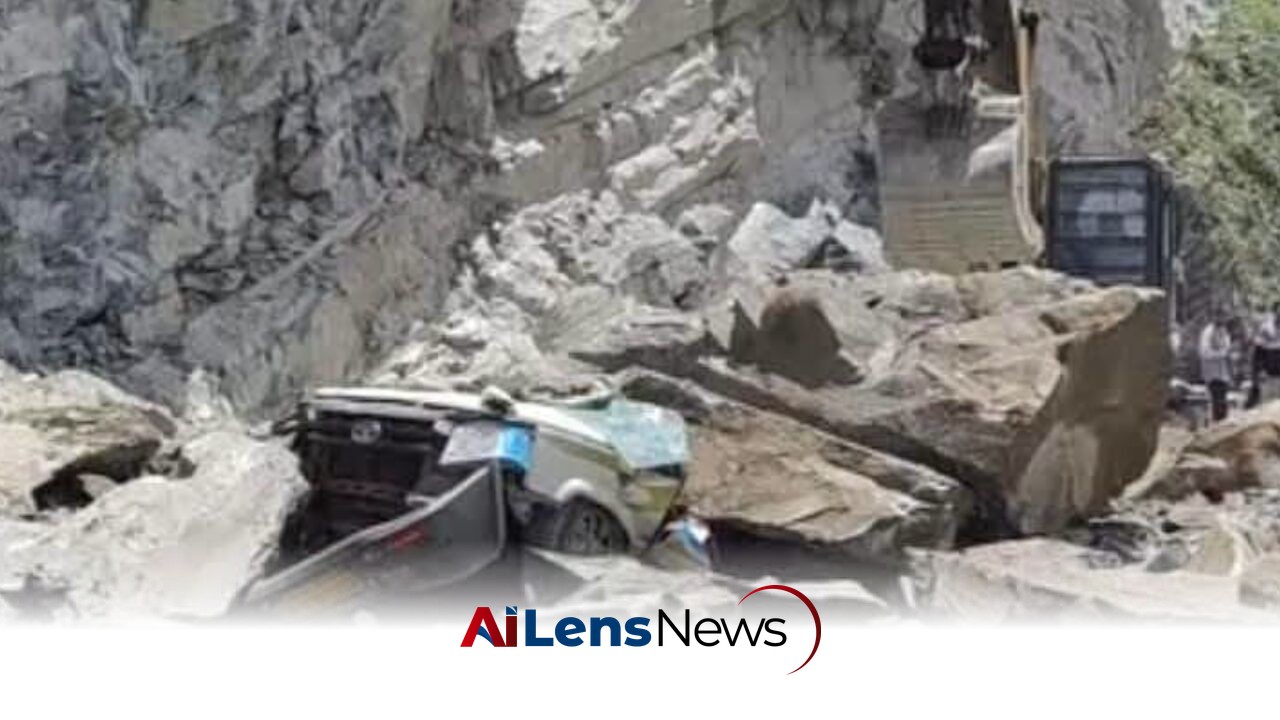


A devastating landslide struck a taxi on the Udaipur-Killar road in Himachal Pradesh, resulting in the deaths of 13 individuals, including a newborn. Rescue operations are ongoing.
Shimla, India Jul 24, 2026 ALN: Kullu: A devastating rockfall on the Udaipur-Killar road in Himachal Pradesh’s tribal district of Lahaul-Spiti claimed the lives of 13 people, including a newborn, after a massive landslide struck a moving taxi on Friday near Kadoonala.
According to preliminary information, the taxi was travelling from Kullu to Pangi when a huge volume of rocks and debris suddenly came crashing down from the hillside, burying the vehicle under tonnes of rubble. The impact left little chance for those inside, making it one of the deadliest road accidents in the region in recent years.
As soon as information about the tragedy was received, personnel from the Tindi Police, local administration, and rescue agencies rushed to the accident site and launched an intensive search and rescue operation. The response teams faced significant challenges due to the difficult terrain and the ongoing threat of further landslides in the area, which complicated their efforts to reach the victims.
Officials reported that the passengers had been stranded overnight in Tindi after the Udaipur-Killar road remained closed due to adverse weather conditions on Thursday. They resumed their journey towards Pangi after the road was reopened on Friday morning. However, while passing through the vulnerable Kadu Nala stretch, the vehicle was struck by a massive rockfall, illustrating the inherent risks of traveling on these precarious mountain roads, especially during the monsoon season.
Rescue teams have so far recovered one injured survivor from the debris, who has been shifted for medical treatment. Search and rescue operations are continuing to locate and recover any remaining passengers trapped beneath the debris. The recovery efforts have been painstaking, with workers sifting through the rubble in a race against time to find any additional survivors.
This tragic incident has brought to light the ongoing dangers associated with mountain travel in Himachal Pradesh, particularly during the monsoon months when heavy rains can trigger landslides. The Udaipur-Killar road, which is crucial for connecting remote villages in the region, has a history of being prone to such disasters. Landslides in this area are often caused by a combination of geological factors, heavy rainfall, and the natural erosion of the mountainsides.
Himachal Pradesh, known for its breathtaking landscapes and challenging terrain, has long been susceptible to landslides. The state’s mountainous geography, combined with climate change and erratic weather patterns, has led to an increase in the frequency and severity of such natural disasters. Local authorities have been urged to implement better monitoring systems and provide timely warnings to travelers during the monsoon season to help mitigate the risks associated with landslides.
The implications of this incident extend beyond the immediate loss of life. It raises questions about road safety standards in remote areas and the adequacy of infrastructure to handle natural disasters. Many of the roads in Himachal Pradesh, particularly in tribal districts, are not only narrow and winding but also lack proper maintenance and safety measures. This can lead to increased vulnerability for travelers, particularly those in vehicles that may not be equipped to handle such treacherous conditions.
Furthermore, the tragedy underscores the need for improved emergency response protocols in these remote regions. While local authorities responded swiftly to the incident, the challenges posed by the terrain and the potential for further landslides highlight the importance of having robust disaster management strategies in place. Community awareness programs about the risks of traveling during the monsoon season could also play a vital role in reducing casualties in future incidents.
In the wake of this disaster, it is also essential to consider the emotional and psychological impact on the families of the victims. The loss of 13 lives, including a newborn, leaves a profound void in the community. Grief counseling and support services may be necessary to help those affected cope with their loss and begin the healing process.
As the search and rescue operations continue, local authorities are likely to conduct a thorough investigation into the circumstances surrounding the rockfall. This may involve geological assessments of the area to identify potential risks and implement preventative measures to protect travelers in the future. The hope is that lessons learned from this tragedy will lead to improved safety protocols and infrastructure enhancements to prevent similar incidents from occurring.
Overall, the tragic rockfall on the Udaipur-Killar road serves as a stark reminder of the dangers inherent in mountain travel, particularly during adverse weather conditions. It calls for a collective effort from government agencies, local communities, and travelers themselves to prioritize safety and awareness in order to prevent such heartbreaking losses in the future.
In addition, this incident raises significant concerns regarding the long-term sustainability of travel routes in the region. The Udaipur-Killar road is not just a transportation link but also serves as a lifeline for many remote communities that rely on it for access to essential services, including healthcare, education, and markets. As such, any improvements to road safety and infrastructure must consider the needs of these communities, ensuring that they are not only safe but also accessible year-round.
Experts in geology and environmental science have emphasized the importance of understanding the geological makeup of the region. The Himalayas are characterized by their complex geological formations, which can be unstable, especially when subjected to heavy rainfall. The interaction between human activity, such as road construction and deforestation, and natural processes can exacerbate the risk of landslides. Therefore, it is crucial for planners and local authorities to adopt a holistic approach that integrates environmental considerations into infrastructure development.
Moreover, the role of climate change cannot be overlooked. With changing weather patterns leading to more intense and unpredictable rainfall, communities in mountainous regions are at greater risk of experiencing landslides and other natural disasters. This necessitates a re-evaluation of disaster preparedness strategies, including the creation of early warning systems that can alert residents and travelers to potential hazards. Such systems could include real-time monitoring of weather conditions and geological stability, allowing for timely evacuations and road closures when necessary.
Community engagement is also vital in addressing these challenges. Local residents often have valuable insights into the risks associated with their environment and can play an active role in disaster preparedness efforts. By involving communities in the planning and implementation of safety measures, authorities can foster a culture of awareness and resilience, ultimately reducing the impact of future disasters.
In summary, the tragic rockfall on the Udaipur-Killar road highlights the critical need for comprehensive strategies to enhance road safety, improve infrastructure resilience, and prepare communities for the realities of climate change. It is a wake-up call for all stakeholders involved to prioritize the safety of travelers and the well-being of local populations in the face of increasing environmental challenges.
To learn more about the latest developments in Crime & Law, stay updated with our exclusive reports and analyses on AiLensNews.

