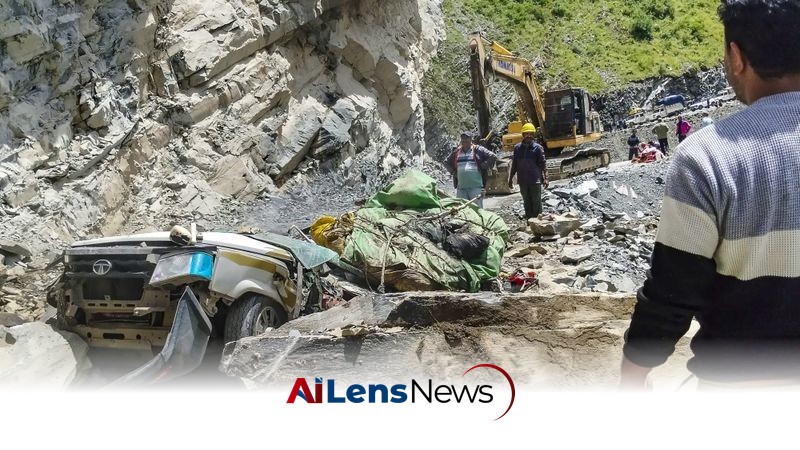


A devastating landslide in Himachal Pradesh's Lahaul Valley resulted in the deaths of 13 individuals, including women and a six-month-old child, as a cab was buried under debris.
Shimla, India Jul 25, 2026 ALN: A tragic incident occurred in Himachal Pradesh's Lahaul Valley on Friday, where a massive landslide buried a cab carrying passengers, resulting in the death of 13 individuals. The victims included four women and a six-month-old child, highlighting the devastating impact of the natural disaster. This incident has sent shockwaves through the local community and beyond, bringing attention to the inherent risks associated with traveling in mountainous regions, particularly during certain seasons.
The cab was traveling from Kullu to the remote Pangi Valley when it was caught under the landslide near Kaddu Nala on the Udaipur-Killar road. Eyewitnesses reported seeing smoke billowing from the vehicle as the passengers were trapped beneath the debris. Such landslides are not uncommon in Himachal Pradesh, especially during the monsoon season when heavy rainfall saturates the soil, increasing the likelihood of earth movements. The region's steep terrain and geological composition make it particularly susceptible to these natural disasters.
Rescue operations commenced promptly after the incident, with local authorities and emergency services mobilizing to the site. Heavy machinery was deployed to clear the debris and search for survivors. However, the challenging terrain and ongoing risks of further landslides complicated the rescue efforts. Rescuers faced not only the physical challenges posed by the landscape but also the emotional toll of working in such dire circumstances, as they sought to recover victims and provide assistance to any potential survivors.
Local officials reported that the rescue teams worked tirelessly, often under precarious conditions, to reach the site of the landslide. The use of excavators and other heavy machinery was essential in removing the large boulders and earth that had fallen onto the road. Despite their efforts, the rescue teams were met with the harsh reality of the situation, as the likelihood of finding survivors diminished with each passing hour.
The local community is in mourning as families come to terms with the loss of their loved ones. Many residents expressed their grief and shock over the incident, emphasizing the need for improved safety measures in the region, which is prone to landslides, especially during the monsoon season. Community leaders have called for greater awareness and preparedness regarding natural disasters, urging the government to invest in infrastructure that could mitigate the risks associated with landslides.
In the aftermath of the tragedy, various community organizations have begun to organize support for the affected families. This includes fundraising efforts to assist with funeral expenses and provide financial aid to those who have lost their primary breadwinners. The emotional impact on the community is profound, as many families are left grappling with the sudden loss of loved ones, and the psychological effects of such a disaster can linger long after the immediate aftermath has passed.
The Himachal Pradesh government has announced an investigation into the incident and pledged support for the affected families. Officials are expected to review safety protocols and infrastructure in landslide-prone areas to prevent future tragedies. This investigation will likely focus on the effectiveness of current warning systems and the maintenance of roadways in vulnerable regions.
In addition to immediate relief efforts, the government has been urged to implement long-term strategies to address the underlying issues that contribute to landslides. This includes improving drainage systems, conducting regular geological assessments, and ensuring that road construction adheres to safety standards designed to withstand natural disasters. The government’s commitment to enhancing safety measures is crucial in restoring public confidence in travel through these regions.
Himachal Pradesh is known for its breathtaking landscapes and tourism opportunities, but it is also a region that faces significant geological challenges. The state's mountainous terrain, combined with heavy rainfall during the monsoon season, creates a perfect storm for landslides. Over the years, numerous incidents have occurred, leading to loss of life and property. The state has experienced a number of deadly landslides, emphasizing the urgent need for effective disaster management strategies.
Moreover, climate change has exacerbated the situation, leading to unpredictable weather patterns and increased rainfall intensity. This has raised concerns among experts regarding the future stability of the region's slopes and the safety of its inhabitants and travelers. As such, there is a growing call for comprehensive studies on the impact of climate change on landslide frequency and severity, which could inform better planning and response strategies.
This heartbreaking event serves as a reminder of the dangers posed by natural disasters in mountainous regions. As rescue operations continue, the focus will shift to supporting the grieving families and ensuring the safety of travelers in the future. The tragic loss of life in Lahaul Valley underscores the importance of proactive measures to prevent similar incidents, highlighting the need for a multi-faceted approach that includes community education, government intervention, and infrastructure improvement.
In the wake of this disaster, it is essential for both local authorities and the state government to engage in dialogue with residents to understand their concerns and needs. By fostering a collaborative environment, it may be possible to develop more effective strategies for disaster preparedness and response, ultimately saving lives and preserving the community's resilience in the face of nature's unpredictability.
Himachal Pradesh has a long history of landslides, particularly in the monsoon season when heavy rains can destabilize slopes. The state has recorded numerous incidents over the years, some of which have resulted in significant casualties and damage to infrastructure. The geographical features of the region, characterized by steep hills and valleys, create a natural predisposition to landslides. These incidents often draw attention to the need for better land use planning and disaster risk management in the region.
In previous years, other tragic landslides have claimed lives in various districts of Himachal Pradesh, prompting discussions about the effectiveness of existing safety measures and the need for more robust disaster preparedness systems. The increasing frequency of such events has led to a heightened awareness among both residents and officials about the importance of monitoring geological activity and implementing preventive measures.
In response to the ongoing threat of landslides, local governments have initiated several programs aimed at enhancing safety and preparedness. These include community training sessions on disaster response, the establishment of early warning systems, and the reinforcement of critical infrastructure to withstand natural disasters. Local authorities are also working with geological experts to conduct detailed assessments of vulnerable areas, which can help in planning future development and road construction projects.
Furthermore, community resilience programs are being developed to educate residents about the risks of landslides and the importance of preparedness. These initiatives aim to empower individuals and families to take proactive steps in safeguarding their lives and property against future disasters.
Non-governmental organizations (NGOs) and international bodies have also played a role in addressing the challenges posed by landslides in Himachal Pradesh. Many NGOs are involved in disaster relief and recovery efforts, providing support to affected families and advocating for better policies and practices to mitigate risks. Their work often includes raising awareness about climate change and its impact on natural disasters, as well as promoting sustainable development practices that can reduce the likelihood of landslides.
Collaborations between government agencies and NGOs have led to the implementation of innovative solutions, such as the use of technology for real-time monitoring of weather patterns and soil stability. These partnerships highlight the importance of a multi-stakeholder approach in tackling the complex issue of landslides in the region.
As the community in Lahaul Valley begins to heal from this tragedy, it is crucial to reflect on the lessons learned from this incident. The need for comprehensive disaster management strategies that incorporate scientific research, community input, and government action has never been more apparent. Engaging with residents to understand their experiences and concerns can lead to more effective policies that prioritize safety and resilience.
Moving forward, it is essential for stakeholders at all levels to commit to ongoing dialogue and collaboration. This will not only enhance disaster preparedness but also foster a sense of community solidarity in the face of adversity. Ultimately, the goal is to create a safer environment for all who live in or travel through the beautiful but perilous landscapes of Himachal Pradesh.
To learn more about the latest developments in Crime & Law, stay updated with our exclusive reports and analyses on AiLensNews.

