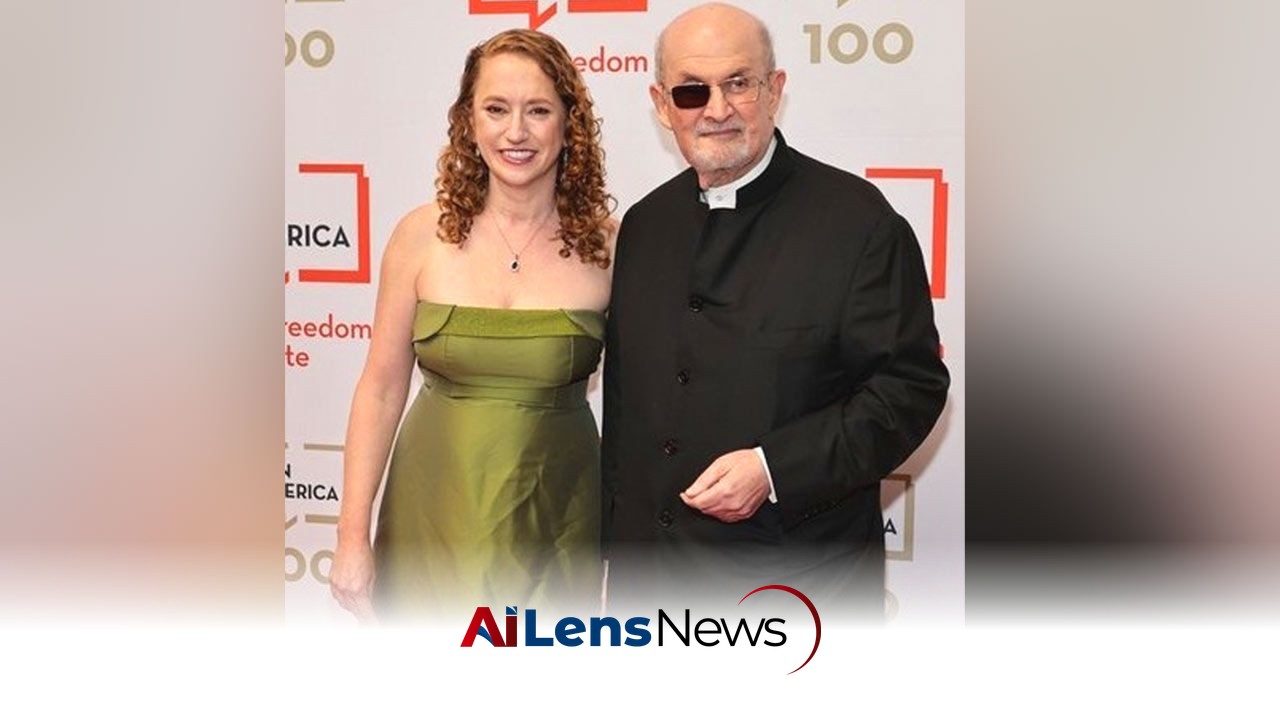


Hadi Matar, who attacked Salman Rushdie in 2022, is on trial for terrorism charges in a US federal court, accused of acting on an Iranian fatwa.
New Delhi, India Jul 23, 2026 ALN: New York: The man who attacked author Salman Rushdie, blinding his right eye, went on trial on transnational terrorism charges in a federal court on Wednesday. This trial marks a significant moment not only in the legal proceedings against Hadi Matar but also in the ongoing discourse surrounding freedom of expression and the consequences of inciting violence through religious edicts. The case is emblematic of a broader struggle between artistic freedom and religious extremism, raising questions about the limits of free speech and the responsibilities of authors in a world where their words can provoke violent reactions.
Hadi Matar attacked Rushdie to “fulfil the fatwa,” the Iranian religious edict demanding Rushdie’s killing because his novel Satanic Verses was considered blasphemous by Islamic clerics, assistant federal prosecutor Timothy Lynch told the court in Buffalo. The fatwa, issued by the late Ayatollah Khomeini in 1989, has had a profound impact on Rushdie’s life and has sparked international debates about the limits of free speech and the responsibilities of authors. The issuance of the fatwa was a watershed moment, marking a shift in how literature could be perceived in the context of religious beliefs, leading to a chilling effect on writers and artists who challenge prevailing norms.
Matar was convicted last year in New York State court of attempting to murder and sentenced to 25 years in prison. He now faces federal terrorism charges under a separate set of laws. The distinction between state and federal laws is crucial in this case, as it allows for Matar to be tried on multiple counts related to the same incident. In the United States, this dual system means that individuals can be held accountable under various legal frameworks for their actions, potentially facing more severe penalties if convicted on federal charges. The federal charges reflect the seriousness with which authorities view the attack, not merely as an assault on an individual but as an act that threatens the foundations of free expression and public safety.
If convicted of the terrorism charge, Matar could face life in prison. This potential sentence underscores the seriousness with which federal authorities are treating the case, not only as an attack on an individual but as an assault on the principles of free expression and the safety of public discourse. The implications of this trial extend beyond the courtroom, touching on issues of national security and the protection of individuals who may be targeted for their beliefs or expressions. The case raises critical questions about how society balances the right to free speech with the need to protect individuals from violence inspired by extremist ideologies.
Matar, who is a US citizen of Lebanese descent, attacked Rushdie on a stage during a literary programme in 2022 at the Chautauqua Institution, a literary and arts centre about 600 kilometres from the city. The choice of venue is significant; the Chautauqua Institution is known for its commitment to the arts and education, providing a platform for intellectual discourse. The attack occurred during a public event where Rushdie was set to discuss the importance of protecting writers and their work, further highlighting the irony of the situation. It raises the question of whether public spaces dedicated to intellectual engagement can remain safe in the face of extremist violence.
The federal trial is taking place in Buffalo, close to the Canada border, which may also bring into question issues of cross-border terrorism and the international implications of the fatwa that has spanned decades. The attack on Rushdie is not just a local incident but a reflection of global tensions regarding freedom of speech, religious extremism, and the safety of authors and artists. The international dimension of the case emphasizes the need for a coordinated response to threats against free expression that transcend national borders.
Matar has denied the conspiracy charges. His lawyer Nathaniel Barone stated that Matar was acting on his own and, as a religious person, was “enraged” against Rushdie. This defense raises questions about the individual versus collective responsibility in acts of violence inspired by ideological beliefs. It also reflects a broader challenge in addressing the motivations behind such attacks—whether they stem from personal conviction or are influenced by larger ideological movements. The defense's argument may prompt discussions about the nature of radicalization and how individuals can be drawn into extremist ideologies.
The late Ayatollah Khomeini issued the fatwa against Rushdie, a Booker Prize-winning author, who then went into hiding for several years under British government protection. The issuance of the fatwa was a watershed moment in the relationship between literature and religion, igniting protests and debates around the world. It has led to a chilling effect on writers and artists, many of whom have faced threats or violence for their work. Rushdie’s experience serves as a stark reminder of the dangers that can accompany creative expression, especially when it challenges prevailing religious or cultural norms. The legacy of the fatwa continues to influence how writers approach sensitive topics and the potential repercussions they may face.
Rushdie now lives in the US wearing an eyepatch over his right eye and is expected to testify at the trial. His presence in court is likely to serve as a powerful statement about resilience in the face of violence and the importance of standing up for one’s beliefs. Rushdie has written a memoir, Knife: Meditations After an Attempted Murder, about the attack and its aftermath, providing insight into his thoughts and feelings during this tumultuous period. The memoir not only recounts the physical attack but also delves into the psychological impact of living under the threat of violence for decades. This personal narrative adds depth to the legal proceedings, underscoring the human experience behind the headlines.
Ironically, at the event where he was attacked, he was to have spoken about the protection of writers. This tragic twist of fate emphasizes the ongoing struggle for authors and public figures to navigate the fine line between free expression and the potential repercussions of their words. The trial of Hadi Matar is not just a legal proceeding; it is a reflection of the societal challenges that arise when art, faith, and violence intersect. The outcome of this trial may influence how future cases involving threats to free speech are handled in the United States and beyond.
As the trial unfolds, it will be closely watched by advocates for free speech, human rights organizations, and the literary community worldwide. The outcome could set important precedents regarding how acts of violence motivated by ideological beliefs are prosecuted in the United States. Moreover, it may influence future discussions on how societies can better protect individuals who are at risk due to their creative expressions, ensuring that the principles of free speech are upheld while also addressing the security concerns that arise from violent extremism. The implications of this case are far-reaching, potentially shaping the legal landscape for years to come and impacting how societies confront the challenges posed by radical ideologies.
To learn more about the latest developments in Crime & Law, stay updated with our exclusive reports and analyses on AiLensNews.

