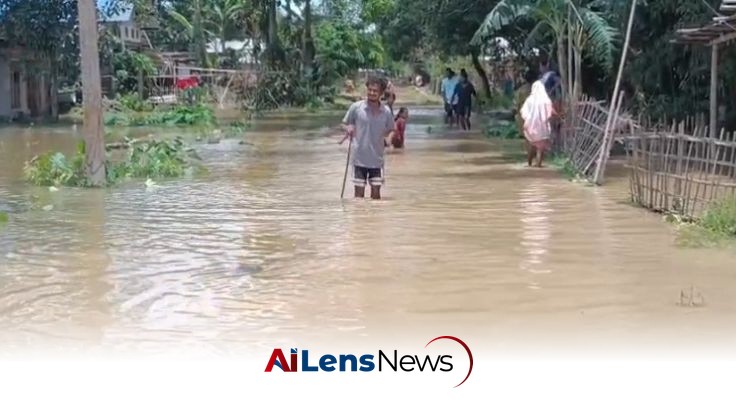


Over 31,000 residents affected as floodwaters engulf villages and farmland in Golaghat district, prompting urgent relief efforts.
New Delhi, India Jul 25, 2026 ALN: The flood situation in Golaghat district remains critical, with over 31,000 people affected and river levels continuing to stay above the danger mark across several locations. The region has been grappling with severe flooding, which has been exacerbated by the release of water from the Doyang Hydroelectric Project in Nagaland. This situation has heightened concerns regarding the safety and stability of downstream areas, prompting the district administration to implement rigorous monitoring measures in vulnerable regions.
The Doyang Hydroelectric Project, which is a significant source of hydroelectric power for the region, has been releasing substantial volumes of water to manage reservoir levels. This has raised alarms among local residents and officials alike, as the additional water flow has the potential to further elevate river levels in Golaghat. The district administration is acutely aware of the risks posed by this situation, which could lead to more extensive flooding if not managed properly.
According to the latest official flood update, 125 villages spread across five revenue circles have been affected, impacting 31,399 people. The flooding has resulted in significant disruptions to daily life, with many residents forced to evacuate their homes and seek shelter in relief camps. The scale of the disaster is underscored by the fact that floodwaters have submerged 3,074.97 hectares of agricultural land, causing extensive damage to crops and livelihoods. For many families in Golaghat, agriculture is the primary source of income, making the loss of crops particularly devastating.
In response to the crisis, Golaghat Deputy Commissioner Biswajit Phukan, along with officials from the district administration, visited the flood-affected Padumpathar area in Merapani on Friday to assess the ground situation and review relief and response measures. This proactive approach is crucial in ensuring that the needs of the affected population are being met and that resources are allocated effectively to address the ongoing challenges posed by the floods.
The district administration has established 11 relief camps, where 1,216 displaced people are currently taking shelter. These camps are vital for providing immediate assistance, including food, water, and medical care, to those who have lost their homes. In addition, relief distribution centres are providing assistance to thousands of flood-affected residents across the district, ensuring that basic necessities are available to those in need.
Several rivers in Golaghat continue to flow above the danger mark. The Dhansiri River at Numaligarh was recorded at 78.85 metres against the danger level of 78.42 metres. Similarly, the Gelabil River at Badulipara stood at 77.97 metres, exceeding its danger mark of 76.10 metres, while the Kakdonga River at Dufalating was flowing at 88.08 metres against the danger level of 87.50 metres. The flood report also lists the Dhansiri (South) at Numaligarh among the rivers flowing above the danger level in the state, indicating a widespread and serious flooding situation.
Adding to the concern, all four spillway gates of the Doyang Hydroelectric Project in Nagaland remain open, releasing around 157 cubic metres of water. This ongoing discharge of water is a critical factor in the rising water levels in the Doyang River, which poses an increased risk of flooding in downstream areas of Golaghat, particularly in Merapani and Sarupathar. The implications of this situation are dire, as residents fear that the additional discharge could lead to further inundation and displacement.
The Assam State Disaster Management Authority (ASDMA) reported that Golaghat is among the 12 districts currently affected by floods in the state. Across Golaghat, five revenue circles including Golaghat, Khumtai, Bokakhat, Morongi, and Dergaon have been impacted by the deluge. This widespread flooding underscores the scale of the crisis and the need for a coordinated response from local and state authorities.
Meanwhile, authorities have urged residents living in low-lying and riverbank areas to remain alert as water levels continue to fluctuate. The potential for further rainfall in the upstream catchments could exacerbate the flood situation over the coming days, making it imperative for residents to stay informed and prepared for possible evacuation if necessary. The risks associated with flooding are compounded by the fact that many of these communities are already facing significant challenges in terms of infrastructure and access to resources.
Golaghat District Commissioner Biswajit Phukan surveyed the affected regions to evaluate the flood situation and assured that the local administration is fully equipped to handle emergencies. The deployment of State Disaster Response Force (SDRF) and National Disaster Response Force (NDRF) teams is a critical component of the response strategy, as these teams are trained to conduct rescue operations and provide support in disaster situations. Active relief measures are being implemented to ensure that those affected by the floods receive the assistance they need.
In his remarks, Biswajit Phukan emphasized the importance of monitoring the fluctuating water levels and the need for ongoing assessments of the situation. "I visited the Merapani area to monitor the fluctuating water levels. Although 207 cubic meters of water were initially released, the discharge has now stopped. We are actively working to deliver rescue and relief operations to the inundated villages, and arrangements are in place to bring in additional rescue teams as needed,” he stated. This commitment to proactive management of the crisis is essential in mitigating the impact of the floods on the local population.
The implications of the flooding crisis in Golaghat extend beyond immediate concerns about safety and displacement. The long-term effects on agriculture, infrastructure, and community resilience will require careful consideration and planning from local authorities and disaster management agencies. Recovery efforts will need to address not only the physical damage caused by the floods but also the psychological and social impacts on affected communities.
In conclusion, the flooding crisis in Golaghat district highlights the vulnerability of communities to natural disasters and the importance of preparedness and response strategies. As the situation evolves, it is crucial for local authorities to remain vigilant and responsive to the needs of affected residents while also planning for long-term recovery and resilience-building efforts in the aftermath of the floods.
To learn more about the latest developments in Crime & Law, stay updated with our exclusive reports and analyses on AiLensNews.

