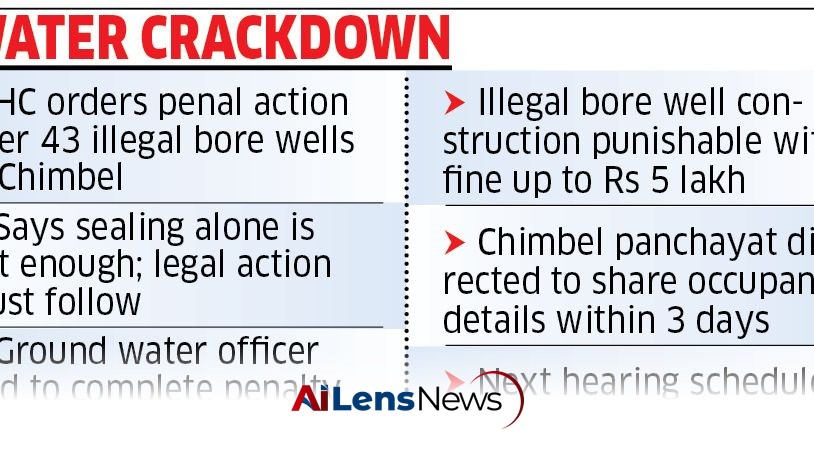


The Bombay High Court has mandated penalties against those responsible for 43 illegal bore wells in Chimbel, emphasizing the need for legal action beyond mere sealing.
Panaji, India Jul 17, 2026 ALN: The High Court of Bombay at Goa has taken a significant step in addressing the issue of illegal bore wells in Chimbel village by directing the ground water officer to initiate penal action against those responsible for 43 illegal bore wells discovered in the area. This ruling highlights the ongoing challenges related to groundwater management and the enforcement of environmental regulations in Goa, a region known for its rich biodiversity and reliance on natural resources.
Illegal bore wells have become a pressing concern in many parts of India, including Goa, as they contribute to the depletion of groundwater resources, which are already under stress due to over-extraction and pollution. Groundwater is a critical resource for agriculture, drinking water, and various industries, making its sustainable management essential for both environmental and public health. The High Court's intervention in Chimbel reflects a growing recognition of the need to enforce laws designed to protect this vital resource.
The court's directive came after a public interest litigation was filed by Ana Gracias, prompting an investigation by the Water Resources Department. The findings revealed that 43 illegal bore wells were located within Survey No. 62/2 of Chimbel village. An affidavit submitted by executive engineer Ajay Kudchadkar detailed the results of the investigation, which included a survey plan and a chart identifying the occupants and structures associated with the illegal bore wells. This thorough documentation underscores the importance of proper oversight and regulation in managing groundwater extraction.
In its ruling, the High Court emphasized that merely sealing the illegal bore wells was insufficient. The court stated that legal action must follow to ensure accountability and deter future violations. This stance is in line with the provisions of the Goa Ground Water Regulation Act, 2002, which aims to regulate the use of groundwater in the state. Specifically, Section 17 of the Act makes the illegal sinking or construction of a well a punishable offense, reflecting the state's commitment to sustainable water management practices.
Recent amendments to the Act, enacted on July 21, 2023, have increased the penalties for violations, allowing for fines of up to Rs 5 lakh. This change highlights the government's recognition of the severity of the issue and its intention to impose stricter measures to curb illegal activities related to groundwater extraction. The High Court's ruling serves as a reinforcement of these legislative efforts, signaling that violations will not be tolerated.
As the court directed the ground water officer to proceed with imposing penalties, it also mandated the Chimbel panchayat secretary to provide house numbers and details of the occupants within three days of a formal request from the executive engineer. This requirement aims to facilitate the identification of responsible parties and ensure that the penalties are enforced effectively. The matter is set for further hearing on September 2, during which authorities are expected to report on the actions taken in response to the court's directives.
The implications of this ruling extend beyond Chimbel village. It sets a precedent for how illegal bore wells are treated across Goa and potentially other regions facing similar challenges. By enforcing penalties for illegal groundwater extraction, the court aims to promote compliance with environmental regulations and encourage responsible water use among residents and businesses.
This case also highlights the role of public interest litigations in India, where citizens can seek judicial intervention to address environmental concerns and hold authorities accountable. Such legal actions are vital for promoting transparency and ensuring that laws designed to protect natural resources are enforced effectively. Public interest litigations serve as a powerful tool for citizens to voice their concerns and demand action from the government, especially in cases where environmental degradation is at stake.
Furthermore, the issue of illegal bore wells is intertwined with broader discussions about water scarcity and sustainable development in India. As urbanization and population growth continue to put pressure on water resources, the need for comprehensive water management strategies becomes increasingly urgent. The High Court's ruling serves as a reminder of the importance of balancing development with environmental sustainability, particularly in regions like Goa that are heavily reliant on their natural resources for economic and social well-being.
In many parts of India, rapid urban expansion and agricultural demands have led to a significant increase in groundwater extraction, often exceeding the natural recharge capacity of aquifers. This unsustainable practice can lead to a range of environmental issues, including land subsidence, reduced water quality, and the loss of biodiversity. The situation is particularly critical in states like Goa, where tourism and agriculture are vital to the local economy, yet these sectors depend heavily on the availability of clean water.
The High Court's decision not only addresses the immediate issue of illegal bore wells in Chimbel but also serves as a call to action for other regions to reassess their groundwater management practices. It underscores the necessity for local governments to implement stringent regulations and conduct regular monitoring of water resources to prevent illegal extraction and ensure equitable access to water for all residents.
Moreover, the ruling could lead to increased awareness among the public regarding the importance of sustainable water management. As communities become more informed about the consequences of illegal bore wells, there may be a shift towards more responsible water use practices. Educational campaigns and community engagement initiatives could play a crucial role in fostering a culture of conservation and compliance with water regulations.
In conclusion, the High Court of Bombay at Goa's decision to impose penalties for illegal bore wells in Chimbel represents a crucial step towards enforcing groundwater regulations and promoting sustainable water management practices. As the authorities prepare to implement the court's directives, the case underscores the importance of legal frameworks in protecting vital natural resources and ensuring that communities adhere to environmental laws. The outcome of this case may have lasting implications for groundwater management in Goa and serve as a model for addressing similar issues in other parts of India. The ruling not only reinforces the legal mechanisms in place but also highlights the critical need for ongoing dialogue and action to safeguard water resources for future generations.
To learn more about the latest developments in Local & Regional, stay updated with our exclusive reports and analyses on AiLensNews.

