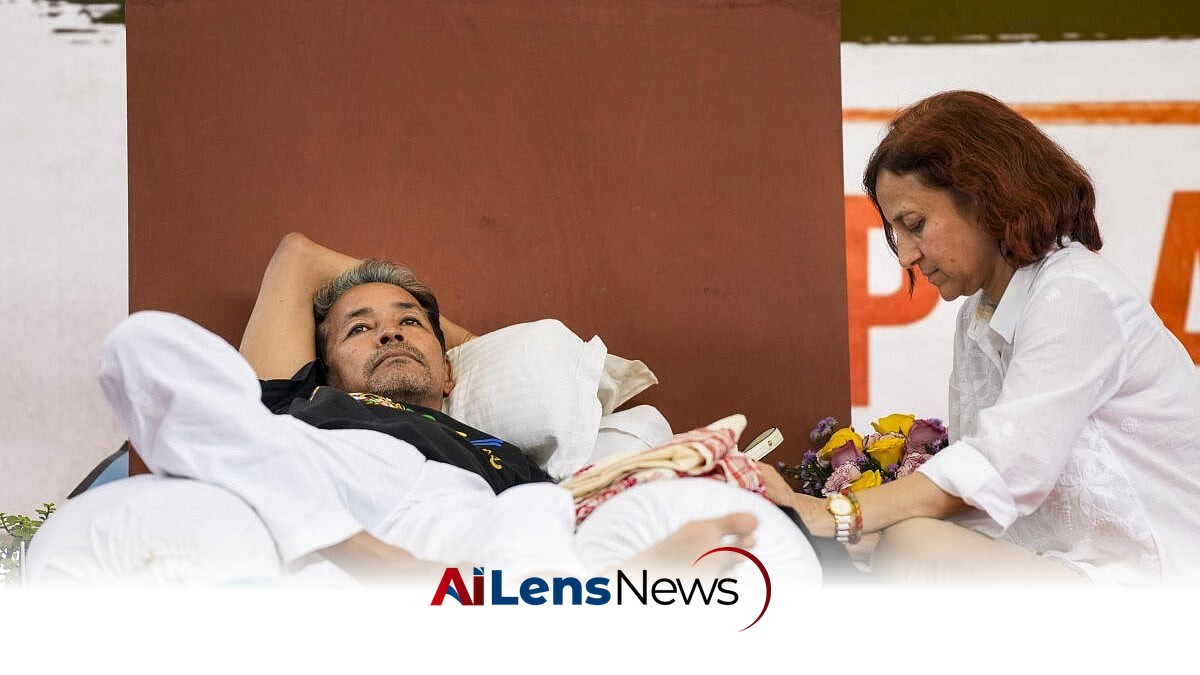


Gitanjali Angmo vows to lead the July 20 Parliament march if her husband, Sonam Wangchuk, cannot join due to alleged hospital negligence and lack of transparency.
New Delhi, India Jul 18, 2026 ALN: New Delhi: A determined Gitanjali J Angmo, the activist-wife of Sonam Wangchuk, who was forcibly removed from his hunger strike protest site on health grounds, announced on Saturday that she will lead the July 20 Parliament march if her husband is unable to participate. Angmo alleges that the government hospital has refused to share Wangchuk's medical reports despite multiple requests. This situation has raised serious concerns regarding the transparency and ethics of medical treatment in politically sensitive cases.
Sonam Wangchuk, a well-known engineer and environmental activist, has a history of advocating for social and environmental justice in India. His hunger strikes have often drawn public attention to pressing issues, particularly those affecting the youth and the environment. The current protest, which has now entered its third week, is part of a broader movement demanding accountability from the government regarding education policies and environmental practices. Wangchuk's decision to engage in a hunger strike reflects his deep commitment to these causes, but it has also placed him in a precarious situation regarding his health.
Angmo expressed her concerns regarding the treatment of her husband at the union government-run Safdarjung Hospital, where doctors reportedly provided conflicting potassium level readings within a 24-hour period. "Yesterday (Friday), doctors from Safdarjung checked him and all vitals were normal. Potassium was 4.3. Now they are saying the potassium is 2.9 and it is life-threatening. But when we asked for the report, they showed us the report but did not give it. I am having trust issues due to lack of transparency," she told reporters. This inconsistency in medical assessments raises questions about the protocols followed in emergency medical situations, especially when the patient is a high-profile activist.
In light of these concerns, Angmo has requested that no medical treatment be administered to Wangchuk without her consent and is seeking his discharge from the hospital, citing a lack of transparency. Angmo stated, "We want to get Wangchuk examined independently before consenting to any treatment. I've asked them not to administer potassium. We are going to do another test from a different lab before giving medicines. Sonam is absolutely fine and we will soon shift him to a hospital we trust." This insistence on independent medical evaluation highlights the growing mistrust between patients and the healthcare system, particularly when political motives may be at play.
Angmo also voiced her frustrations over the restrictions placed on their phones while at the hospital, likening the environment to a "jail" due to the heavy police presence. Wangchuk was taken to the hospital by police on Saturday morning, citing his deteriorating health after 21 days of hunger strike. The presence of law enforcement in medical settings raises ethical concerns about the right to privacy and the ability of patients to communicate freely with family and advocates.
Despite the circumstances, Angmo remains hopeful that Wangchuk will participate in the July 20 Parliament March aimed at demanding the removal of Education Minister Dharmendra Pradhan. She stated, "The youth have kept the movement on. Even if Sonam can't participate in the march, I will represent him and lead the march on Monday. It's not that by forcefully removing Sonam they can stop it." This determination to continue the protest underscores the resilience of social movements, particularly those led by young activists who are increasingly vocal about their demands for change.
Angmo emphasized that the Delhi High Court order did not mandate hospitalisation, only stating that an individual's health must be monitored regularly. "So, this (hospitalisation by police) is not in accordance with the High Court order," she remarked. This assertion calls into question the legal frameworks governing medical treatment and the rights of individuals, especially those engaged in protests or hunger strikes.
In her communication with Safdarjung Hospital's Medical Superintendent Charu Bamba, Angmo insisted that no oral or intravenous medicine or fluid be administered to Wangchuk without her consent and requested copies of all medical reports. She also sought his discharge to transfer him to a medical facility of the family's choice, citing a "loss of confidence" in the hospital. The insistence on consent and transparency in medical treatment reflects broader societal concerns about patient rights, particularly in cases involving political dissent.
A medical bulletin issued at 3:30 PM indicated that "intravenous fluids were advised but the patient has refused all intravenous fluids, oral rehydration fluid or any other medication." This refusal raises questions about informed consent and the rights of patients to make decisions about their own health care, particularly in high-stress situations where external pressures may influence their choices.
Angmo noted that Wangchuk had joined the Cockroach Janta Party agitation because he believed in the genuineness of the demands and the organic nature of the protest. "Gen Z has shown how peacefully they can protest," she added. This reference to the younger generation's activism highlights the changing landscape of political engagement in India, where social media and grassroots movements have empowered youth to voice their concerns and demand accountability from those in power.
Dr. Satish Lamba, who had been monitoring Wangchuk's health during the hunger strike, stated that he had not been permitted to meet the activist at Safdarjung Hospital. This restriction on medical professionals raises ethical concerns about the right of doctors to provide care and support to their patients, particularly in politically charged situations. The implications of such restrictions extend beyond individual cases, potentially affecting the overall trust in the healthcare system and its ability to serve all citizens equitably.
The situation surrounding Sonam Wangchuk's health and the actions of Gitanjali Angmo reflect broader themes of activism, healthcare ethics, and the role of governmental authority in personal health matters. As the July 20 Parliament march approaches, the actions taken by both Angmo and the healthcare system will likely influence public perception and discourse surrounding the intersection of health, politics, and social justice in India.
To learn more about the latest developments in Health & Public Safety, stay updated with our exclusive reports and analyses on AiLensNews.

