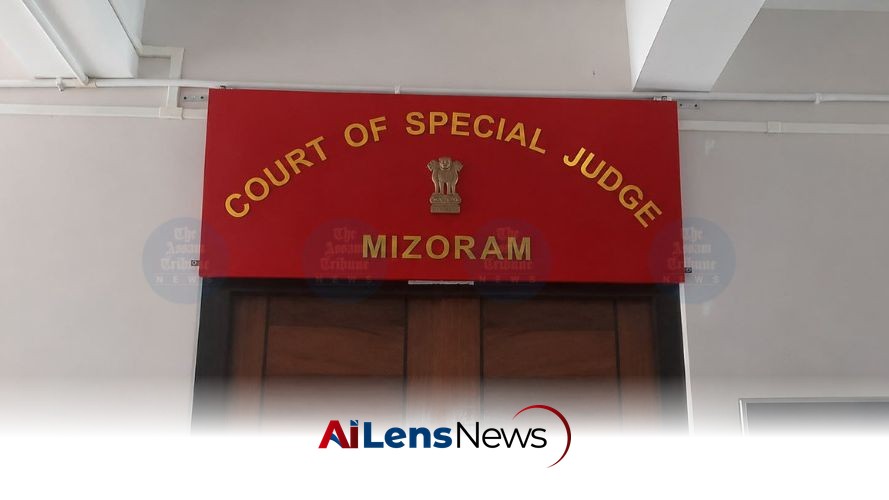


In a significant ruling, four businessmen were sentenced to two years in prison for a Rs 10.34 crore subsidy fraud involving Mizo Carbon Products Limited, while 13 others were acquitted due to lack of evidence.
New Delhi, India Jul 25, 2026 ALN: Four businessmen were sentenced to two years’ imprisonment and fined Rs 1.50 lakh each by the Special Court (Prevention of Corruption) here in connection with a multi-crore subsidy fraud involving Mizo Carbon Products Limited, while 13 other accused, most of them government employees, were acquitted after the court found insufficient evidence to establish their guilt.
The sentence was pronounced on Friday following the conviction of the four accused in a judgment delivered by Special Judge F Rohlupuia on Thursday. Those convicted are Ravi Gulgulia of Guwahati, Assam, Vimal Kishore of Silchar in Assam’s Cachar district, Sandeep Agarwal of Guwahati and Pramod Bharech of Kolkata, West Bengal. They were found guilty under Sections 120B (criminal conspiracy), 420 (cheating) and 471 (using forged documents as genuine) of the Indian Penal Code.
The court held that the prosecution had failed to prove the charges beyond reasonable doubt against the remaining 13 accused, resulting in their acquittal. This outcome highlights the complexities involved in prosecuting cases of financial fraud, especially when a significant number of individuals are implicated.
The case traces its origins to a public interest litigation (PIL) filed before the Gauhati High Court in 2017 by anti-corruption activist Vanramchhuangi, popularly known as Ruatfela Nu. In her petition, she alleged that executives of Mizo Carbon Products Limited had fraudulently sought to obtain Rs 10.34 crore under the Central Transport Subsidy (CTS) scheme despite failing to transport and utilize the quantity of raw coal required to qualify for the subsidy. This legal action reflects a growing trend in India where citizens are increasingly using PILs as a tool to combat corruption and hold businesses accountable.
Mizo Carbon Products Limited was established as a partnership firm with the intention of manufacturing Low Ash Metallurgical Coke (LAMC), hard coke, coke breeze, and allied products at its factory located in the Industrial Growth Centre at Luangmual in Aizawl. The firm claimed to import raw coal from outside Mizoram for use in its manufacturing operations. However, the veracity of these claims came under scrutiny as the investigation unfolded.
The initial investigation was conducted by the Mizoram Anti-Corruption Bureau (ACB), which eventually transferred the case to the Central Bureau of Investigation (CBI) on October 17, 2017, following directives issued under the Delhi Special Police Establishment (DSPE) Act, 1946. This transfer to a central agency underscored the seriousness of the allegations and the potential implications for public trust in governmental processes.
During its investigation, the CBI concluded that the company had falsely represented that it was importing raw coal from outside the State and manufacturing coke on a large scale. Investigators found that the firm had, in reality, neither imported the claimed quantity of raw coal nor produced coke in the volumes stated in its subsidy claims. This misrepresentation not only defrauded the government of substantial funds but also raised questions about the regulatory oversight in place for such subsidy schemes.
Moreover, the investigation revealed that the company had fraudulently secured more than Rs 3.41 crore under the Central Transport Subsidy (CTS) and Central Capital Investment Subsidy (CCIS) schemes despite the absence of the claimed manufacturing activity at its Luangmual factory. The implications of this fraud extend beyond financial loss; they also call into question the efficacy of subsidy programs designed to support local industries and promote economic development.
CBI investigators further uncovered that the company relied on forged documents relating to manufacturing equipment and the transportation of raw coal to support its applications for the central subsidies. This aspect of the case emphasizes the lengths to which some businesses may go to exploit governmental support mechanisms, potentially undermining the integrity of legitimate businesses that comply with regulations.
Among the most notable findings cited during the investigation was an implausible transportation record showing a single truck allegedly travelling between Khlehriat in Meghalaya and Luangmual in Aizawl, a distance of about 312 kilometres, as many as eight times in a single day. This claim exposed the fabricated nature of the transport documents used to obtain the subsidies, illustrating the blatant disregard for the truth by the accused parties.
The outcomes of this case have broader implications for the business environment in Mizoram and the rest of India. The conviction of the four businessmen sends a strong message about the consequences of engaging in fraudulent activities, particularly in relation to government subsidies. However, the acquittal of the 13 other accused raises concerns about the challenges of securing convictions in complex fraud cases, especially when the evidence may be circumstantial or insufficient.
In the context of Mizoram, where economic development is a priority, the integrity of subsidy programs is crucial. The government must ensure that these programs are not exploited, as they are intended to support legitimate business operations and foster growth in key sectors. The case serves as a reminder of the need for robust oversight and transparency in the administration of subsidies, as well as the importance of holding individuals accountable for fraudulent actions.
As the legal proceedings conclude, it remains to be seen how this case will influence future policy decisions regarding subsidy allocation and monitoring in Mizoram and across India. The government may need to reevaluate its processes to prevent similar incidents from occurring in the future, ensuring that public funds are utilized effectively and in accordance with the intended purpose.
Overall, the Mizo Carbon Products Limited subsidy fraud case illustrates the complexities and challenges of tackling corruption within the business sector, particularly when it intersects with governmental support mechanisms. It highlights the need for vigilance, accountability, and a commitment to ethical practices in both business and governance.
To learn more about the latest developments in Crime & Law, stay updated with our exclusive reports and analyses on AiLensNews.

