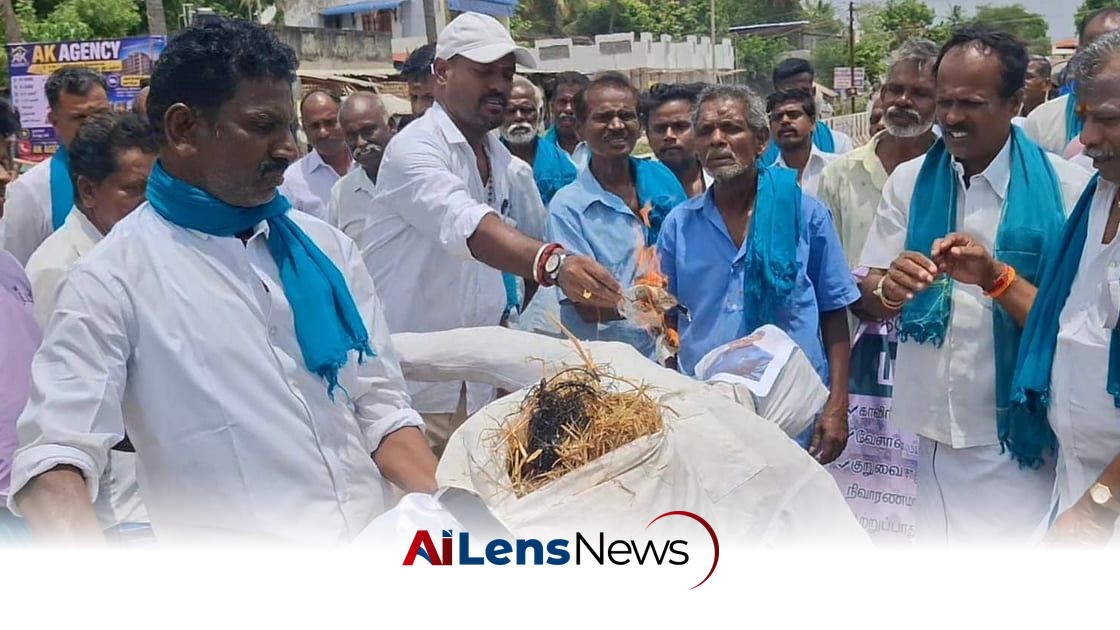


Farmers from Thanjavur and Tiruchy staged protests against Karnataka's Mekedatu dam, demanding water release and compensation for crop losses.
New Delhi, India Jul 21, 2026 ALN: Farmers from Thanjavur on Tuesday (July 21) burnt the effigy of Karnataka Chief Minister DK Shivakumar, condemning the construction of the Mekedatu dam while farmers from Tiruchy staged a protest in the Kollidam river, demanding the release of their due share of water to Tamil Nadu.
The farmers, belonging to the Cauvery Delta Farmers Protection Association and led by president D Swaminathan, protested at Budalur in Thanjavur. They charged that the Karnataka government has failed to release the due share of water to Tamil Nadu despite court directives, while Chief Minister Shivakumar continues with the dam's construction. This ongoing water dispute between Karnataka and Tamil Nadu has historical roots, primarily revolving around the sharing of the Cauvery River's waters, which are critical for agricultural activities in the Tamil Nadu region.
The Mekedatu dam project, proposed by the Karnataka government, aims to construct a dam across the Cauvery River at Mekedatu, located in the Kanakapura taluk of Ramanagara district in Karnataka. The Karnataka government argues that the dam will provide drinking water to Bengaluru and help in power generation. However, the farmers of Tamil Nadu view this project as a potential threat to their agricultural livelihoods, fearing that it would restrict the flow of water to their state, exacerbating the already contentious water-sharing issue.
The farmers urged the Union Government to halt the dam's construction, warning that it would turn the Delta region into a desert. The Cauvery Delta is one of the most fertile regions in Tamil Nadu, known for its rice cultivation, particularly the kuruvai variety, which requires a significant amount of water during the monsoon season. The farmers' demands are not only about immediate water access but also about the long-term sustainability of their agricultural practices and the ecological balance of the region.
Additionally, they demanded that Chief Minister C Joseph Vijay initiate legal proceedings against the Karnataka government to prevent the dam's construction. This call for legal action reflects a broader frustration among Tamil Nadu farmers regarding what they perceive as the Karnataka government's unilateral actions that disregard the interests of Tamil Nadu's agricultural community. The historical context of the Cauvery Water Disputes Tribunal's verdicts and subsequent Supreme Court rulings play a significant role in shaping these sentiments, as many farmers believe that Karnataka has consistently failed to adhere to agreements regarding water sharing.
They also called for a kuruvai loss compensation of Rs 25,000 per acre and insisted on proper desilting of water bodies across the state, particularly in the delta region. The request for compensation highlights the economic strain that water shortages impose on farmers, who often rely heavily on the timely availability of water for their crops. The desilting of water bodies is crucial to ensure that water retention is maximized and that the existing water resources are utilized effectively.
During the protest, a section of the farmers brought forth the effigy of Chief Minister Shivakumar and set it ablaze while chanting slogans against Karnataka. The act of burning an effigy is a traditional form of protest in India, symbolizing deep-seated anger and frustration towards political leaders. This display of dissent underscores the emotional stakes involved in the ongoing water dispute, as farmers feel their livelihoods are at risk.
Meanwhile, in Tiruchy, farmers led by P Ayyakannu, state president of Desiya Thennidhiya Nadhigal Inaippu Sangam, entered the Kollidam river near Upper Anicut and staged a protest amidst the water. This direct action illustrates the desperation of farmers who feel compelled to take matters into their own hands when they believe that their voices are not being heard by the government. The Kollidam river, a tributary of the Cauvery, is vital for irrigation in the region, and the farmers’ actions were intended to draw attention to their plight and demand immediate action from the authorities.
They demanded that the Karnataka government release the due share of water to Tamil Nadu and condemned the Mekedatu dam's construction. The farmers' protests come at a time when water scarcity is a pressing issue across many parts of India, exacerbated by climate change, population growth, and inefficient water management practices. The situation in Tamil Nadu is particularly precarious, as the state has faced severe drought conditions in recent years, further intensifying the competition for water resources.
Upon receiving information, the Jeeyapuram police rushed to the scene and removed the protesters from the river. The police intervention highlights the tensions surrounding such protests, as authorities often seek to maintain order while balancing the rights of citizens to express their grievances. The response from law enforcement can sometimes escalate tensions further, leading to clashes between protesters and police forces, which has been observed in various protests across the country over different issues.
The ongoing protests by farmers in Tamil Nadu against the Mekedatu dam construction are not just isolated incidents but part of a larger narrative surrounding water rights and agricultural sustainability in India. As climate change continues to impact water availability, and as urban areas expand, the conflicts over water resources are likely to intensify. The situation calls for a comprehensive dialogue between the states involved, guided by legal frameworks and equitable water-sharing agreements that can address the concerns of all stakeholders, including farmers, policymakers, and environmentalists.
The implications of the Mekedatu dam construction extend beyond immediate water availability; they touch upon issues of regional equity, agricultural viability, and the socio-economic fabric of communities dependent on agriculture. As farmers continue to voice their concerns, the need for effective governance and collaborative approaches to resource management becomes increasingly critical to ensure that the needs of all parties are met in a fair and sustainable manner.
To learn more about the latest developments in Politics, stay updated with our exclusive reports and analyses on AiLensNews.

