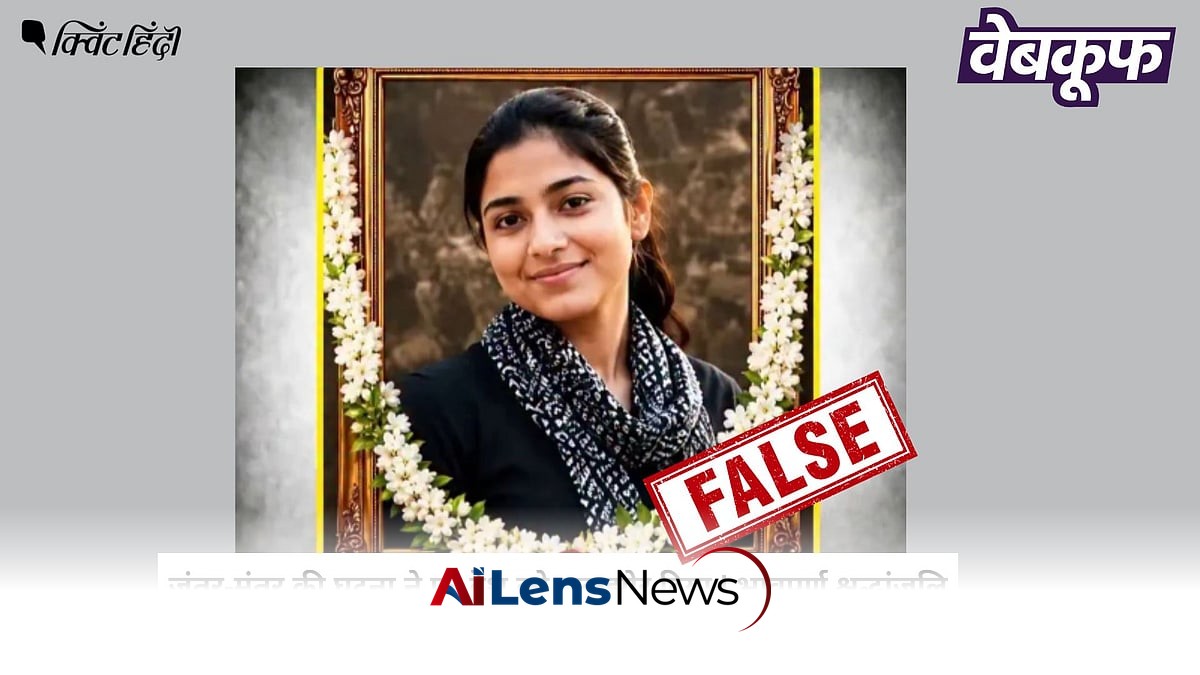


Misleading claims about a student's death during a protest at Jantar Mantar have been debunked, revealing the image shared was AI-generated.
New Delhi, India Jul 27, 2026 ALN: The protest organized by the Cockroach People's Party (CJP) at Jantar Mantar concluded on July 25, 2026, following the resignation of Education Minister Dharmendra Pradhan. The CJP, a political party known for its advocacy on various social issues, mobilized a significant number of students and activists to voice their concerns regarding education policies and other pressing matters. The protests were marked by passionate speeches, public demonstrations, and a call for reforms in the educational sector. However, the end of the protest did not stop the spread of fake news and misleading claims on social media, which is a growing concern in today’s digital age.
Claim: A photo of a girl is circulating on social media, claiming that she died during the police baton charge at Jantar Mantar on July 20.
This claim, which has gained traction online, is indicative of the broader issue of misinformation that often accompanies protests and civil unrest. In recent years, social media has become a powerful tool for both activism and the dissemination of false information. The viral image purportedly showing a deceased protester has been shared widely, leading to panic and outrage among the public.
Is this claim true? No, this claim is false.
The viral post is not genuine; it was created using AI. The use of artificial intelligence to fabricate images and videos has become increasingly common, raising concerns about the authenticity of visual content shared online.
There has been no official confirmation of any fatalities among the protesters during the baton charge by the Cockroach People's Party. This lack of confirmation is critical, as it highlights the importance of relying on verified information rather than sensationalized claims.
How did we verify the truth? We searched the internet using keywords related to this news (Jantar Mantar, protester death). The process of verifying claims is essential in an era where misinformation can spread rapidly.
Our search did not yield any credible news reports confirming this viral incident or any other protester death in Delhi. The absence of reliable sources is a strong indicator that the claims circulating on social media are unfounded.
We found a news report from the government news website Akashvani stating, "Delhi police have refuted the claims circulating on social media that a woman died during the protests at Jantar Mantar, clarifying that this information is false and misleading." Official statements from law enforcement agencies are crucial in dispelling rumors and providing clarity to the public.
Based on this, we checked the Delhi Police's social media accounts. Our search revealed a post on the Delhi Police's X (formerly Twitter) account refuting these viral claims. The proactive approach of the police in addressing misinformation is commendable and necessary in managing public perception during sensitive times.
Additionally, we found a post from PIB (Press Information Bureau) that included the viral image and labeled the claim as fake. The PIB plays a vital role in disseminating accurate information and combating misinformation, especially during crises.
Using the Deepfake-O-Meter tool, which identifies AI-generated content, we found that one tool indicated a 73% likelihood that the image was AI-generated, while another tool suggested a 98% likelihood. These findings underscore the importance of using technology to verify the authenticity of content shared on social media.
About the injured student: Reports indicated that a girl named Sakshi was injured during the baton charge on July 20. According to a report in Hindustan Times, "Sakshi, a 21-year-old who was injured during the protest at Jantar Mantar, has shown significant improvement and is currently in the ICU at Ram Manohar Lohia Hospital."
The hospital's medical bulletin stated, "She has been taken off the ventilator and is breathing independently. She is conscious and responsive to commands. Her brain and spinal MRI scans are normal." This update is a positive development, providing hope for her recovery and alleviating concerns among her family and friends.
The incident involving Sakshi highlights the risks associated with protests, particularly in situations where law enforcement may resort to aggressive crowd control measures. The use of batons and other forms of force during protests has been a contentious issue, raising questions about police conduct and the rights of protesters. The public's reaction to such incidents can lead to increased scrutiny of law enforcement practices and calls for accountability.
Moreover, the phenomenon of misinformation in the context of protests is not new. Historically, protests have often been accompanied by exaggerated claims or outright fabrications, particularly when emotions run high. The combination of social media's rapid dissemination capabilities and the public's desire for real-time updates creates an environment ripe for the spread of false information. This trend has been observed globally, where protests over various issues—ranging from social justice to political reform—have seen similar patterns of misinformation.
The implications of such misinformation can be profound. False claims can incite further unrest, lead to misallocation of resources by law enforcement, and even provoke violence. In the case of the Jantar Mantar protest, the spread of the false claim about a protester's death could have escalated tensions between protesters and police, potentially leading to more aggressive responses from law enforcement. This underscores the need for responsible reporting and social media use during times of civil unrest.
Conclusion: The claim regarding the death of a student during the protest at Jantar Mantar is false. No student died during this protest in Delhi. This situation serves as a reminder of the critical need for responsible sharing of information and the importance of fact-checking in the digital age. The spread of misinformation can have serious consequences, including inciting fear, confusion, and unrest among the public.
As social media continues to play a significant role in shaping public discourse, it is imperative for individuals to approach information with a critical eye, verify claims through credible sources, and refrain from sharing unverified content. The responsibility to combat misinformation lies not only with media organizations and fact-checkers but also with every individual who engages with content online. The digital landscape demands that users become more discerning consumers of information, understanding the potential impact of their shares and retweets.
In conclusion, the events surrounding the Jantar Mantar protest highlight the intricate relationship between social movements, media, and the public's perception of truth. As society navigates this complex terrain, fostering a culture of critical thinking and media literacy will be essential in combating the tide of misinformation that threatens to undermine the very fabric of informed civic engagement.
(If you come across any information that raises doubts about its authenticity, please send it to our WhatsApp number 9540511818 or email us. We will provide you with the truth. You can read our other fact-check stories here.)
To learn more about the latest developments in Crime & Law, stay updated with our exclusive reports and analyses on AiLensNews.

