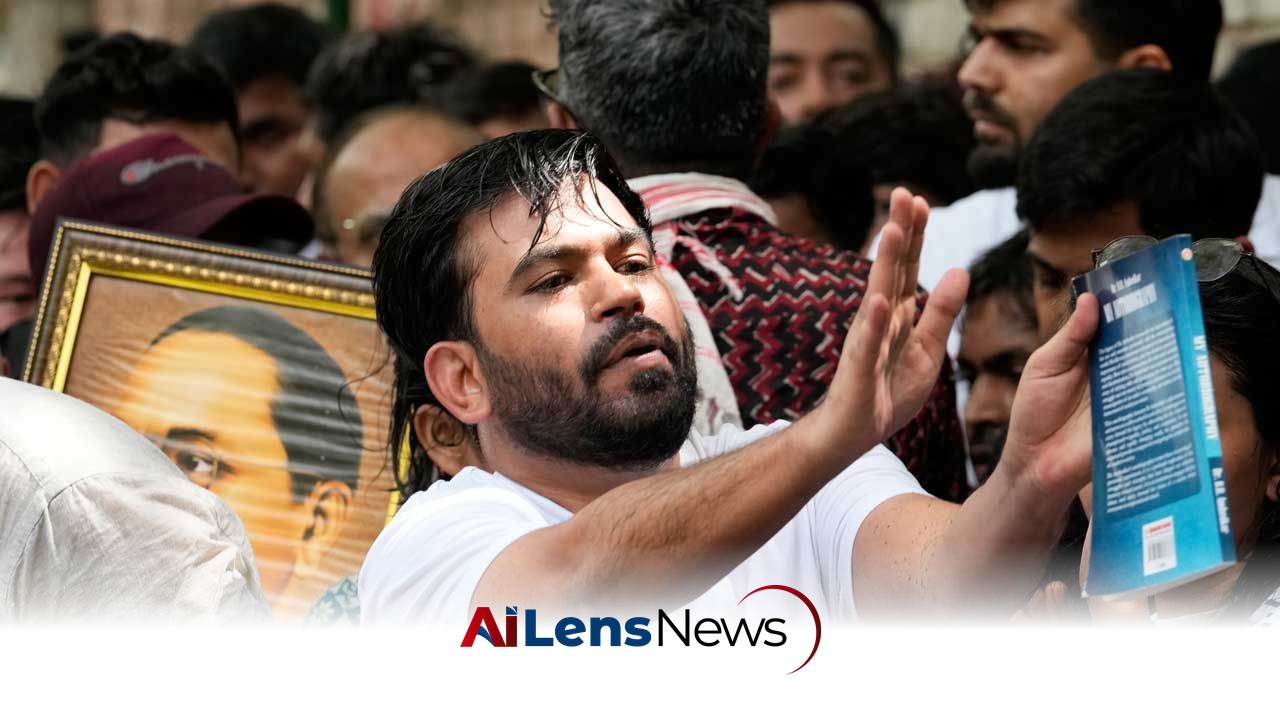


CJP founder Abhijit Dipke claims Delhi Police used excessive force against students during a peaceful march towards Parliament, demanding the resignation of Union Education Minister Dharmendra Pradhan.
New Delhi, India Jul 21, 2026 ALN: New Delhi: Abhijit Dipke, founder of the Cockroach Janata Party (CJP), has strongly condemned the Delhi Police for allegedly using excessive force against students during a march from Jantar Mantar towards Parliament. This incident has reignited discussions about police conduct and the treatment of student protests in India, especially in the context of the ongoing agitation surrounding the National Eligibility cum Entrance Test (NEET) and other related educational reforms.
The march, which was aimed at highlighting systemic issues within the NEET examination process, drew thousands of students and supporters who gathered at Jantar Mantar, a site known for political protests in the capital. The students were advocating for accountability concerning repeated paper leaks and demanding reforms in the examination process. The NEET-UG examination, which is crucial for medical college admissions, has been mired in controversy over the years, with allegations of corruption, mismanagement, and inadequate support for students.
Addressing the media, Dipke announced that while the march towards Parliament was called off midway to ensure students’ safety, the ongoing agitation and hunger strike led by prominent education reform activist Sonam Wangchuk would continue until Union Education Minister Dharmendra Pradhan resigns. Wangchuk has been a vocal critic of the existing education system and has advocated for significant changes to improve educational standards and accessibility for students across the country.
Speaking to IANS, Dipke claimed that the protest was entirely peaceful, yet the police initiated a brutal lathi-charge, injuring many students. He alleged that female students were also subjected to mistreatment near the barricades, with reports of head injuries, broken limbs, and other serious injuries. Such incidents have raised significant concerns regarding the use of force by law enforcement agencies during protests, particularly those led by students, who are often seen as the voice of the future.
“Our students were determined to march to Parliament despite the risks, but we had to prioritize their safety to prevent any major tragedy,” he said. This statement underscores the delicate balance between the right to protest and the responsibility of authorities to ensure public safety. The events of the day have prompted calls for a review of police protocols regarding crowd control and the treatment of peaceful protesters.
In a contrasting narrative, the Delhi Police stated that more than 100 of its personnel were injured during the students’ protest. This claim has sparked debate about the nature of the confrontation and whether the police response was proportional to the actions of the students. The police force is often under scrutiny for its handling of protests, and this incident is likely to fuel ongoing discussions about reforming police practices in India.
Dipke questioned the government’s intentions, especially after a meeting with Union Minister JP Nadda. This meeting, which was presumably intended to address student concerns, raises questions about the effectiveness of dialogue between the government and student bodies. The CJP leader also reacted to the FIR registered against activist Saurabh Das, demanding that if action was taken against protesters, the Education Minister should also be held accountable for the NEET-UG controversies, which he alleged had led to multiple student suicides. This assertion highlights a growing concern about mental health issues among students, particularly in high-stakes examination environments.
Despite the police action, Dipke welcomed opposition parties for raising the NEET-UG issue in Parliament on the first day of the Monsoon Session. The involvement of opposition parties signifies a broader political consensus on the need for educational reforms, although it also reflects the contentious nature of student protests as a political tool. “The opposition kept its promise to the students. However, our protest will not stop. We will continue raising our voices until Dharmendra Pradhan resigns,” he asserted, indicating a firm commitment to the cause.
The march towards Parliament was called off after thousands of students and supporters gathered at Jantar Mantar to demand systemic reforms to the examination process and accountability for repeated paper leaks. The decision to halt the march was not taken lightly, as it reflects the precarious situation that student leaders find themselves in when navigating the complexities of activism within a charged political landscape.
Dipke expressed gratitude to the opposition parties for raising the NEET-UG issue in Parliament on the first day of the Monsoon Session. This acknowledgment emphasizes the importance of political support for social movements and the role of legislative bodies in addressing public grievances. He said the opposition had kept its promise to the students by raising the matter in Parliament. However, he made it clear that the agitation and protests would continue until Union Education Minister Dharmendra Pradhan resigns. Such a determination indicates a significant level of dissatisfaction among students regarding the current administration’s handling of educational policies.
This incident not only highlights the immediate concerns regarding police brutality and student rights but also reflects broader societal issues, including the treatment of youth in political discourse and the urgent need for educational reform in India. As the situation develops, it remains to be seen how both the government and student bodies will navigate the complexities of this protest, and whether meaningful dialogue will emerge from the tensions that have unfolded on the streets of New Delhi.
The NEET examination itself has been a contentious topic for several years, with numerous protests and calls for reform emerging from various student groups. The examination serves as a gateway for aspiring medical students, but its administration has faced criticism for alleged irregularities, such as question paper leaks and discrepancies in results. Such issues have not only affected the credibility of the examination but have also raised questions about the overall state of education in India, where access to quality education remains a significant concern.
Moreover, the mental health of students has become a pressing issue, particularly in the context of high-stakes examinations like NEET. The pressure to perform well in such exams can lead to severe anxiety and stress, contributing to tragic outcomes, including suicides among students. This has prompted calls for greater mental health support within educational institutions, as well as advocacy for a more humane approach to education that prioritizes student well-being over rote learning and exam-centric systems.
The role of student activism in India has evolved significantly over the years. Historically, student movements have played a crucial role in shaping political discourse and advocating for social justice. However, the current climate of student protests often faces challenges, including government crackdowns and police violence, which can deter participation and silence dissenting voices. The recent events in New Delhi serve as a reminder of the delicate balance between authority and activism, and the need for constructive dialogue to address the grievances of young people.
As the government navigates these protests, it must also consider the broader implications of its actions. The treatment of student protesters can influence public perception and trust in law enforcement agencies, as well as the government's commitment to upholding democratic values. A failure to adequately address the concerns raised by students may not only lead to increased unrest but could also hinder the government's ability to implement effective educational reforms in the future.
In conclusion, the clash between Delhi Police and students during the recent march towards Parliament highlights critical issues surrounding police conduct, student rights, and the urgent need for educational reform in India. As students continue to advocate for their rights and demand accountability, the government's response will be pivotal in shaping the future of education and the relationship between authorities and the youth of the nation. The events that transpired in New Delhi may serve as a catalyst for change, prompting a reevaluation of policies and practices that impact the lives of millions of students across the country.
To learn more about the latest developments in Crime & Law, stay updated with our exclusive reports and analyses on AiLensNews.

