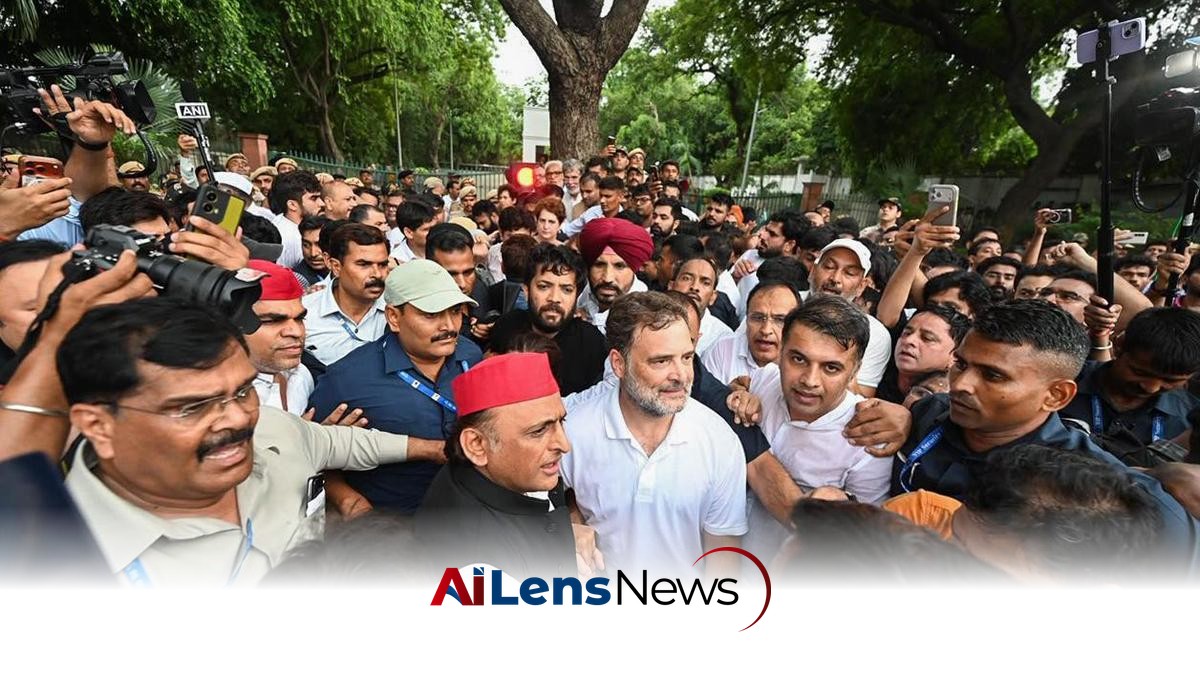


The Aam Aadmi Party criticizes Rahul Gandhi's protest outside PM Modi's residence, alleging it undermines the CJP's ongoing movement.
New Delhi, India Jul 22, 2026 ALN: The Aam Aadmi Party (AAP) on Tuesday accused Congress leader Rahul Gandhi of attempting to “weaken” the movement initiated by the Cockroach Janta Party (CJP), which demands the resignation of Union Education Minister Dharmendra Pradhan. This accusation arose after Gandhi organized a sit-in protest outside the residence of Prime Minister Narendra Modi on the same issue, leading AAP to claim that the BJP and Congress operate as “one unit.”
This situation highlights a growing tension between the AAP and Congress, particularly in the context of their respective approaches to protest and political activism. The CJP, a collective of activists and concerned citizens, has been vocal about issues surrounding education in India, specifically targeting the Union Education Minister for perceived failures in the education sector. Their protest at Jantar Mantar has been ongoing for a month, drawing attention to various grievances, including inadequate educational policies and the treatment of students by the government.
Former Delhi Chief Minister Atishi expressed her disbelief over Gandhi's ability to protest outside the PM’s residence while the CJP demonstration faced suppression. “This is amazing! CJP and Sonam Wangchuk: One month protest at Jantar Mantar. Modi govt. refuses to talk to them. Rahul Gandhi: Allowed to protest outside PM residence. In one hour, Modi govt. starts dialogue. Wah! Kya jugalbandi hai!” Ms. Atishi remarked in a post on X. Her comments underscore a sentiment among some political observers that there is a disparity in how different political figures are treated by the government, particularly when it comes to their ability to mobilize and engage in protests.
Atishi's remarks reflect a growing concern among opposition parties that the ruling government may selectively engage with certain leaders while ignoring grassroots movements. The CJP's ongoing protest, which has been characterized by its peaceful approach and focus on dialogue, has not garnered the same level of attention or response from the government as Gandhi’s sit-in, which was organized at a high-profile location. This raises questions about the effectiveness of traditional forms of protest in the current political climate and the role of media coverage in shaping public perception of political movements.
In another post, Atishi highlighted the disparity in police treatment, stating, “The same Delhi Police that was not allowing CJP to move even 100 metres towards Parliament, allowed Rahul Gandhi to reach right outside PM residence! Do we need any more evidence that Congress-BJP is one unit?” This comment points to a broader critique of law enforcement's role in political protests in India, where police action has often been seen as politically motivated. The juxtaposition of the police's response to the CJP and Congress protests raises critical questions about the right to protest and the extent to which political affiliations influence law enforcement actions.
Senior AAP leader Saurabh Bharadwaj also questioned the Modi government's sudden responsiveness to Gandhi's protest, noting that while the CJP movement had been ignored for a month, two Ministers and two secretaries were dispatched to meet Gandhi after just one hour of his protest. “Mr. Rahul Gandhi does not want to be at Jantar Mantar. He wants people to join his 100 people protest,” Bharadwaj stated. This observation suggests that there may be strategic calculations at play regarding the visibility and impact of different protests, with larger parties like Congress potentially benefiting from their established political stature.
During the protest, Mr. Gandhi was accompanied by other senior Congress leaders, including Priyanka Gandhi Vadra and party chief Mallikarjun Kharge, alongside various Opposition leaders. They collectively demanded Mr. Pradhan’s resignation and condemned the police action against protesting students, who were detained during the demonstrations. The presence of prominent leaders at Gandhi's protest signifies the Congress party's attempt to consolidate opposition against the government and rally support for educational reforms.
The broader implications of this political dynamic are significant. The AAP's accusations against Congress reflect an ongoing rivalry in Indian politics, particularly in urban centers like Delhi, where both parties vie for influence and voter support. The AAP, which has positioned itself as a champion of grassroots movements, may feel threatened by the Congress's ability to mobilize quickly and effectively at high-profile locations. This could lead to further polarization within the opposition, complicating efforts to present a united front against the ruling party.
Moreover, the treatment of protests and the engagement of law enforcement also highlight deeper issues within India's democratic framework. The right to dissent is a cornerstone of democratic societies, and how protests are managed can significantly impact public trust in governmental institutions. The contrasting experiences of the CJP and Congress may resonate with the public, influencing perceptions of both parties and their commitment to representing the interests of ordinary citizens.
As the political landscape continues to evolve, the tensions between AAP and Congress may set the stage for future electoral battles, particularly as both parties seek to address the pressing issues facing voters, including education, employment, and civil rights. The outcome of this rivalry could have lasting effects on the political strategies of both parties, as well as on the broader discourse surrounding governance and accountability in India.
In conclusion, the accusations from the AAP against Congress regarding the handling of protests and the treatment of political movements underscore the complexities of Indian politics today. As various parties navigate their roles in advocating for change, the effectiveness of their strategies will likely be scrutinized by both their supporters and the wider public, shaping the future of political activism in the country.
To learn more about the latest developments in Politics, stay updated with our exclusive reports and analyses on AiLensNews.

