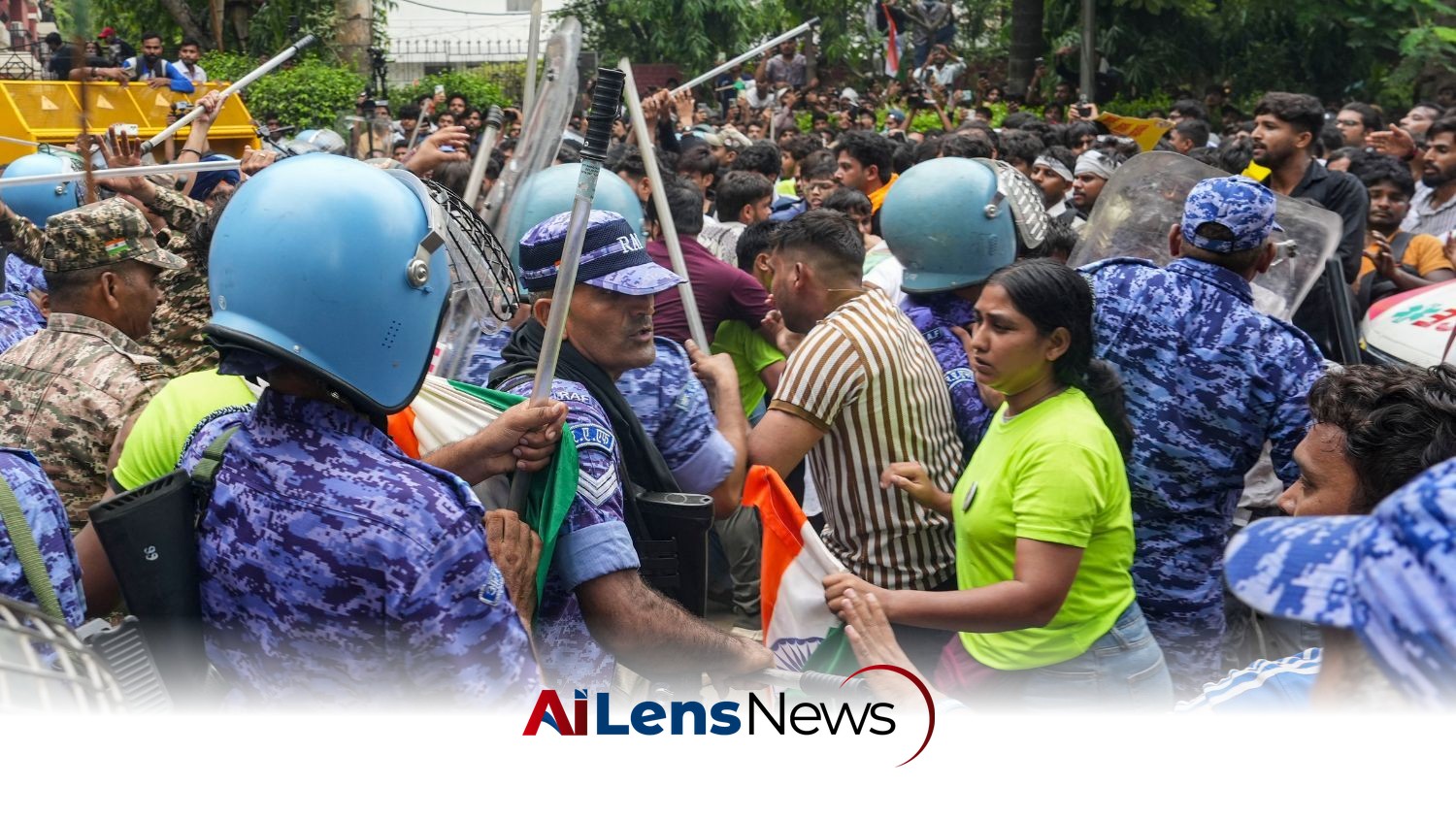


In response to escalating protests, the Union Government has airlifted 20 companies of CRPF personnel from West Bengal to bolster security in Delhi.
New Delhi, India Jul 22, 2026 ALN: New Delhi: The Union Government has ordered the deployment of 20 additional companies of the Central Reserve Police Force (CRPF) in Delhi to enhance security measures amid ongoing protests by the Cockroach Janta Party (CJP) and various political parties, officials confirmed on Wednesday.
The forces, all drawn from the CRPF, are being airlifted from West Bengal following an order from the Ministry of Home Affairs (MHA) for their immediate deployment in the national capital on Tuesday night. This decision underscores the government's proactive approach in ensuring public safety and maintaining order during a period marked by heightened political tensions.
A total of 20 CRPF companies are being transported from Kolkata to be stationed in Delhi, aimed at maintaining law and order in light of the CJP protests, demonstrations by political factions, and the current session of Parliament, according to official sources within the security establishment. The deployment comes at a critical time when the Parliament is in session, and there are concerns that protests could escalate, potentially disrupting legislative activities.
Recent violent clashes during the protests have prompted this urgent deployment, officials stated. The protests, which began as peaceful demonstrations, have seen an increase in intensity, with reports of confrontations between demonstrators and law enforcement agencies. The government is keen to prevent any further escalation of violence, as such incidents can lead to significant public unrest and a breakdown of law and order.
These companies were previously stationed in West Bengal for the assembly elections held a few months ago and had been retained at the request of the state government. The swift mobilization of these forces illustrates the government's readiness to address security challenges as they arise, drawing on resources that were recently engaged in maintaining peace during the electoral process in West Bengal.
A CRPF company typically comprises over 100 personnel, which means that the deployment of 20 companies will bring at least 2,000 additional personnel to the capital. This significant increase in security presence is intended to deter any potential violence and reassure the public that law enforcement is prepared to respond effectively to any disturbances.
Additionally, approximately 30 companies of the CRPF and its specialized anti-riots unit, the Rapid Action Force (RAF), have already been assigned to the Delhi Police to strengthen security measures in anticipation of the CJP protests and the Monsoon session of Parliament that commenced on July 20. The presence of these forces is particularly crucial given the historical context of protests in India, where political demonstrations can quickly escalate into larger movements, sometimes resulting in violence and civil disorder.
The CJP, a political party that has been vocal in its opposition to various government policies, has been organizing protests to express its discontent over issues such as economic policies, social justice, and governance. The party's ability to mobilize large numbers of supporters reflects broader societal grievances and dissatisfaction with the current administration. As protests grow, the government faces the dual challenge of addressing the underlying issues that fuel such dissent while also maintaining public order.
The role of the CRPF in these situations is not only to manage crowds but also to engage in community relations, ensuring that the rights of citizens to protest peacefully are respected while also safeguarding the rights of others to go about their daily lives without disruption. The balance between these competing interests is delicate and requires a nuanced approach from law enforcement agencies.
In the past, similar deployments have been met with mixed reactions from the public. While some citizens appreciate the government's efforts to ensure safety, others view the presence of large security forces as an indication of a repressive state response to legitimate dissent. This dynamic can complicate the relationship between citizens and the state, resulting in increased tensions rather than resolution.
Moreover, the implications of these protests extend beyond immediate public order concerns. They can influence political discourse, shape public opinion, and impact upcoming elections. As parties like the CJP gain traction, they can alter the political landscape, prompting established parties to reassess their strategies and policies to address the concerns raised by protesters.
Historically, protests in India have played a significant role in shaping the country’s political narrative. From the anti-corruption movement led by Anna Hazare to the protests against the Citizenship Amendment Act (CAA), each wave of dissent has prompted the government to respond in various ways, including policy changes and, at times, a crackdown on dissent. The current protests led by the CJP echo similar sentiments of discontent, reflecting broader societal grievances that have been simmering for years.
Furthermore, the timing of this deployment is crucial. The Monsoon session of Parliament is often seen as a period when significant legislative changes are proposed, and opposition parties typically ramp up their activities to challenge the ruling government. This year, with the CJP mobilizing support against various policies, the potential for conflict increases, necessitating a strong security presence to manage any unrest.
The government’s strategy in deploying additional forces also raises questions about the long-term implications for civil liberties. While the state has a responsibility to maintain law and order, the use of force can sometimes lead to accusations of authoritarianism, particularly if peaceful protests are met with aggressive policing. This balance is vital as the government seeks to uphold democratic principles while ensuring public safety.
In conclusion, the deployment of additional CRPF forces in Delhi is a significant response to the ongoing protests and reflects the government's commitment to maintaining law and order during a politically sensitive period. As the situation evolves, it will be essential to monitor not only the immediate impacts of this deployment but also the broader implications for political stability and civil society in India. The interplay between state authority and citizen activism will continue to shape the democratic landscape, making it crucial for all stakeholders to engage constructively in dialogue and seek peaceful resolutions to conflicts.
As the protests continue, the effectiveness of the CRPF's deployment will be scrutinized not only by the government and law enforcement agencies but also by civil society organizations and the general public. The outcome of this situation could set precedents for how future protests are managed and how the government responds to dissent in a democratic framework.
To learn more about the latest developments in Crime & Law, stay updated with our exclusive reports and analyses on AiLensNews.

