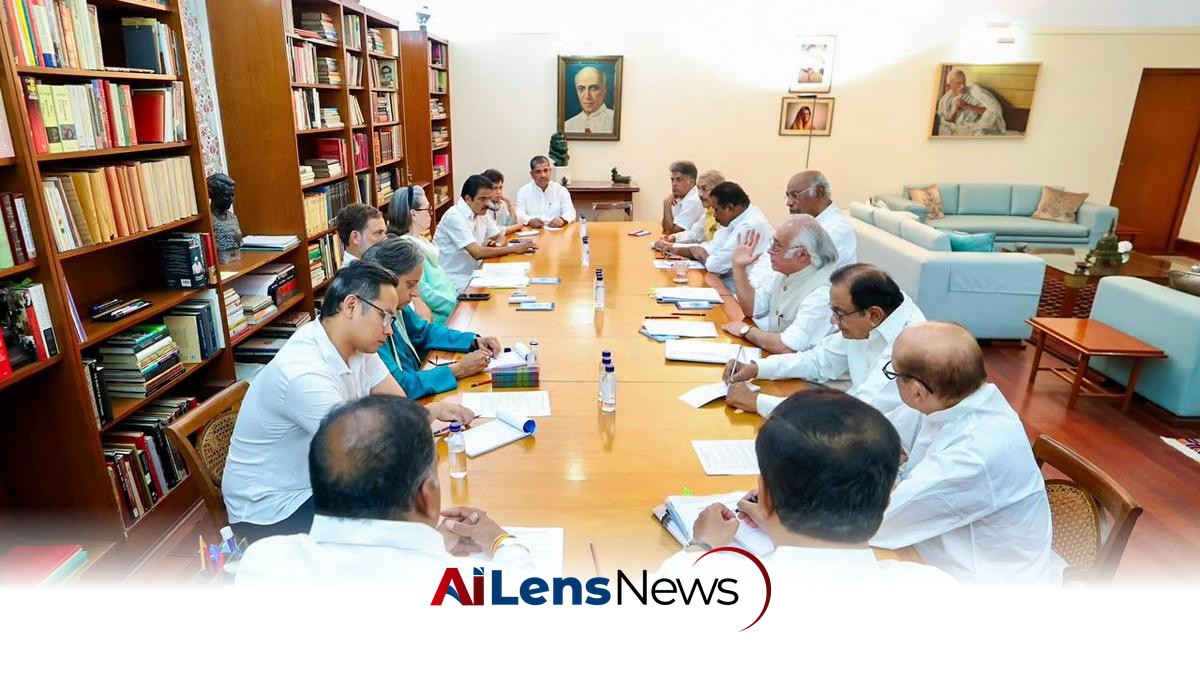


Congress leaders strategize for the upcoming Monsoon session, focusing on donation issues at the Ram Temple and opposing the delimitation Bill.
New Delhi, India Jul 17, 2026 ALN: The recent meeting of the Congress parliamentary strategy group has brought to the forefront two significant issues that are poised to shape the political discourse in India during the upcoming monsoon session of Parliament. The alleged donation theft at the Ram Temple in Ayodhya, a matter that has garnered considerable public attention, alongside the concerns regarding the "systematic corrosion" of educational institutions, has been identified as a core focus for the Congress party. These issues not only reflect the party's immediate agenda but also highlight broader socio-political dynamics in India.
The Ram Temple in Ayodhya, a site of immense historical and religious significance, has been at the center of a protracted legal and political battle. The temple's construction, which was a key promise of the ruling Bharatiya Janata Party (BJP), has evoked strong sentiments among its supporters and critics alike. Allegations of "chanda chori"—or donation theft—have surfaced, suggesting a lack of transparency in the management of funds intended for the temple's construction. This issue, if substantiated, could have far-reaching implications for the BJP, potentially eroding public trust and support. For the Congress party, leveraging this narrative could serve as a strategic move to regain traction among voters who are concerned about accountability and integrity in governance.
In parallel, the Congress party is also focusing on the deterioration of the education system in India, which has been a growing concern for many citizens. The party has framed this issue within the context of institutional capture and corruption, asserting that the current government has failed to uphold the standards of education and has allowed for a decline in academic integrity. This narrative aims to resonate with parents, students, and educators who are increasingly disillusioned with the educational policies and practices that have emerged under the present administration.
As part of its strategy, Congress president Mallikarjun Kharge has reached out to Prime Minister Narendra Modi, requesting the convening of an all-party meeting to discuss the government's revised proposals related to the Constitution (131st Amendment) Bill. This Bill, which aims to increase the strength of the Lok Sabha and initiate a delimitation exercise, has been met with skepticism from the Congress party. Kharge's letter underscores a desire for transparency and inclusivity in the legislative process, emphasizing the need for adequate time to study the proposals before they are introduced in Parliament.
Kharge's appeal for an all-party meeting reflects a broader concern within the opposition regarding the government's approach to significant legislative changes. The delimitation exercise, which involves redrawing the boundaries of electoral constituencies, has profound implications for electoral representation and political power dynamics. Critics, including the Congress party, argue that such changes could be used to manipulate electoral outcomes, particularly in light of the BJP's previous attempts to push through the delimitation Bill without securing the necessary support. The Congress party's strategy is to unify opposition voices against what they perceive as an attempt by the ruling party to consolidate power through legislative maneuvering.
During the strategy meeting, which was chaired by Sonia Gandhi, several prominent leaders, including Rahul Gandhi, K.C. Venugopal, P. Chidambaram, and Jairam Ramesh, were present. Their collective experience and influence within the party are crucial as they prepare to confront the government's legislative agenda. Ramesh, in particular, has been vocal about the Congress party's commitment to opposing the delimitation Bill, framing it as a threat to democratic principles. His assertion that the party will work to maintain unity among opposition parties highlights a strategic approach to counter the ruling party's initiatives.
Ramesh's criticisms extend beyond the delimitation Bill. He has expressed strong opposition to various proposed amendments, including those related to the removal of Ministers facing 30 days of custody, the Viksit Bharat Shiksha Adhishthan Bill, and amendments to the Foreign Contribution (Regulation) Act and the Food Security Act. Each of these issues carries significant implications for governance, civil society, and the welfare of citizens. The Congress party's stance against these amendments indicates a broader commitment to safeguarding democratic values and protecting the rights of individuals and institutions.
Furthermore, Ramesh has directed his criticism towards Union Home Minister Amit Shah, accusing him of employing divisive tactics to secure a two-thirds majority in the Lok Sabha. This accusation underscores a growing concern among opposition leaders regarding the integrity of the electoral process and the potential for political manipulation. Ramesh's comments reflect a sentiment that the pursuit of a parliamentary majority should not come at the expense of democratic principles and constitutional integrity.
The Congress party's strategy is not limited to internal discussions; it also involves reaching out to other opposition parties. Both Kharge and Gandhi have been in contact with parties that previously supported the Congress in defeating the government's delimitation Bill in April. The formation of the Indian Developmental, Inclusive Alliance (INDIA) bloc, which aims to foster collaboration among opposition parties, is a crucial aspect of this strategy. The upcoming strategy meeting of the INDIA bloc is expected to play a pivotal role in shaping a united opposition front against the government's legislative agenda during the monsoon session.
As the monsoon session approaches, the political landscape in India is poised for intense debates and discussions. The issues of donation transparency at the Ram Temple, the state of the education system, and the implications of the delimitation Bill are likely to dominate the parliamentary discourse. For the Congress party, these issues represent an opportunity to reassert its relevance in Indian politics and to challenge the ruling party's narrative. The effectiveness of their strategy will depend on their ability to mobilize support from other opposition parties and to resonate with the concerns of the electorate.
In conclusion, the Congress party's focus on the alleged donation theft at the Ram Temple and the proposed delimitation Bill reflects a broader strategy to engage with pressing issues that resonate with the public. As they prepare for the monsoon session of Parliament, their ability to hold the government accountable and to unite the opposition will be crucial in shaping the political discourse in the coming weeks. The implications of these discussions will extend beyond the immediate legislative agenda, influencing public perceptions and electoral dynamics as India approaches future elections.
To learn more about the latest developments in Politics, stay updated with our exclusive reports and analyses on AiLensNews.

