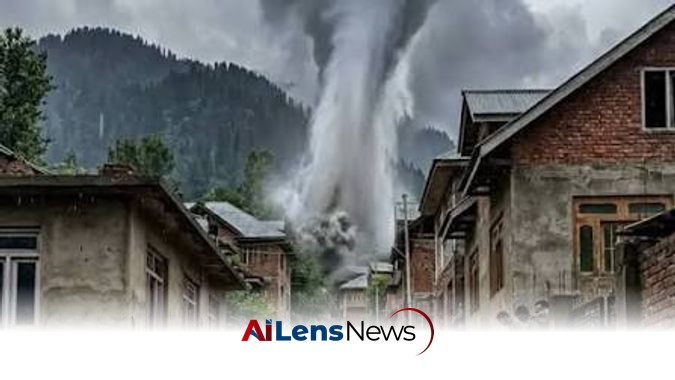


A cloudburst in Boniyar, Kashmir, triggered flash floods, damaging infrastructure and disrupting essential services. Rescue operations are underway.
New Delhi, India Jul 23, 2026 ALN: A cloudburst in the upper reaches of Mayan village in Boniyar tehsil of north Kashmir’s Baramulla district on Thursday triggered flash floods, washing away culverts, disrupting essential services, and prompting rescue and restoration operations by the district administration and police.
Cloudbursts are sudden and intense rainfall events that can lead to rapid runoff and flooding, particularly in mountainous regions like Kashmir. These phenomena can occur with little warning, making them particularly dangerous for local communities. The nature of cloudbursts is such that they can release an enormous amount of rainfall in a short period, often leading to severe flooding. This is especially true in regions with steep terrain, where the geography can funnel rainwater into streams and rivers, amplifying the risk of flash floods.
Officials reported that four culverts were washed away in the flash floods, snapping road connectivity and hampering restoration efforts. The destruction of these infrastructure elements highlights the vulnerability of rural areas to extreme weather events, which can disrupt not only transportation but also access to emergency services and supplies. The cloudburst also caused widespread disruption to electricity and drinking water supply, leaving residents of Mayan and adjoining villages facing considerable hardship. The loss of such critical infrastructure can significantly hinder recovery efforts, as it limits the ability of emergency services to reach affected areas and provide necessary assistance.
Tehsildar Boniyar, Mohammad Najbullah Shah, stated that restoration work had been launched on a war footing. This indicates the urgency with which local authorities are responding to the crisis. “We are hopeful that power and drinking water services will be restored by Friday, provided the weather remains favourable,” he noted, reflecting the reliance on weather conditions for recovery efforts. The challenges faced by the local administration are compounded by the unpredictability of weather patterns in the region, which can change rapidly, making it difficult to plan and execute restoration work effectively.
The Jal Shakti Department, Uri, issued a public advisory stating that the cloudburst had severely impacted the Neela Nag water source. Water sources in the region are critical for sustaining the local population, especially in rural areas where access to water can be limited. The department noted that raw water transmission pipelines were extensively damaged, resulting in disruption of drinking water supply to several villages. This situation raises concerns about public health, as a lack of access to clean drinking water can lead to waterborne diseases and other health issues. The potential for such health crises is a serious concern, particularly in the aftermath of natural disasters when sanitation and hygiene practices may be compromised.
The department urged residents to use water sparingly, boil drinking water before consumption, and extend cooperation to field staff engaged in restoration work. This advisory underscores the importance of community cooperation in crisis situations, as local residents often play a key role in assisting recovery efforts. It assured the public that efforts were underway to restore the damaged infrastructure and resume water supply at the earliest, which is vital for the well-being of the affected communities. The engagement of the community is crucial, as local knowledge and resources can significantly enhance the efficiency of recovery operations.
In a separate development, Jammu and Kashmir Police, in coordination with the Civil Administration, rescued a woman who was trapped inside her house after flash floods inundated parts of Mayan in the Lachipora-Bijhama area. The swift response of the police and civil administration highlights the efficiency of local emergency services in responding to natural disasters. Officials reported that the cloudburst caused a sudden surge of water and debris in a local stream, leading to flash flooding and panic among residents. The rapid onset of such events can create chaotic situations, where timely intervention is crucial. The ability of emergency services to respond quickly can mean the difference between life and death in such scenarios.
Acting swiftly, Tehsildar Boniyar, the Sub-Divisional Police Officer (SDPO) Uri, the Station House Officer (SHO) of Police Station Bijhama, along with rescue teams, reached the spot and safely evacuated the woman without any loss of life. This successful rescue operation serves as a reminder of the importance of preparedness and the need for effective communication between various agencies during emergencies. Coordination among different departments is essential for effective disaster management, as it enables a more comprehensive response to the needs of affected populations.
Authorities stated that the administration and police are continuously monitoring the situation in the affected areas and remain on alert to tackle any further emergencies. Continuous monitoring is essential in disaster management, as it allows for quick responses to evolving situations. Residents living near vulnerable locations have been advised to stay vigilant, avoid venturing close to flooded streams and water channels, and strictly adhere to advisories issued by the authorities. This guidance is critical, as it helps to prevent further incidents and ensures the safety of the community. Public awareness campaigns and education on flood preparedness can also play a vital role in enhancing community resilience to such natural disasters.
The impact of such extreme weather events is not limited to immediate damage; they can have long-term implications for infrastructure, local economies, and community resilience. The frequent occurrence of cloudbursts and flash floods in the Kashmir region raises concerns about climate change and its effects on weather patterns. As global temperatures rise, regions like Kashmir may experience more frequent and intense weather events, necessitating improved disaster preparedness and response strategies. The changing climate poses a significant challenge for local governments and communities, requiring proactive measures to mitigate risks associated with extreme weather.
In conclusion, the cloudburst in Boniyar village serves as a stark reminder of the vulnerability of communities in mountainous regions to extreme weather events. The swift response of local authorities and the resilience of the community are crucial in mitigating the impacts of such disasters. However, it also highlights the need for ongoing efforts to enhance infrastructure, improve emergency preparedness, and address the broader implications of climate change on local weather patterns and community safety. As the region continues to face the challenges posed by climate variability, it is imperative that stakeholders at all levels work collaboratively to develop sustainable solutions that enhance the resilience of communities to future natural disasters.
To learn more about the latest developments in Crime & Law, stay updated with our exclusive reports and analyses on AiLensNews.

