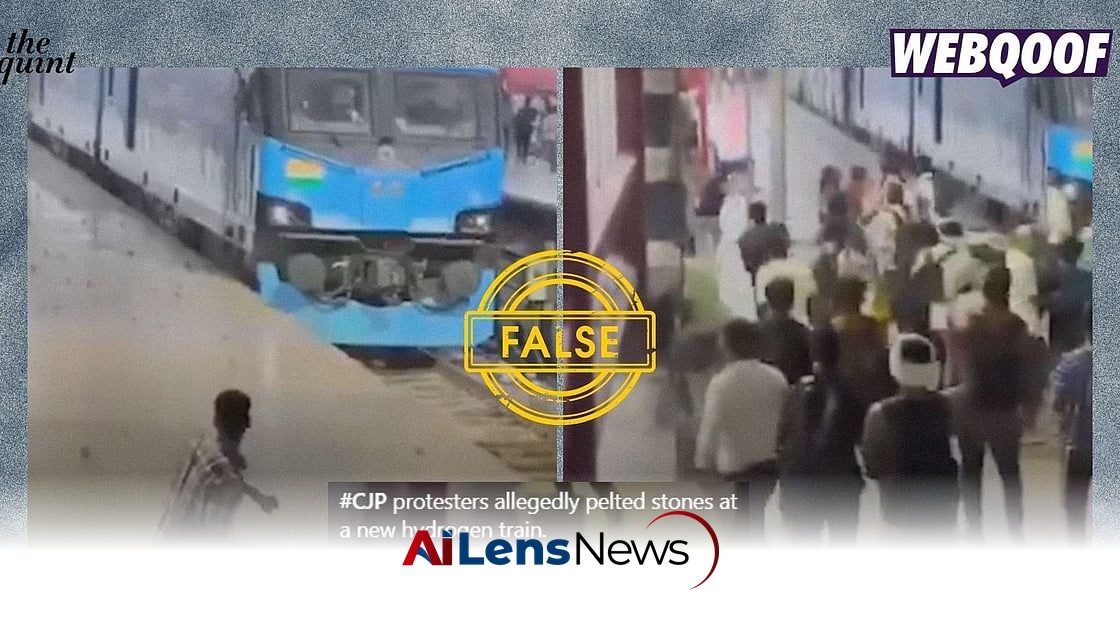


A viral video misidentified as CJP protesters pelting stones at a hydrogen train actually shows students in Bihar's Pataliputra station reacting to a train delay.
New Delhi, India Jul 22, 2026 ALN: The recent dissemination of a video purportedly showing protesters from the Cockroach Janta Party (CJP) attacking a hydrogen train has sparked significant controversy. The video, which has been widely shared across various social media platforms, depicts individuals throwing stones at a train, leading many to draw conclusions about the nature of the incident and the motivations behind it. Misinformation, especially in politically charged environments, can have serious ramifications, and this incident serves as a prime example of the potential consequences of misattributed claims.
Among those who propagated this claim is Member of Parliament Rekha Sharma, who reposted the video with the same assertion, further amplifying its visibility and potentially misleading the public regarding the events depicted. The implications of such misattributions are profound, as they can incite further unrest and misinform the public about the actions and motivations of political groups. The spread of misinformation can create an atmosphere of distrust, not only towards the political entities involved but also towards the media and public institutions that are responsible for providing accurate information.
The hydrogen fuel cell-powered train, which is at the center of this controversy, was inaugurated on 17 July 2026. It serves the route between Jind and Sonipat, a significant development in India's push towards greener transportation solutions. The introduction of hydrogen trains is part of a larger initiative to reduce carbon emissions and promote sustainable energy sources within the country's railway system. This initiative reflects a broader global trend towards decarbonization in public transport. As nations grapple with the impacts of climate change, transitioning from traditional fossil fuel-powered transportation to more sustainable alternatives is becoming increasingly urgent.
However, the video in question does not depict this hydrogen train. After thorough investigation, it has been established that the footage actually shows students at Bihar's Pataliputra railway station engaging in stone pelting directed at a different train. This incident reportedly occurred due to a delay that frustrated students who were on their way to an important examination, leading to an outburst of anger and vandalism against the train. Such incidents are not uncommon, as delays in public transportation can lead to frustration among passengers, particularly when they are on tight schedules, such as for examinations or job interviews.
To ascertain the authenticity of the claims surrounding the video, a reverse image search was conducted using Google Lens. This search yielded a video uploaded on 14 June 2026, which shared striking similarities with the claimed video. The caption accompanying this earlier upload indicated that the incident took place in Bihar, thus supporting the findings of our investigation. The ability to verify information through digital tools is becoming increasingly important in an era where misinformation can spread rapidly.
Further analysis involved a comparative review of the two videos, which confirmed that the settings were indeed similar. Additionally, a keyword search provided access to a report detailing the incident, which corroborated the narrative of students expressing their frustration over a train delay. According to reports from Live Hindustan, the unrest at Pataliputra railway station was a direct response to the unfortunate delay, which had serious implications for the students' examination schedules. The emotional weight of such situations cannot be underestimated, as students often invest significant time and resources into their education, making delays all the more frustrating.
The train depicted in the viral video was identified as a WAG-12B class locomotive. This type of locomotive was specifically developed for use on dedicated freight corridors and is primarily used to transport goods. In contrast, the hydrogen train is a passenger service operating on the Jind–Sonipat route, highlighting the distinct nature of the two types of trains and further emphasizing the inaccuracy of the claims made regarding the video. Understanding the differences between various types of trains and their purposes is crucial for contextualizing incidents like these.
In response to the viral misattribution, the Northern Railway took to their official X account to clarify the situation. They stated unequivocally that the viral posts do not depict the hydrogen train, but rather a WAG 12 locomotive. This clarification is crucial as it seeks to mitigate any potential misunderstandings and prevent the spread of misinformation regarding the incident and the hydrogen train initiative. The role of official channels in correcting misinformation is vital, as they serve as a trusted source of information for the public.
The implications of this incident extend beyond mere miscommunication. The spread of misinformation, especially in politically charged environments, can lead to heightened tensions among various groups and can influence public perception and policy decisions. The CJP, as a political entity, may find itself facing backlash or increased scrutiny based on the misattributed actions of individuals in a separate context. Furthermore, the public's trust in media sources and political representatives can be eroded when misinformation proliferates unchecked. This erosion of trust can have long-term consequences for democratic processes and civic engagement.
This situation underscores the importance of critical media literacy among the public. In an age where information can spread rapidly through social media, it is essential for individuals to verify claims before sharing them further. Fact-checking initiatives play a vital role in this process, as they provide tools and resources for the public to discern fact from fiction. The ability to critically assess the validity of information is crucial for maintaining an informed citizenry and a healthy democratic process. Educational programs aimed at improving media literacy can empower individuals to navigate the complexities of information consumption in the digital age.
As this incident illustrates, the stakes of misinformation are high, particularly in contexts involving political protests and public demonstrations. The potential for misunderstanding and misrepresentation can lead to real-world consequences, including violence, public unrest, and damage to reputations. It is imperative that all stakeholders—media, political representatives, and the public—commit to upholding standards of accuracy and integrity in the information they disseminate and consume. The responsibility to verify and share accurate information lies collectively with the society, and fostering a culture of accountability can mitigate the risks associated with misinformation.
In conclusion, while the video in question has been misattributed as evidence of CJP protesters attacking a hydrogen train, the reality is far more mundane. It depicts an isolated incident of student frustration at a train delay in Bihar. The ongoing dialogue surrounding this incident serves as a reminder of the need for vigilance against misinformation and the importance of thorough fact-checking in preserving the integrity of public discourse. As society continues to grapple with the challenges posed by misinformation, fostering a culture of verification and accountability will be essential in ensuring that the public remains well-informed and engaged in democratic processes.
To learn more about the latest developments in Crime & Law, stay updated with our exclusive reports and analyses on AiLensNews.

