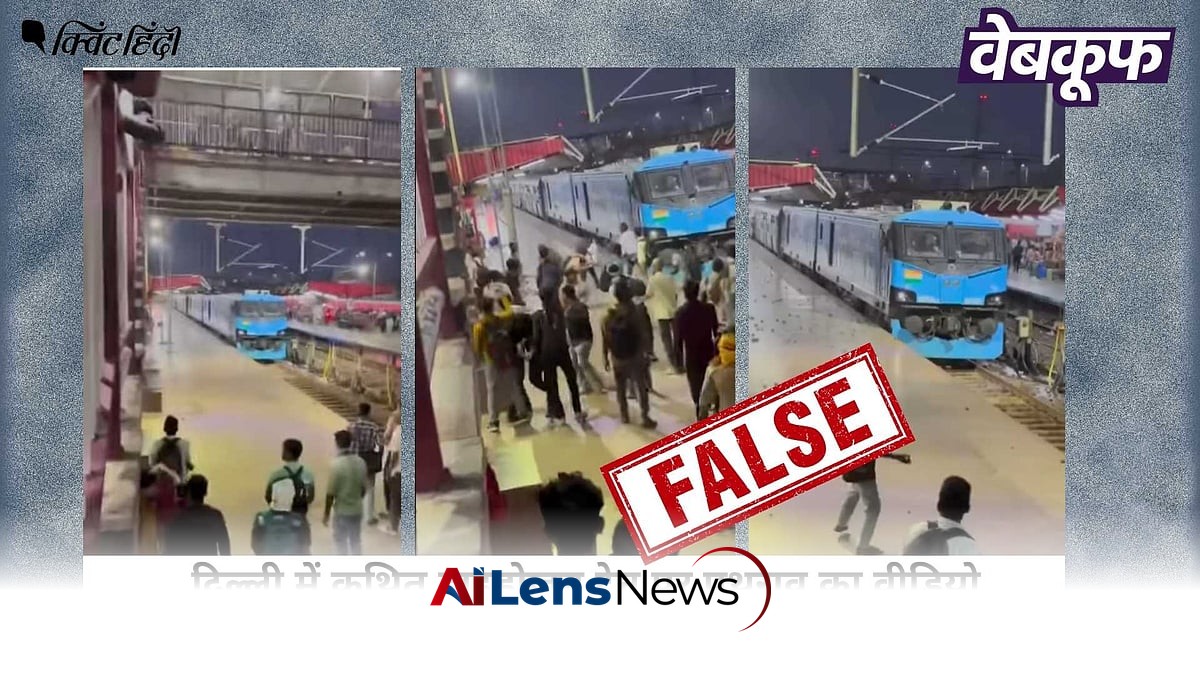


A viral video misrepresented as showing CJP protesters attacking a hydrogen train actually depicts students throwing stones at a train at Patliputra station in Bihar.
New Delhi, India Jul 22, 2026 ALN: A video has recently gained traction on social media, alleging that members of the 'Cockroach People's Party' (CJP) were involved in throwing stones at a new hydrogen train. This claim has been amplified by various individuals, including Member of Parliament Rekha Sharma, who reposted the video with the same assertion. Such events, especially those involving public demonstrations and allegations of violence, can quickly escalate in public discourse, leading to widespread misunderstanding and misinformation.
The hydrogen fuel cell train in question was inaugurated on July 17, 2026, and serves the route between Jind and Sonipat, which is part of the Northern Railway zone. This train represents a significant advancement in sustainable transportation, as hydrogen trains are seen as a cleaner alternative to traditional diesel-powered trains. The development of hydrogen trains is part of a broader effort to reduce carbon emissions in the transportation sector, aligning with global goals for sustainability and environmental conservation. Hydrogen fuel cell technology has garnered attention as a promising solution to the increasing demand for cleaner energy sources, particularly in the transportation sector, which is a significant contributor to global greenhouse gas emissions.
Despite the serious nature of the allegations made against the CJP, a thorough investigation has revealed that the claims are not accurate. The viral video does not depict an attack on a hydrogen train but instead shows students throwing stones at a train at Patliputra station in Bihar. This misrepresentation highlights the importance of verifying information before sharing it, especially in an age where misinformation can spread rapidly through social media channels. The rapid dissemination of unverified claims can have serious ramifications, leading to public outrage, misdirected blame, and potentially unjust consequences for individuals or groups wrongly accused.
To verify the authenticity of the claims made in the viral video, a reverse image search was conducted using Google Lens. This investigation led to the discovery of a video uploaded on June 14, 2026, which contained scenes that closely matched those in the viral video. The caption accompanying the original video indicated that the incident took place in Bihar, providing crucial context to the situation. This process of fact-checking is vital in today's digital landscape, where the speed of information sharing often outpaces the ability to verify facts.
Further analysis revealed that both videos exhibited notable similarities, reinforcing the conclusion that the viral claims were unfounded. In addition, a search for related keywords yielded a report detailing the incident at Patliputra station. The visuals included in this report confirmed that the locomotive featured in the viral video was indeed the same as that shown in the original footage. This methodical approach to fact-checking emphasizes the need for critical thinking and skepticism when encountering sensational claims online.
According to reports, the chaos at Patliputra railway station was triggered by a delay in the arrival of the train. Students, who were en route to take exams, expressed their frustration over the situation, which escalated into acts of vandalism against the train. This incident underscores the potential for public unrest in response to perceived failures in transportation services, particularly in critical situations such as exam schedules. The pressure on students during exam periods is significant, and delays can exacerbate feelings of anxiety and frustration, leading to impulsive actions that may not reflect their usual behavior.
It is also important to note the type of locomotive involved in the incident. The WAG-12B locomotive, which was vandalized, is designed for freight transport and operates on dedicated freight corridors. This is distinct from the hydrogen train, which is specifically intended for passenger service on the Jind-Sonipat route. The confusion between these two types of trains illustrates the need for clarity in public discourse, especially when discussing incidents that may have serious implications for public safety and trust in transportation systems. Understanding the operational differences between various types of trains can help mitigate misinformation and enhance public awareness about transportation infrastructure.
In light of the misinformation surrounding this incident, Northern Railway took the initiative to clarify the situation through their official X account. They confirmed that the viral post regarding stone-pelting does not involve the hydrogen train but rather depicts the WAG 12 locomotive, thereby dispelling any misconceptions that may have arisen from the video. This proactive communication from Northern Railway is essential in restoring public confidence and ensuring that accurate information prevails over sensationalized narratives.
The conclusion drawn from this investigation is clear: the video circulating on social media does not show an attack on a hydrogen train by CJP protesters, but rather an unrelated incident involving students at Patliputra station in Bihar. This situation serves as a reminder of the importance of responsible sharing of information and the need for thorough verification before drawing conclusions about sensitive issues such as public protests and acts of violence. The consequences of misinformation can extend beyond individual incidents, affecting public trust in institutions and the efficacy of communication strategies employed by authorities.
In the broader context, incidents like this highlight the challenges faced by authorities in managing public perception and maintaining trust in public transportation systems. Misinformation can lead to unwarranted panic and hostility towards certain groups, which can further exacerbate tensions within communities. As transportation systems continue to evolve with new technologies like hydrogen trains, it is essential for stakeholders to engage with the public transparently and effectively to foster understanding and support for these advancements. Building a well-informed public is crucial for the successful implementation of innovative transportation solutions, which require public acceptance and cooperation.
Moreover, the introduction of hydrogen trains is part of a larger trend towards sustainable transportation solutions. As countries around the world seek to reduce their carbon footprints and combat climate change, innovations in public transport will play a crucial role. The successful implementation of hydrogen trains could pave the way for further investment in green technologies, ultimately benefiting the environment and society as a whole. The transition to hydrogen-powered transportation systems not only addresses environmental concerns but also represents a significant shift in how societies approach energy consumption and sustainability.
In conclusion, while the claims made by the viral video were proven false, the incident at Patliputra station raises important questions about public frustration with transportation services and the potential for misinformation to shape narratives around such events. As society navigates the complexities of modern transportation and environmental challenges, ensuring accurate communication and public engagement will be vital for fostering a collaborative approach to these issues. It is imperative for both authorities and the public to remain vigilant against misinformation and to prioritize fact-based discourse in order to promote understanding and cooperation in the face of evolving transportation technologies.
To learn more about the latest developments in Crime & Law, stay updated with our exclusive reports and analyses on AiLensNews.

