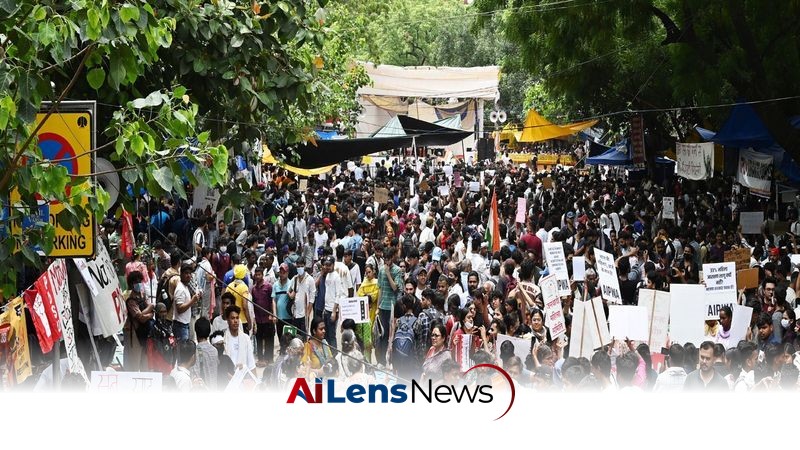


Activist Sonam Wangchuk concludes his hunger strike after receiving written assurances from the Centre, aiming to prevent violence and further protests.
New Delhi, India Jul 25, 2026 ALN: In a significant development, the Central Joint Protest (CJP) has officially declared the withdrawal of its 36-day protest following the acceptance of their demands by the government. This decision comes after extensive negotiations and the assurance of written commitments from the Centre. The CJP, which represents a coalition of various activist groups and community organizations, had mobilized thousands of individuals from different backgrounds to voice their grievances against perceived governmental neglect and demands for greater autonomy and rights.
Activist Sonam Wangchuk, a prominent figure in the protests, announced the end of his 26-day hunger strike, citing concerns over a potential crackdown on demonstrators. He emphasized the need to prevent violence, recalling the tragic events of September 24, 2025, when youth in Ladakh were fired upon during protests. This incident had left a lasting scar on the community, fostering a deep sense of distrust towards the authorities. Wangchuk's decision to end his hunger strike was a pivotal moment in the protests, as it symbolized a willingness to engage in dialogue rather than confrontation.
The protests, which began over a month ago, were aimed at addressing various socio-political issues affecting the region. Activists and citizens rallied together, demanding government action and accountability. Key issues included demands for greater representation in local governance, protection of land and cultural rights, and the provision of essential services such as education and healthcare. The protests drew attention not only to local grievances but also to broader national concerns about the treatment of marginalized communities in India.
The socio-political landscape in Ladakh has been particularly complex since the region was granted Union Territory status in 2019. This change, while aimed at providing more autonomy, has also led to fears about the erosion of local identity and the influx of outside influences. Activists argue that the government has not done enough to safeguard the interests of the indigenous population, leading to a feeling of disenfranchisement among the youth and other community members.
In response to the escalating tensions, the government engaged in dialogue with the protest leaders. The written assurances provided by the Centre were crucial in persuading Wangchuk and other activists to cease their hunger strike and withdraw from the protest site. These assurances reportedly included commitments to address the protesters' key demands and to initiate a series of consultations aimed at resolving ongoing issues. The government's willingness to engage in dialogue marked a significant shift in its approach, as previous responses had often been characterized by a heavy-handed security presence and limited engagement with community leaders.
Furthermore, the government's approach to the protests can be seen as part of a larger strategy to maintain stability in the region, especially in light of the sensitive geopolitical context surrounding Ladakh. The region shares borders with China and Pakistan, and any unrest could potentially have wider implications for national security. Thus, the government's decision to negotiate was likely influenced by a desire to prevent further escalation of tensions.
Looking ahead, the CJP has announced that the next round of talks with the government will take place in four weeks. This timeline aims to ensure that the commitments made are not only honored but also effectively implemented. The CJP has emphasized the importance of transparency and accountability in these discussions, calling for mechanisms to monitor the progress of the agreements reached. Activists have also stated that they will remain vigilant and prepared to mobilize again if their demands are not met satisfactorily.
The proposed talks are expected to cover a range of topics, including the establishment of a local legislative assembly, the protection of cultural heritage, and the implementation of development projects that directly benefit the local population. The CJP has expressed hope that these discussions will lead to a more equitable distribution of resources and opportunities in Ladakh.
The decision to withdraw has been met with mixed reactions from the community. While many are relieved to see an end to the protests, others remain cautious, emphasizing the need for continued vigilance and advocacy. Some community leaders have voiced concerns that the government’s assurances may not translate into real change on the ground. They argue that past experiences have shown that promises made during negotiations can often be forgotten once the immediate crisis has passed.
Additionally, there are fears that the withdrawal of the CJP could lead to a decrease in public pressure on the government, potentially allowing it to sidestep its commitments. As a result, some activists are calling for the establishment of a community monitoring group to oversee the implementation of the agreements reached in the upcoming talks. This group would serve as a watchdog to ensure that the government remains accountable to the people of Ladakh.
As the situation develops, the CJP and its supporters remain hopeful that the government's assurances will lead to meaningful change and improved conditions for the people of Ladakh. The recent protests have galvanized a sense of unity among diverse groups within the community, fostering a renewed commitment to advocacy and dialogue.
In conclusion, the withdrawal of the protest marks a pivotal moment in the ongoing struggle for rights and recognition in the region. The upcoming discussions will be critical in shaping the future of the community and its relationship with the government. As Ladakh navigates its path forward, the outcomes of these negotiations will likely have lasting implications for the region’s governance, identity, and social cohesion. The CJP’s experience serves as a reminder of the power of collective action and the importance of civic engagement in addressing the concerns of marginalized communities.
To learn more about the latest developments in Politics, stay updated with our exclusive reports and analyses on AiLensNews.

