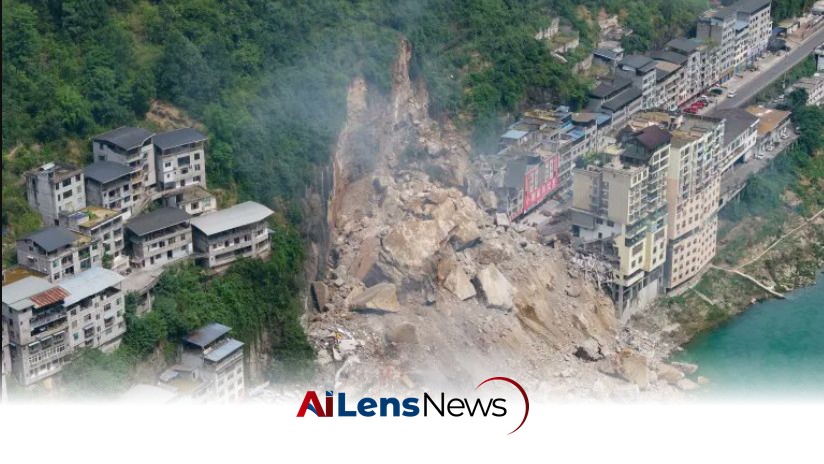


A devastating mountain collapse in Chongqing, China, has resulted in eight fatalities and left 34 individuals unaccounted for, prompting a national emergency response.
New Delhi, India Jul 18, 2026 ALN: Eight people have been confirmed dead, and 34 others remain missing after a rainfall-induced mountain collapse occurred along a section of the Wujiang River in southwest China's Chongqing Municipality on Friday, local authorities said.
Ten people have been rescued, and search and rescue operations are underway, according to a press briefing held on Friday night, Xinhua news agency reported. The situation has raised concerns about the frequency and severity of geological disasters in the region, particularly in light of the recent heavy rainfall that has affected various parts of China.
China activated a Level-II national emergency response for geological disasters after a landslide struck southwest China's Chongqing Municipality, causing houses to collapse and leaving people trapped, the Ministry of Emergency Management said on Friday. This response level indicates a serious situation where significant resources are mobilized to assist in recovery and rescue efforts.
The geological disaster saw massive amounts of rock and soil wash downslope at 9:08 a.m. on Friday, burying more than 10 residential buildings, while leaving some local residents trapped and unaccounted for, according to local authorities in Pengshui Miao and Tujia Autonomous County in Chongqing. The rapid onset of the landslide highlights the dangers posed by heavy rainfall, especially in mountainous areas where the terrain can be unstable.
The National Commission for Disaster Prevention, Reduction and Relief activated a Level-IV national disaster relief emergency response and sent a work team to assess the situation and assist local authorities in ensuring the basic living needs of affected residents. This level of response is typically reserved for significant disasters that require immediate governmental intervention to mitigate the impact on communities.
The mountain collapse occurred at about 9:10 a.m. on Friday in Hanjia sub-district of Pengshui County, bringing down multiple residential buildings at the foot of the mountain. The timing of the collapse, just after heavy rainfall, underscores the need for better forecasting and risk management strategies in areas prone to such natural disasters.
Earlier in the day, Chinese President Xi Jinping urged efforts to carry out search and rescue operations in a scientific manner after the mountain collapse. His call for a scientific approach reflects a growing recognition of the importance of utilizing data and technology in disaster response efforts.
Xi stressed the need to prevent secondary disasters, provide proper medical treatment to the injured, and effectively handle the aftermath. Such measures are critical in ensuring that the immediate needs of those affected are met, while also planning for long-term recovery. Efforts should also be made to identify the cause of the disaster, draw lessons from it, and thoroughly screen for and eliminate geological disaster risks, he said.
Xi's comments resonate with ongoing discussions in China regarding the management of natural disasters, particularly in the context of climate change and its implications for extreme weather events. As weather patterns shift and become more unpredictable, the potential for landslides and other geological disasters may increase, necessitating a reevaluation of current policies and preparedness strategies.
In light of this incident, there may be increased scrutiny on urban planning and construction practices in mountainous regions. Ensuring that buildings are constructed with adequate safety measures and that communities are informed about potential risks is paramount. The government may also need to invest in infrastructure improvements, such as better drainage systems, to mitigate the impact of heavy rainfall.
The response to this disaster will likely involve not only immediate rescue efforts but also long-term strategies aimed at improving resilience in vulnerable communities. This includes enhancing early warning systems, conducting regular geological assessments, and implementing community education programs about disaster preparedness.
The implications of this disaster extend beyond the immediate loss of life and property; they also raise questions about the effectiveness of current disaster management policies in China. As the country continues to experience rapid urbanization and development, balancing economic growth with safety and environmental considerations will be a critical challenge.
Furthermore, the psychological impact on the affected communities cannot be overlooked. Survivors of such disasters often experience trauma and loss, and providing mental health support will be an essential component of the recovery process.
As search and rescue operations continue, the focus will remain on locating the missing individuals and providing assistance to those displaced by the landslide. The government's response in the coming days and weeks will be closely monitored, both domestically and internationally, as it reflects on China's ability to manage and respond to natural disasters.
In conclusion, the tragic mountain collapse in Chongqing serves as a stark reminder of the vulnerabilities faced by communities living in geologically active regions. It underscores the necessity for robust disaster preparedness and response strategies, as well as the importance of community resilience in the face of natural calamities. As rescue efforts progress, the nation will be looking to learn from this incident to prevent future tragedies and safeguard the lives of its citizens.
The Wujiang River region, where the collapse occurred, is known for its dramatic landscapes and steep terrain, which can be both a draw for tourism and a risk for residents. The area has experienced geological instability in the past, exacerbated by human activities such as mining and construction. Such activities can disrupt the natural balance of the ecosystem, making regions more susceptible to landslides and other geological hazards.
Chongqing, a major city in southwestern China, has been subject to intense rainfall in recent weeks, which has led to flooding and other related incidents. The heavy rains are part of a broader pattern of extreme weather events that have been observed globally, prompting discussions around climate change and its local manifestations. This incident may serve as a catalyst for local governments to reassess their emergency preparedness plans and invest in more sustainable infrastructure that can withstand extreme weather conditions.
Moreover, the local government will likely face pressure to improve communication with residents about the risks associated with living in such areas. Providing clear information about evacuation routes and safety protocols can be vital in saving lives during emergencies. Community engagement in disaster preparedness initiatives can empower residents to take proactive measures in safeguarding their families and homes.
The tragic events of July 17 will likely lead to increased advocacy for better environmental policies and land-use planning that considers the geological characteristics of regions like Chongqing. As urban development continues, integrating environmental assessments into planning processes will be crucial to minimizing future risks.
In the wake of this disaster, it is also essential to foster collaboration among various stakeholders, including government agencies, non-governmental organizations, and local communities. This collaboration can facilitate the sharing of resources, knowledge, and best practices in disaster management, ultimately leading to more effective responses to future incidents.
As the nation reflects on this tragedy, it is imperative to honor the lives lost and affected by the landslide by taking meaningful action to prevent similar disasters in the future. Ensuring that lessons are learned and applied in policy and practice will be vital in building a safer and more resilient society.
In summary, the mountain collapse in Chongqing not only highlights the immediate human toll and the need for urgent rescue efforts but also emphasizes the importance of long-term planning, community engagement, and the integration of scientific approaches in disaster management. As the recovery process unfolds, the focus will be on both immediate needs and the broader implications for disaster resilience in the face of climate change and urban development challenges.
To learn more about the latest developments in World News & International Affairs, stay updated with our exclusive reports and analyses on AiLensNews.

