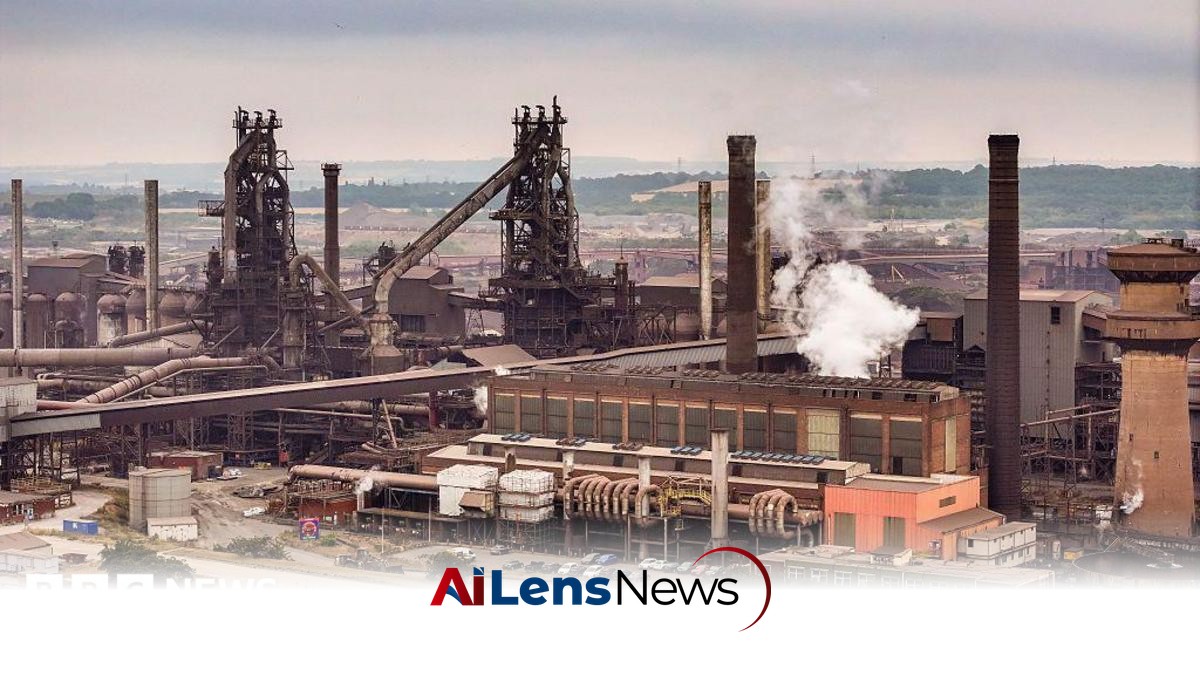


China has expressed strong opposition to the UK's decision to nationalize British Steel, citing concerns over investment rights and bilateral relations.
New Delhi, India Jul 17, 2026 ALN: China has hit out at the nationalisation of British Steel, saying it "firmly opposes and is strongly dissatisfied with the British government's decision".
On Thursday, the UK government announced that taking the loss-making firm into public hands would protect jobs and safeguard a "vital national capability". This decision marks a significant shift in the UK’s approach to its steel industry, which has faced numerous challenges in recent years, including rising costs, competition from cheaper imports, and the impact of global economic fluctuations. The nationalisation is seen as a response to these ongoing issues and an attempt to stabilize an industry that is crucial to the UK’s economy.
The UK took control of British Steel's operations in Scunthorpe last year, although it was still owned by China's Jingye Group, limiting the government's ability to steer its future. This situation has drawn criticism, as the UK government found itself in a position where it could not fully implement its strategies for the steel sector due to the existing ownership structure. Jingye, which acquired British Steel in 2020, has been under scrutiny as the company struggled with financial losses, reportedly losing around £700,000 a day prior to the nationalisation announcement.
China's commerce ministry stated on Friday that the moves "seriously infringed upon Jingye's legitimate rights and interests and severely undermined the confidence of Chinese companies investing in the UK". This statement reflects broader concerns in China about the treatment of foreign investments, particularly in sectors deemed strategic by the host country. The ministry also called on Britain to "faithfully fulfil" its obligations under the China–UK Bilateral Investment Treaty, which was established to protect investments and promote economic cooperation between the two nations. The treaty, signed in 1986, aimed to create a stable environment for bilateral trade and investment, but recent events have raised questions about its effectiveness.
"Disregarding Jingye's significant contribution to the UK economy and society, the British side forcibly took control of the company in the name of national security," the ministry said. This statement underscores the tension between the UK’s national security concerns and its commitment to maintaining a favorable investment climate for foreign companies. The implications of this nationalisation could resonate beyond the steel industry, potentially affecting future foreign investments from China and other nations.
The decision to nationalise British Steel threatens to strain the relationship between London and Beijing, especially as Andy Burnham is set to become the prime minister on Monday. The incoming PM will have to weigh his approach to the issue with the economic benefits of ties with the world's second-largest economy. Burnham's administration may face pressure to navigate the complexities of international relations while addressing domestic economic concerns, particularly in sectors like steel that are crucial for infrastructure and manufacturing.
The nationalisation came after Parliament on Wednesday passed legislation allowing the government to bring the steel industry into public ownership under circumstances where it met a public interest test. This legislative move reflects a growing sentiment among UK lawmakers that certain industries, particularly those essential to national infrastructure, should remain under government control to ensure stability and security.
Jingye is seeking compensation, having previously stated that the business was losing £700,000 a day. The BBC has been unable to get a response from Jingye itself to Thursday's announcement. The financial implications of the nationalisation are significant, as the UK government will need to manage the costs associated with running the steelworks, which, according to the National Audit Office, was costing the government about £1.3 million a day as of March. Small Business Minister Blair McDougall informed the House of Commons on Thursday that the government will appoint an independent valuer in the autumn "to make a judgment on any compensation that is due, and that could be nil". This uncertainty surrounding compensation adds another layer of complexity to an already contentious situation.
By taking British Steel into public ownership, the government now has the power and freedom to decide on the future of the plant while keeping the blast furnaces operational. However, it is unlikely the government will want to continue running the business in the long term, as it is costing it more than a million pounds a day. Business Secretary Peter Kyle told the BBC that the government would need to cover the running costs "for the immediate future". This raises questions about the sustainability of the nationalisation and whether the government has a viable long-term plan for the steel industry.
The steelworks directly employs around 2,700 people in Scunthorpe and supports thousands more jobs in the supply chain. The loss of jobs in the steel industry would have a significant impact on the local economy, especially in regions where alternative employment opportunities may be limited. The UK imports most of its steel, with major suppliers including the European Union, the US, China, and India. This reliance on imports highlights the importance of maintaining domestic production capabilities, particularly in light of global supply chain disruptions.
If the plant stopped producing virgin steel, the UK would become the only member of the G7 group of leading economies without the ability to make it. Steel output elsewhere in Britain relies on electric arc furnaces (EAFs), which recycle scrap metal to turn it into new products. While EAFs are generally considered more environmentally friendly and cost-effective, they cannot produce certain types of steel that are essential for specific applications, such as those needed by Network Rail and the building industry.
Although the government's long-term strategy is for all domestically produced steel to come from EAFs, which are cheaper and much less carbon-intensive to run, it does not want to lose production at Scunthorpe yet. The plant produces types of steel that are not yet made anywhere else in the country, and the fear had been that losing this output would be disruptive and make the country too reliant on imports. Therefore, the decision was made that Scunthorpe should be kept open until alternatives are available.
British Steel was last under state ownership in 1988 when it was privatised by Prime Minister Margaret Thatcher's government. The current nationalisation represents a significant reversal of the privatisation trend that has characterized UK economic policy over the past several decades. This move reflects a growing recognition of the need for government intervention in certain sectors to protect jobs and ensure national interests, particularly in light of the challenges posed by globalization and market volatility.
To learn more about the latest developments in World News & International Affairs, stay updated with our exclusive reports and analyses on AiLensNews.

