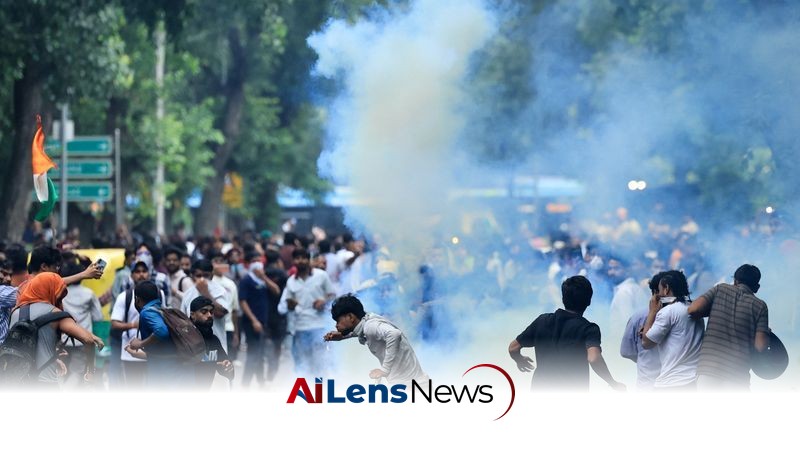


A protest march by the CJP in the capital turned violent, leading to clashes with police. Authorities resorted to tear gas and lathicharge, resulting in injuries to over 50 individuals.
Chandigarh, India Jul 21, 2026 ALN: In a shocking turn of events, a protest march organized by the Citizens for Justice and Peace (CJP) in the capital escalated into violence, prompting police to deploy tear gas and resort to lathicharge. The demonstration, aimed at advocating for justice and highlighting pressing issues, saw a significant turnout but quickly spiraled out of control.
Eyewitnesses reported chaos as protesters clashed with law enforcement, leading to injuries among both demonstrators and police personnel. Initial estimates suggest that over 50 individuals sustained injuries during the confrontations, with several requiring medical attention. The violence not only raised concerns about public safety but also ignited a debate on the right to peaceful assembly in the face of governmental authority.
The CJP, a prominent organization advocating for civil rights, organized the march to draw attention to various social justice issues, including the recent suicide of a NEET aspirant, which has sparked widespread discussions about the pressures faced by students in competitive environments. The group also aimed to highlight the detention of activist Wangchuk, whose arrest has been viewed as a significant infringement on civil liberties. The CJP's efforts to engage with political leaders, including a meeting with BJP leader J.P. Nadda, were part of their strategy to seek support for their cause, reflecting a growing frustration with the government's inaction on critical social issues.
The protest was not only a response to these specific incidents but also a broader outcry against systemic injustices that many citizens feel are being overlooked. The CJP has positioned itself as a voice for marginalized communities, advocating for transparency and accountability from authorities. The organization believes that peaceful protests are essential for democracy, allowing citizens to express their grievances and demand change.
This backdrop of systemic issues is crucial to understanding the motivations driving the CJP and its supporters. The suicide of the NEET aspirant, which many attribute to the immense pressure placed on students in high-stakes exams, underscores a larger crisis in the education system. Activists argue that the current system does not adequately support students' mental health and well-being, leading to tragic outcomes. The CJP aims to address these systemic failures by advocating for reforms that prioritize student welfare over competitive success.
Moreover, the arrest of activist Wangchuk has resonated deeply within the community, symbolizing a broader crackdown on dissent. Many view his detention as part of a troubling pattern of silencing voices that challenge the status quo. This has galvanized support for the CJP, as individuals from various backgrounds come together to demand accountability and justice.
As tensions escalated, police were forced to take drastic measures to control the situation. The use of tear gas and lathicharge has sparked outrage among activists and civil society groups, who argue that such actions are excessive and infringe upon the right to peaceful assembly. Critics of the police response contend that the force used was disproportionate to the situation, arguing that it reflects a broader pattern of aggressive policing in response to peaceful protests.
Protesters expressed their frustration, stating that their voices were being silenced through force. "We are here to demand justice and accountability. Using violence against us only strengthens our resolve," said one protester. This sentiment was echoed by many who participated in the march, emphasizing the need for dialogue and understanding rather than confrontation. The violence has led to calls for a reassessment of police tactics during protests, with many advocating for training that emphasizes de-escalation and respect for civil rights.
The police's actions have drawn criticism not only from protesters but also from various human rights organizations, which argue that the state must ensure the protection of civil liberties, including the right to protest. The deployment of tear gas and physical force against demonstrators raises ethical concerns about the extent to which law enforcement can use force to maintain order. This incident has ignited a renewed debate about the role of law enforcement in a democratic society, particularly concerning how authorities manage public demonstrations.
In response to the incident, government officials have defended the police's actions, asserting that they were necessary to maintain order and prevent further escalation. "The police acted within their rights to ensure public safety," a spokesperson stated. This defense highlights the ongoing tension between law enforcement agencies and civil rights advocates, as the interpretation of what constitutes a threat to public safety can vary significantly between different stakeholders.
The government’s position raises important questions about the balance of power between the state and its citizens. Critics argue that the justification for police action often comes at the expense of civil liberties, especially in contexts where citizens are exercising their right to protest. This incident has ignited a renewed debate about the role of law enforcement in a democratic society, particularly concerning how authorities manage public demonstrations.
Furthermore, the government’s response reflects a broader trend observed in many democratic societies where the right to protest is increasingly under scrutiny. As protests become more frequent and sometimes escalate into violence, the challenge lies in balancing the need for public order with the fundamental rights of citizens. This delicate balance is pivotal in maintaining a healthy democracy, where dissent is not only tolerated but encouraged as a means of fostering dialogue and change.
As the dust settles from the chaotic events, the CJP has vowed to continue its fight for justice. The organization plans to hold a press conference to address the violence and outline its next steps in advocating for the rights of marginalized communities. This determination reflects a larger trend among civil society organizations that are increasingly willing to confront governmental actions that they perceive as unjust.
This incident raises critical questions about the balance between maintaining public order and respecting the rights of citizens to protest. As the situation develops, many will be watching closely to see how authorities respond to the demands for justice and accountability. The fallout from this protest may lead to increased scrutiny of police practices, particularly regarding the treatment of demonstrators and the use of force.
In the wake of the protest, discussions around police reform and the treatment of demonstrators are expected to gain momentum, with calls for a thorough investigation into the events that transpired. Activists are likely to push for legislative changes that protect the rights of protesters, ensuring that future demonstrations can occur without the threat of violence from law enforcement. The outcome of these discussions may shape the landscape of civil liberties in the country, influencing how protests are conducted and policed in the future.
Furthermore, the incident has the potential to galvanize support for social justice movements, as activists rally around the need for systemic change. The visibility of the CJP's cause, coupled with the violent response they faced, may inspire other groups to mobilize and advocate for their rights. As the public discourse evolves, it is essential for all parties involved to engage in constructive dialogue to address the underlying issues that lead to such confrontations.
In conclusion, the violent outbreak during the CJP protest not only highlights the immediate concerns regarding police conduct and civil rights but also serves as a reflection of the broader societal tensions that exist within the current political climate. The path forward will require careful navigation of these complex issues, as both the government and civil society seek to find common ground in the pursuit of justice and accountability. The events of this protest may very well serve as a catalyst for change, prompting a reevaluation of how protests are handled and how citizens can exercise their rights without fear of retribution.
To learn more about the latest developments in Crime & Law, stay updated with our exclusive reports and analyses on AiLensNews.

