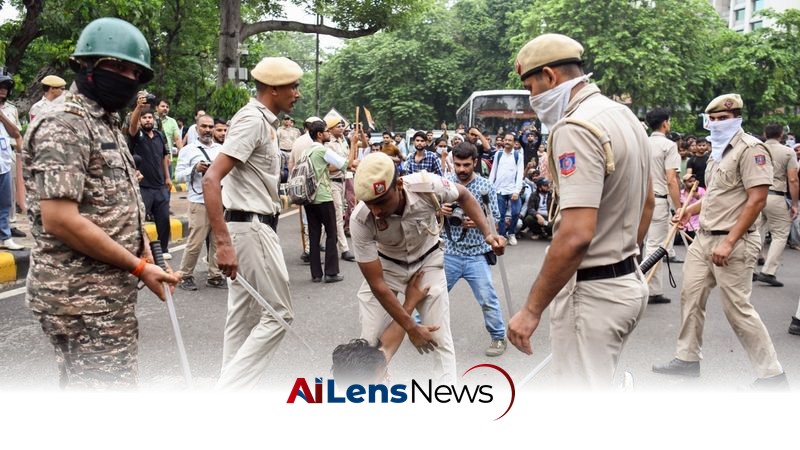


The Supreme Court will address petitions alleging excessive police force used against students protesting exam paper leaks, scheduled for Monday.
Chandigarh, India Jul 24, 2026 ALN: The Supreme Court of India has agreed to hear two petitions on Monday concerning the alleged excessive use of police force against students protesting across the country. The protests have erupted in response to allegations of exam paper leaks, which have raised significant concerns among students and educational institutions alike.
The petitions claim that the police response to the protests has been disproportionate, leading to unnecessary violence and intimidation of students. Activists and student organizations have voiced their concerns, stating that the right to peaceful protest is being undermined by heavy-handed police tactics.
In recent weeks, students from various universities and colleges have taken to the streets to demand accountability and transparency in the examination process. The protests have gained momentum as more students join in, expressing their frustration over the perceived lack of action from authorities regarding the alleged leaks. These leaks, if proven true, suggest systemic failures in the examination system, which many believe compromise the integrity of the educational framework.
The exam paper leak allegations have sparked widespread outrage, particularly given the high stakes associated with these examinations for students' futures. Many students feel that their hard work and dedication are being undermined by a flawed system that allows such breaches to occur. The protests have thus become a rallying point for students not only seeking justice for themselves but also advocating for reforms in the educational sector to ensure that similar issues do not arise in the future.
Moreover, these protests are reflective of a broader discontent among the youth regarding various systemic issues in the educational sector, including the quality of education, the fairness of evaluation processes, and the transparency of administrative actions. The students' demands extend beyond immediate grievances related to the exam leaks, encompassing a call for comprehensive reforms that address the structural deficiencies in the education system.
The petitions set to be heard by the Supreme Court outline specific instances of alleged police misconduct, including the use of batons and tear gas against peaceful protesters. Eyewitness accounts and video footage have surfaced, showing confrontations between police and students, raising questions about the appropriateness of the police response. Such tactics have been criticized as excessive and unnecessary, especially when aimed at individuals exercising their democratic right to protest.
The reported use of force has led to injuries among protesters, further inflaming tensions between the police and student communities. Legal representatives for the petitioners argue that such actions not only violate the fundamental rights of individuals but also reflect a broader trend of escalating police violence against dissenters in India. This situation is particularly concerning in a democratic society where the right to peaceful assembly and protest is enshrined in the Constitution.
In addition to the immediate implications for the students involved, these incidents of police violence raise critical questions about the broader relationship between law enforcement and civil society in India. The heavy-handed tactics employed by police have led to a growing perception among the public that the authorities are more inclined to suppress dissent rather than engage in constructive dialogue with citizens. This perception can lead to a breakdown of trust between the police and the communities they serve, further complicating efforts to address underlying social issues.
The Supreme Court's decision to take up the petitions is seen as a critical moment for upholding the rights of students to protest peacefully. Legal experts suggest that the outcome could set a precedent for how law enforcement handles similar situations in the future, particularly regarding the balance between maintaining public order and respecting civil liberties. The court's ruling could potentially redefine the legal boundaries of police conduct in public demonstrations and establish clearer guidelines for law enforcement agencies across the country.
Moreover, the implications of the court's decision could extend beyond this specific case. Should the court rule in favor of the petitioners, it may encourage more citizens to exercise their right to protest without fear of excessive police retaliation. Conversely, a ruling in favor of the police could embolden law enforcement to adopt more aggressive tactics in future protests, which may lead to a chilling effect on civil liberties.
Furthermore, the legal framework governing protests and public gatherings in India has been a topic of debate for many years. The existing laws often grant significant discretionary power to law enforcement, which can lead to arbitrary enforcement and the suppression of dissenting voices. A ruling from the Supreme Court that emphasizes the need for accountability and restraint in police actions could pave the way for legislative reforms aimed at protecting the rights of protesters.
As the Supreme Court prepares to hear the petitions, student organizations are urging their peers to remain peaceful and organized in their protests. They emphasize the importance of their voices being heard without resorting to violence or confrontation. This call for peaceful protest is crucial, as it aligns with the constitutional right to assemble and express dissent, and it also serves to highlight the legitimacy of their grievances.
The upcoming hearing is anticipated to draw significant attention, not only from students but also from civil rights advocates and legal observers, as the implications of the court's ruling could resonate far beyond this particular case. Many are expected to gather outside the court in solidarity, showcasing the collective strength of the student movement and their demand for accountability.
In conclusion, the Supreme Court's involvement in this matter highlights the ongoing struggle for student rights and the need for accountability in law enforcement practices. The outcome of the hearing on Monday will be closely watched by all stakeholders involved. The case underscores the importance of protecting civil liberties in the face of public dissent, and it serves as a reminder of the vital role that judicial oversight plays in maintaining the balance between state power and individual rights. As the situation unfolds, it will be crucial for all parties to engage in constructive dialogue aimed at addressing the underlying issues that have led to these protests, ensuring that the voices of students are heard and respected in the ongoing discourse surrounding educational integrity.
To learn more about the latest developments in Crime & Law, stay updated with our exclusive reports and analyses on AiLensNews.

