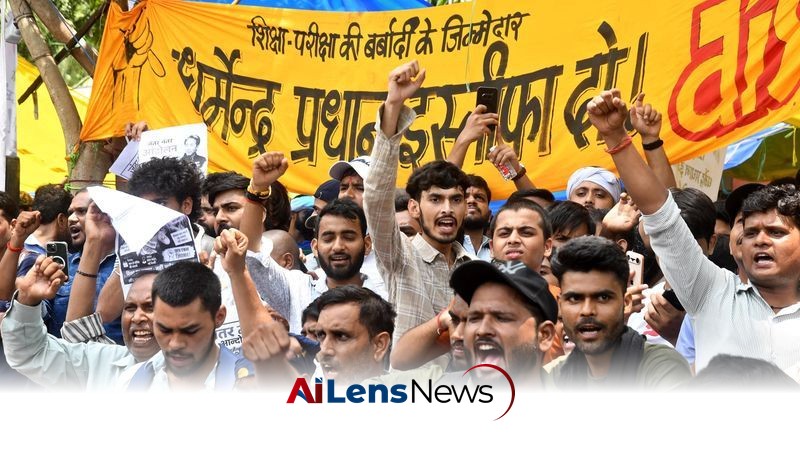


The government has made four outreach attempts to protesting students in 24 hours, seeking dialogue but has yet to receive a response.
Chandigarh, India Jul 23, 2026 ALN: The ongoing protests by students regarding the Centralized Joint Entrance Examination (CJP) have prompted the government to take action. On Thursday, officials announced that they had reached out to the protesting students and their leaders four times in the last 24 hours, hoping to initiate discussions. The CJP, a critical examination for students aspiring to enter higher education institutions, has been the center of contention, with many students expressing dissatisfaction over various aspects of the examination process.
The CJP was introduced as a unified examination system aimed at streamlining the admission process for universities and colleges. The intent behind this centralized examination was to create a fairer and more efficient method for assessing students' readiness for higher education, thus reducing the discrepancies that often arise from multiple entrance exams administered by different institutions. However, students have raised concerns about its fairness, accessibility, and the overall impact it has on their academic futures. Many believe that the examination does not adequately reflect their capabilities and that it places undue pressure on them during a crucial stage of their educational journey. The protests have seen significant mobilization, with students from various institutions coming together to voice their grievances, indicating a widespread sentiment that resonates across different demographics within the student body.
Despite the government's outreach efforts, which are intended to open a channel for dialogue, officials have reported that they have not yet received any response from the student leaders. This lack of communication has raised concerns about the potential for resolution and the continuation of the protests. The government’s attempts to engage with the students could be seen as a necessary step towards de-escalating the situation, as prolonged protests could lead to further disruptions in academic schedules and public order. The context of these protests is critical; many students feel that the CJP does not only affect their immediate academic prospects but also has long-term implications for their careers and personal development.
The protests have not only been a platform for students to express their dissatisfaction with the CJP but have also highlighted broader issues within the education system. Students have voiced concerns about the quality of education, the availability of resources, and the pressure placed on them by standardized testing. The increasing reliance on high-stakes examinations like the CJP raises questions about educational equity and the extent to which such assessments can truly measure a student's potential. This situation underscores the need for a comprehensive review of the examination system and its implications for students across the nation. Educational experts argue that a more holistic approach to student assessment, which includes continuous evaluation and diverse methods of testing, could better serve the needs of students and reflect their true capabilities.
As the situation develops, both the government and the students remain at a standstill, with the potential for further escalation if dialogue does not commence soon. The government is keen on resolving the matter amicably and is awaiting a response from the student leaders to move forward. However, the longer the dialogue remains unresolved, the more likely it is that the protests will continue to grow in intensity and scale. The students have made it clear that they are not merely protesting for the sake of protest; they are advocating for meaningful change and improvements to the educational system that they feel are necessary for their success.
In the meantime, the protests continue to draw attention, highlighting the students' determination to voice their demands and seek changes in the examination system. The situation has garnered significant media coverage, which has further amplified the students' messages and concerns. As public awareness increases, there is a growing expectation for the government to take decisive action to address the students' grievances. The role of social media cannot be understated in this context; platforms like Twitter, Instagram, and Facebook have become vital tools for students to organize, communicate their messages, and rally support from the broader community.
The implications of these protests extend beyond the immediate concerns regarding the CJP. They reflect a larger trend of student activism in the country, where young people are increasingly willing to stand up for their rights and demand accountability from those in power. This could signal a shift in how educational policies are formulated and implemented, as students and young people become more engaged in the political process. The involvement of students in political discourse is not a new phenomenon, but the current protests may represent a more organized and widespread movement that could influence future policy-making.
Moreover, the protests may also influence public perception of the government’s handling of educational issues. If the government is perceived as being unresponsive or dismissive of the students' concerns, it could lead to a loss of trust and support from the younger demographic, which is crucial for any political entity looking to maintain its legitimacy and authority. The government’s response to these protests could have significant electoral implications, particularly in a political landscape where youth engagement is increasingly important.
In conclusion, the ongoing protests surrounding the Centralized Joint Entrance Examination represent a critical moment for students advocating for their rights and for the government as it navigates the complexities of educational reform. The outcome of this situation will likely have lasting implications for the education system and the relationship between students and policymakers. The need for constructive dialogue and genuine engagement with the concerns raised by the students is paramount in moving towards a resolution that satisfies all parties involved. As both sides prepare for possible negotiations, the focus remains on the essential task of reforming the educational landscape to better serve the needs of all students, ensuring that their voices are heard and respected in the ongoing discourse surrounding education and policy.
To learn more about the latest developments in Politics, stay updated with our exclusive reports and analyses on AiLensNews.

