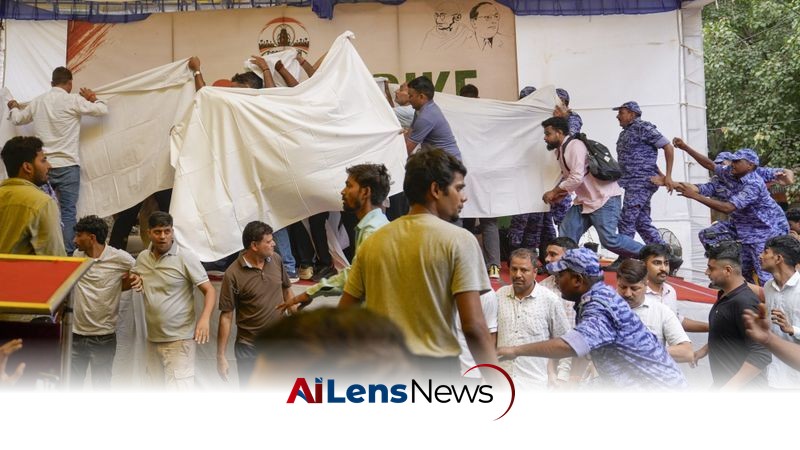


In a preemptive move, Delhi police have shifted activist Wangchuk to a hospital as he continues his fast ahead of a planned march to Parliament.
Chandigarh, India Jul 19, 2026 ALN: In a dramatic early morning operation, Delhi police have moved activist Wangchuk to a hospital as he continues his hunger strike. This intervention comes just two days before a significant march to Parliament, raising concerns over the treatment of protestors and the right to peacefully assemble. The situation surrounding Wangchuk is emblematic of broader societal tensions in India regarding environmental issues, educational reforms, and the rights of citizens to express dissent without fear of retribution.
Wangchuk, known for his activism in various social issues, has been on a hunger strike to draw attention to pressing concerns regarding environmental policies and educational reforms. His fast has garnered considerable media attention and public support, highlighting the ongoing struggles faced by activists in India. Wangchuk, who has been a prominent figure in advocating for sustainable development and educational equity, has used his platform to address the urgent need for reforms in these areas, which he believes are critical for the future of the country.
The issues Wangchuk is protesting are not isolated; they are part of a larger discourse within India about the need for sustainable practices in governance and education. Environmental degradation and inadequate educational infrastructure are pressing concerns that have sparked numerous protests across the nation. Wangchuk's hunger strike is seen as a culmination of years of frustration among activists who feel that their voices are not being heard by those in power. His commitment to fasting until his demands are met reflects a deep-seated belief that real change can only come from sustained pressure on the government.
The police's decision to transfer Wangchuk to a hospital has sparked a debate about the limits of state intervention in peaceful protests. Activists argue that such actions undermine the democratic right to protest and may deter others from voicing their dissent. The intervention raises critical questions about the balance between maintaining public order and respecting individual rights. Critics of the police action assert that it reflects a troubling trend of increasing state control over civil liberties, particularly in the context of dissenting voices.
Historically, India has seen a range of responses to protests, from supportive to repressive. The Delhi police's intervention in Wangchuk's case is being scrutinized not only for its immediate impact on the activist but also for its implications for future protests. The timing of this action, just days before a planned march to Parliament, suggests a calculated move by authorities to preemptively quell potential unrest. This has led to widespread discussions about the role of law enforcement in managing public demonstrations and the ethical considerations surrounding the treatment of protestors.
Despite the police's intervention, Wangchuk has reportedly refused medical treatment, insisting that he will continue his fast until his demands are met. His determination has resonated with many supporters who view his actions as a stand against governmental apathy. Wangchuk's refusal to back down, even in the face of health risks, underscores the seriousness of his commitment to the causes he champions. It also highlights the personal sacrifices that many activists are willing to make to draw attention to societal issues.
Wangchuk's stance is not just about personal health; it is a symbolic act meant to galvanize public support and provoke dialogue around critical issues. His fast is seen as a call to action for citizens to engage with the pressing challenges of environmental degradation and educational inequity. The emotional weight of his protest is amplified by the growing concern among the public regarding the government's responsiveness to such issues, making Wangchuk a figure of inspiration for many.
The march to Parliament, scheduled for later this week, aims to bring attention to Wangchuk's cause and advocate for policy changes. Organizers expect a significant turnout, emphasizing the need for collective action in addressing societal issues. The march is anticipated to attract a diverse group of participants, including students, environmentalists, educators, and concerned citizens, all united in their demand for change. This collective mobilization reflects a growing awareness of the interconnectedness of various social issues and the need for a unified approach to advocacy.
As the march approaches, organizers are strategizing on how to maximize visibility and impact. They are leveraging social media platforms to rally support and inform the public about the issues at stake. This digital mobilization is crucial in an era where information spreads rapidly, and public sentiment can shift quickly. The march is not only a platform for Wangchuk's demands but also an opportunity for broader discussions about governance, accountability, and civic engagement in India.
The public's reaction to Wangchuk's situation has been mixed. While many express solidarity with his cause, others are concerned about the implications of his fast on his health. Social media platforms are abuzz with discussions surrounding the ethics of police intervention in such cases. Supporters have taken to various channels to express their admiration for Wangchuk's courage and commitment, while critics question the effectiveness of hunger strikes as a form of protest.
Public sentiment is further complicated by the increasing polarization of political discourse in India. Some view Wangchuk's actions as a necessary challenge to the status quo, while others perceive them as disruptive. The divide reflects broader societal tensions regarding governance, environmental issues, and the role of activism in shaping public policy. This polarization is indicative of a larger trend in which social movements are increasingly met with skepticism and resistance from certain segments of society.
As the situation unfolds, the focus remains on Wangchuk's health and the upcoming march. The actions taken by the Delhi police will likely influence public perception of the government's stance on civil liberties and the right to protest. The outcome of this situation may have lasting implications for how protests are managed in India and could set a precedent for future demonstrations. As citizens continue to navigate the complexities of activism and governance, the case of Wangchuk serves as a poignant reminder of the ongoing struggle for rights and representation in a rapidly changing society.
To learn more about the latest developments in Society & Social Issues, stay updated with our exclusive reports and analyses on AiLensNews.

